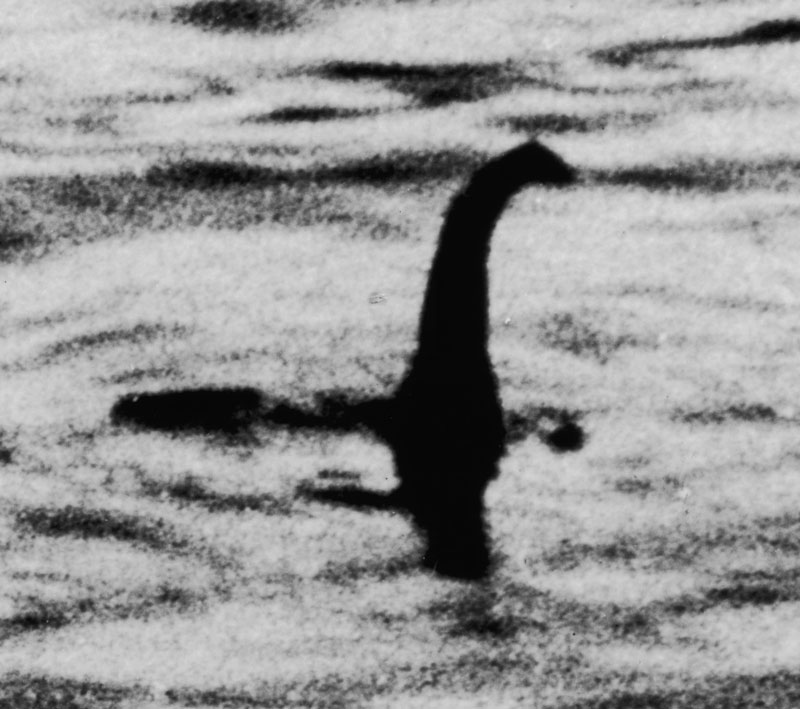
In 1934, a photograph appeared to show something extraordinary rising from Scotland’s Loch Ness: a dark shape with a long neck and small head emerging from the water. The image quickly became the most famous photograph ever associated with the Loch Ness Monster, helping define what “Nessie” would look like for generations. But decades later, investigators began examining the photograph itself rather than the creature it appeared to show. The closer they looked, the more complicated the story became. What seemed like photographic evidence of a mysterious animal became a remarkable lesson in scale, perception and the power of an image.
The Photograph Turned Nessie Into An Icon
The photograph was taken in April 1934 by Robert Kenneth Wilson, a London physician who was visiting the area around Loch Ness. It soon became known as the “Surgeon’s Photograph,” a name that gave the image an air of authority even though Wilson was not presenting himself as a scientific investigator. The photograph appeared to show a creature’s head and long neck emerging from the dark surface of the loch.
The image arrived at a perfect moment for the Loch Ness legend. Reports of a mysterious creature had already attracted public attention, and newspapers were actively looking for photographs that might provide something more tangible than eyewitness accounts. The photograph offered exactly that: a simple black-and-white image that appeared to capture the creature itself.
For decades, the picture became the visual shorthand for Nessie. When people imagined the Loch Ness Monster, they often imagined something remarkably similar to the shape in Wilson’s photograph. The image had done something that eyewitness stories could not do: it gave the legend a recognizable form.
Ever wondered if the Loch Ness Monster is real? Dive into the deep, dark waters of Loch Ness with expert explorers! Using military-grade technology to drain the lake’s mysteries, this thrilling investigation uncovers long-lost secrets, hidden shipwrecks, and the truth behind famous sightings. Watch now to solve the legend!
The Photograph Had A Problem Nobody Could Easily See
One of the most important details about the photograph is not the shape in the water. It is everything that is not in the frame.
There is no nearby person, boat or clearly recognizable object that provides an obvious reference for scale. Without such a reference, viewers cannot easily determine whether the object is enormous or relatively small. A shape photographed from a distance can appear dramatically different depending on the camera position, lens and surrounding landscape.
That matters because the human brain naturally tries to interpret unfamiliar objects using familiar patterns. If viewers are already expecting a giant creature, an indistinct shape on the surface of a large lake can quickly become a “monster” in the mind. The photograph therefore became powerful not only because of what it showed, but because of what it left viewers to imagine.
This is one reason the image remained persuasive for so long. It seemed to provide evidence while withholding the information needed to judge that evidence properly.

The Story Behind The Photograph Was Already Complicated
The photograph did not appear in isolation. It emerged from a growing search for evidence around Loch Ness.
One of the people involved in that earlier search was Marmaduke Wetherell, who had been hired by the Daily Mail to investigate reports of the creature. Wetherell later claimed to have found large footprints around the loch. The supposed tracks were examined by the Natural History Museum and were found to have been made by a hippopotamus foot, apparently from a dried or mounted specimen used to create the impressions.
The episode damaged Wetherell’s credibility, but the public fascination with Nessie did not disappear. Instead, attention shifted toward other forms of evidence, including photographs.
That context makes the appearance of the 1934 photograph particularly interesting. The public had already been primed to look for physical proof of a mysterious creature. When a dramatic image arrived, it was much easier for the photograph to become part of the existing story.
Decades Later, The Photograph Itself Came Under Investigation
For years, the photograph was treated as one of the strongest pieces of visual evidence associated with Nessie. Then, in the 1990s, a very different explanation emerged.
Christian Spurling, a relative of Wetherell, said that the image had been staged using a small model attached to a toy submarine. According to this account, the object photographed in the loch was not a large unknown animal but a deliberately constructed model made to resemble one.
The account became one of the most influential explanations of the photograph, and the Science Museum Group now describes the image in its collection as a photograph of the Loch Ness Monster that was later revealed to have been created using a model.
But there is an important historical distinction here. The explanation emerged decades after the photograph was taken, meaning historians cannot simply treat every detail of the later confession as if it were independently documented in 1934. The evidence surrounding the photograph has to be separated into what was recorded at the time and what was reported much later.
That distinction is exactly what makes the story more interesting than a simple “fake photograph” headline.
One Photograph Shows How Easily Scale Can Be Misread
The Surgeon’s Photograph is also a useful reminder that photographs do not automatically tell us the size of what they capture.
A distant object without a familiar reference can appear enormous. The same principle is used in photography to create visual illusions, whether intentionally or accidentally. A person standing close to the camera can appear larger than someone farther away, even though their actual sizes are completely different.
The Loch Ness photograph became especially effective because the surrounding water provided almost no obvious scale. The dark silhouette appeared isolated against a huge natural background, allowing viewers to imagine almost any size they wanted.
That does not prove what the object was. But it explains why the image could be so visually convincing even before anyone had established its dimensions.
The photograph was therefore doing two jobs at once: supposedly documenting an unknown creature and allowing the viewer’s imagination to fill in the missing information.

The Image Survived Even After Its Evidence Was Challenged
The most remarkable part of the story may be what happened after the photograph’s credibility was questioned.
The image did not disappear from popular culture. It remained one of the defining pictures associated with Loch Ness, reproduced in books, documentaries, newspapers and countless discussions about the legendary creature. The photograph became part of the identity of Nessie itself.
That gives the image a strange historical afterlife. Its importance no longer depends entirely on whether it proves the existence of an unknown animal. Instead, it became evidence of something else: how a single photograph can shape a cultural idea for generations.
Modern searches have also failed to produce convincing evidence of a large unknown creature in Loch Ness. A major 2003 search using satellite technology and hundreds of sonar beams found no evidence of the monster, while later investigations continued to examine the lake without confirming Nessie’s existence. The 1934 photograph therefore remains important, but for a different reason than it once did.
The Most Famous Nessie Photograph Became A Lesson In Evidence
The Surgeon’s Photograph is fascinating because its history follows a path that is almost as interesting as the creature it appeared to show. A mysterious image emerged at exactly the moment the public wanted visual proof, became an international symbol of Nessie and remained influential for decades before its origins were seriously questioned.
The photograph also demonstrates why evidence needs context. A striking image can be authentic as a photograph while still being misleading about what it depicts. Without information about distance, scale, perspective and how the image was produced, viewers can easily assign meaning that the photograph itself does not establish.
Today, the Surgeon’s Photograph is less useful as proof of a monster than as a piece of media history. It shows how a single image can transform an uncertain story into a recognizable cultural icon—and how difficult it can be to undo that first impression once millions of people have already seen it.
The original Devil’s Hideout case file examines the history of the Surgeon’s Photograph, the people connected to it and the later explanation of how the image may have been produced. Additional historical and scientific context comes from the Smithsonian and Science Museum Group, which document the photograph’s lasting role in the Loch Ness story and the later challenges to its authenticity. Source: https://devilshideout.com/case/loch-ness-surgeons-photograph/