For more than a week, rescuers in Laos had been searching a flooded cave for seven men who disappeared after heavy rain triggered flash flooding and landslides. Then divers finally reached a cramped passage deep underground and found five of them alive, huddled together in mud and darkness. It was an extraordinary moment of relief, but it did not mean the ordeal was over. The five men still had to get out through a cave filled with water, unstable rock and passages so narrow that rescuers sometimes had only about 60 centimeters of space to work with. And somewhere deeper inside, two other men were still unaccounted for.
The Men Entered The Cave Looking For Gold
The seven men entered a cave system in Xaisomboun province, in central Laos, around May 19–20, while searching for gold and other valuable material. Heavy monsoon rain then caused flash flooding and landslides that blocked their route back to the surface. One man managed to get out and alert others, but the remaining group was trapped underground as water continued to complicate the rescue effort.
The cave was in a remote and rugged area, roughly 120 kilometers north of the capital, Vientiane. Reaching the site was difficult even before rescuers entered the tunnels, and once underground they faced flooded passages, loose rock, low-oxygen conditions and the possibility of further collapse. What might have been a difficult search under normal conditions had become a race against weather, water and the cave itself.
Eight men entered a cave in search of gold, but the mountain had other plans. 🔦 Dive into the heart-pounding true story of an impossible rescue mission in the jungles of Laos. You won’t believe how this ends—watch now!
Then Divers Found Five Men Alive
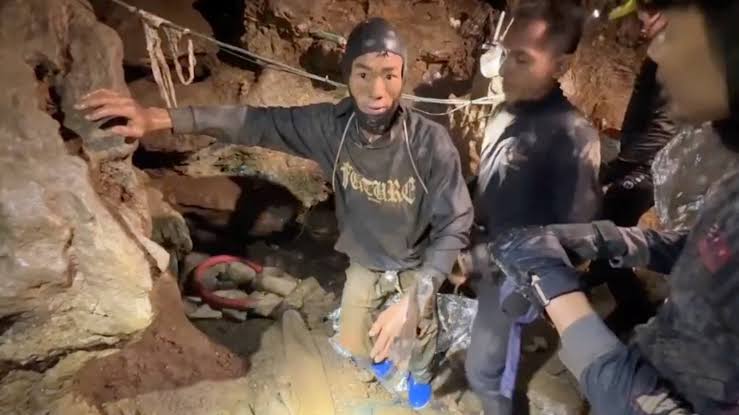
After days of pumping water and clearing parts of the route, specialist divers reached the five men. They were found huddled in a tight section of the cave, their clothes, faces and hands covered in mud, but rescuers said they appeared to be in relatively good condition considering how long they had been underground. Food and basic medical attention were provided, while the team tried to work out how to get them through the flooded sections to the entrance.
The discovery produced an enormous sense of relief because the men had already spent about a week without normal access to food, water or sunlight. It also created a new problem: finding people alive in a flooded cave is only the first stage of a rescue. The route out remained dangerous, and the rescuers could not simply guide five exhausted men through the tunnels as though they were walking down an ordinary passage.
Getting Them Out Was The Real Challenge
The first man was eventually brought out by a specialist cave diver on May 29. The escape involved diving equipment through flooded sections of tunnel, with the rescuer physically guiding the exhausted survivor through the submerged route. Finnish cave diver Mikko Paasi, who had also taken part in the 2018 Tham Luang rescue in Thailand, was among the specialists involved.
The conditions were remarkably restrictive. One rescuer described parts of the cave as requiring specialists to squeeze through tunnels for hundreds of meters, while reports from the operation described sections only around 60 centimeters wide and, later, even tighter clearances in flooded areas. Water levels also changed the route from day to day, meaning a passage that was manageable at one moment could quickly become more dangerous after another burst of rain.
Then something happened that the rescuers were not expecting.

Four Men Crawled Out On Their Own
On May 30, the remaining four survivors emerged from the cave mouth after water levels had fallen enough for them to move without scuba equipment. Rescue divers were still preparing to enter when the men suddenly appeared, one after another, muddy, exhausted and overwhelmed by the sunlight and the people waiting outside. According to ABC, some collapsed in relief and joy as they reached safety.
They had spent about 10 days underground. Australian cave diver Josh Richards, who had been preparing to enter the system, said the four had apparently recognized that the water had dropped far enough for them to take the chance and crawl through the remaining roughly 350 meters toward the entrance. The scene was a dramatic reversal from the days of uncertainty that had preceded it, as family members and rescuers finally watched the five survivors reach the surface.
But Two Men Were Still Missing
The successful rescue of five men left one unanswered question: where were the other two?
Authorities believed the missing men had gone deeper into the cave, and international teams continued searching through additional passages and possible alternative routes. Rescuers used pumps to reduce water levels and explored vertical tunnels in the surrounding jungle, while also considering tools such as radar and satellite imagery to identify possible shafts or other ways into the underground system.
The search quickly became harder again. Heavy rain repeatedly raised water levels, equipment problems slowed the operation, and rescuers faced unstable rock and falling boulders inside the cave. By June 6, officials and rescue specialists had decided that continuing the search had become too dangerous, and the operation was suspended while conditions were monitored.
The decision was not made because rescuers had proved that the two men were dead. It was made because entering the unstable sections of the cave could put additional lives at serious risk, especially with more rain forecast and parts of the entrance showing signs of collapse. The five survivors were safe, but the fate of the remaining two men was still unresolved when the search was called off.
A Rescue Built On Experience From Another Famous Cave
The international response brought together rescuers from Laos and several other countries, including Thailand, Australia, Finland, France, Indonesia, Japan and Malaysia. Several of the specialists had experience in difficult cave rescues, including the 2018 operation in Thailand that brought 12 young soccer players and their coach out of the flooded Tham Luang cave.
That experience mattered because cave rescue is rarely a simple matter of finding a person and leading them back to the entrance. Divers have to understand the cave’s geography, water movement, air supply and structural hazards while also managing frightened or exhausted people who may have little experience with specialized diving equipment. In Laos, every decision was complicated by the fact that weather could change the cave faster than rescuers could prepare for it.
Five Came Home. The Cave Kept One Last Secret.
The most astonishing part of the Laos rescue may be that the five men were found alive at all. They had spent days underground after a flash flood transformed a remote cave into a sealed and hostile environment, yet rescuers eventually reached them, brought one man through flooded passages and watched four others make their own way out when the water receded.
But the story did not end with the cheers at the cave entrance. Two men remained missing, and the rescue operation eventually had to stop because the cave itself had become too dangerous to enter safely. That leaves the Laos incident with an unusual and unsettling ending: five families got their loved ones back, while two others were left without the answer everyone had been hoping for.
Seven men went into a remote cave in central Laos looking for gold. After heavy rain caused flooding and landslides, they became trapped underground, and rescuers spent days fighting water, unstable rock and extremely narrow passages to reach them. Five were eventually found alive, one was brought out by specialist divers, and the other four crawled to the entrance after the water level dropped. Their survival after roughly 10 days underground was remarkable, but the rescue still ended without a complete resolution. Two other men remained missing, and on June 6 rescuers suspended the search because deteriorating conditions made further attempts too dangerous. The operation became a powerful reminder that in cave rescue, finding survivors can be only the beginning of the hardest part.
P.S. The main timeline is based on reporting from The Guardian, ABC News, Reuters/AP and other international coverage published during the rescue. The five survivors were successfully brought out by May 30, while the search for the remaining two men was suspended on June 6 because of worsening conditions inside the cave. Source: https://www.theguardian.com/world/2026/may/27/five-villagers-found-alive-in-laos-cave-as-search-continues-for-two-missing