In 1622, a Spanish galleon carrying one of the richest cargoes ever sent across the Atlantic disappeared beneath the waters off Florida. For more than three centuries, the Nuestra Señora de Atocha remained lost, along with tons of silver, gold, emeralds, coins and other treasures from the Spanish Empire. Then, in 1969, a determined treasure hunter named Mel Fisher began searching for the wreck. He spent 16 years following scattered clues across the ocean floor, enduring years of failure and a devastating family tragedy. On July 20, 1985, the search finally ended with a message that changed everything: “Put away the charts; we’ve found the main pile.”
The Spanish Galleon That Carried A Fortune
On September 4, 1622, a Spanish treasure fleet of 28 ships left Havana, Cuba, beginning the return journey to Spain. These were not ordinary merchant vessels. They carried wealth collected from across the Americas, including silver from Peru and Mexico, gold and emeralds from Colombia, and pearls from Venezuela and Panama. The fleet represented an enormous concentration of wealth belonging to the Spanish Empire, but it was also sailing directly into one of the most dangerous stretches of ocean in the Caribbean.
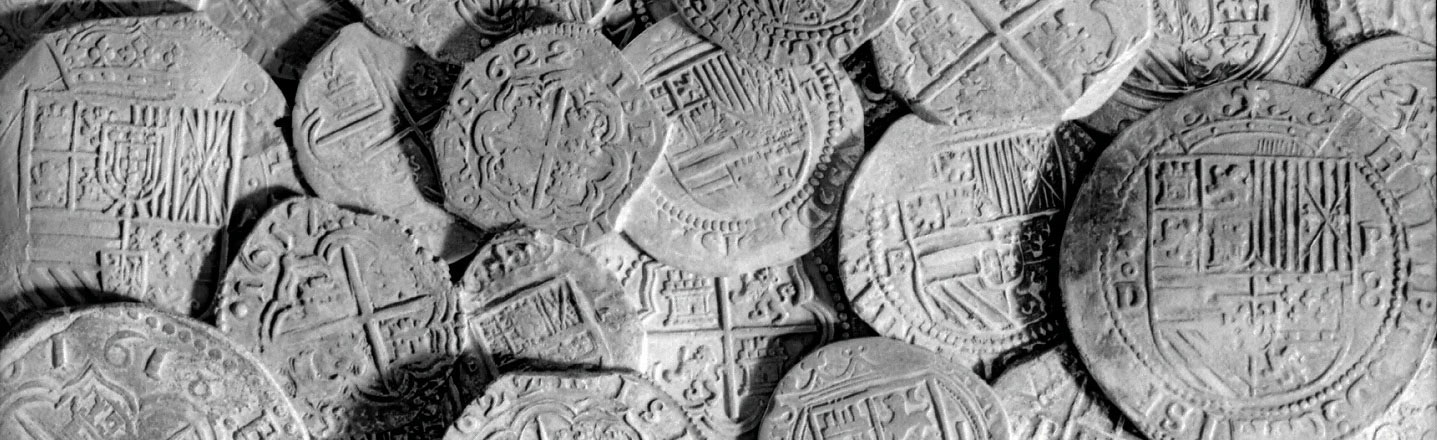
The following day, a hurricane overtook the fleet as it entered the Florida Straits. By September 6, seven ships had been destroyed, scattered across the waters between the Marquesas Keys and the Dry Tortugas. Among them was the Nuestra Señora de Atocha, a heavily loaded galleon carrying an extraordinary cargo. According to the records preserved by the Mel Fisher Maritime Museum, the ship carried roughly 24 tons of silver bullion in more than 1,000 ingots, silver coins, copper ingots, gold bars and discs, bronze cannon, worked silverware, tobacco, indigo and other goods. There were also unregistered jewels and personal possessions aboard.
The Atocha sank with 265 people aboard. Only five survived, clinging to the remains of the ship’s mizzenmast above the water. Rescuers knew where the wreck had gone down, but the ship itself was already beyond their reach. At a depth of about 55 feet, divers of the period could not safely enter the flooded hull, and attention turned to rescuing survivors and recovering cargo from other wrecked ships. Then, on October 5, another hurricane struck. It further destroyed the Atocha and scattered its remains across miles of ocean.
For the next 60 years, Spanish salvagers searched for the lost galleon. They failed. Eventually, the Atocha became something more than a wrecked ship. It became a lost fortune, hidden somewhere beneath the waters of the Florida Keys.
Dive into the incredible true story of Mel Fisher and his lifelong obsession with finding the legendary Nuestra Señora de Atocha. Watch as he overcomes massive challenges, personal loss, and years of searching to uncover a $500 million fortune. Witness the hunt for history’s most valuable shipwreck today!
Mel Fisher Spent 16 Years Following A Trail Of Clues
More than three centuries later, Mel Fisher decided to find it.
In 1969, Fisher and his Treasure Salvors crew began what would become a 16-year search for the Atocha. The challenge was not simply finding a shipwreck. The hurricanes had scattered the wreckage, cargo and artifacts across a huge area, leaving the searchers with no intact ship sitting neatly on the seabed. Instead, they had to follow what Fisher described as a breadcrumb-like trail of clues. Some days produced fragments that suggested they were getting closer. Other stretches produced almost nothing.
Fisher nevertheless kept his crew moving with a simple phrase: “Today’s the day.” The words became more than a slogan. They captured the strange psychology of treasure hunting, where years of disappointment can be followed by a single discovery that suddenly makes everything seem worthwhile. Every piece of metal, coin or wreckage could potentially point toward the main concentration of cargo.
In 1973, the search produced a breakthrough. The team found three silver bars whose weights and tally numbers matched records from the Atocha‘s cargo manifest, preserved in Seville. Suddenly, they had something much more valuable than silver. They had evidence that they were following the trail of the correct ship. Two years later, Fisher’s son Dirk found five bronze cannon whose markings provided an even stronger identification. But the discovery came with a terrible price.

Then The Search Turned Into A Family Tragedy
Only days after the cannon were found, tragedy struck the Treasure Salvors crew. Dirk Fisher, his wife Angel and diver Rick Gage were killed when their salvage boat capsized and sank. The loss devastated the group, transforming the search from a difficult business venture into something deeply personal.
For many treasure hunters, such a tragedy might have been the point at which the search ended. Fisher and his remaining crew decided otherwise. They continued following the clues left behind by the wreck, convinced that the main concentration of the Atocha‘s treasure was still somewhere beneath the sea.
Their persistence eventually produced another extraordinary discovery. In 1980, the team located the wreck site of the Santa Margarita, another ship from the same 1622 fleet. They recovered part of its wooden hull, along with ballast stones, cannonballs and a remarkable collection of artifacts, including gold bars, jewelry and silver coins. The discovery demonstrated that the waters around the Florida Keys still contained enormous pieces of the lost fleet. But Fisher still wanted the Atocha.
There was another obstacle as well: ownership. The treasure was not simply sitting in international waters waiting for whoever found it. Fisher and Treasure Salvors spent years fighting state and federal authorities over the rights to the wrecks and the material recovered from them. In 1982, the U.S. Supreme Court ruled in favor of Fisher and Treasure Salvors, establishing their ownership of the recovered items. The legal battle was over, but the greatest discovery was still ahead.

“Today’s The Day” Finally Became True
Then came July 20, 1985. Kane Fisher, Mel’s son and captain of the salvage vessel Dauntless, was leading the operation when the search finally produced the discovery everyone had been waiting for. He sent a message back to headquarters that became famous in the history of shipwreck hunting:
“Put away the charts; we’ve found the main pile!”
The team had found the elusive cargo hold of the Atocha. Divers described the concentration of silver bars as looking like a reef made of silver. Within days, the markings on the bars were compared with the ship’s historical cargo records, confirming that the team had finally reached the wreck’s main treasure concentration. After 16 years, the search was over.
But what they found was even more extraordinary than the treasure hunters had imagined.
The wreck yielded silver bars and coins intended for the Spanish treasury, gold bars, a solid gold belt, a gem-studded necklace, religious and secular jewelry, fine silverware and an unusual gold chalice designed to help protect its user from poisoning. One gold chain weighed more than seven pounds. Among the most remarkable finds was an enormous uncut emerald weighing 77.76 carats, traced by experts to Colombia’s Muzo mine.
For a treasure hunter, this was an extraordinary fortune. For historians and archaeologists, however, the discovery represented something even more important.
The Real Treasure Was More Than Gold
The Atocha had spent more than 350 years beneath the sea, and its surviving artifacts created an extraordinary window into the world of the seventeenth century. The wreck contained rare navigational instruments, weapons, tools, ceramic vessels, galley equipment and objects associated with Indigenous American cultures. Researchers also recovered much less glamorous items, including seeds and insects, that could reveal details about what people carried aboard ships during the colonial era.
That distinction matters because shipwrecks are not simply underwater treasure chests. They are time capsules. Every object tells researchers something about trade, technology, religion, warfare, travel and daily life. Even a piece of ordinary equipment can become historically valuable when it has been preserved as part of a specific moment in time.
The surviving portion of the Atocha‘s lower hull was also documented and recovered for preservation and research. Many of the artifacts required careful conservation because centuries in salt water had left them in an extremely unstable condition. The material had to be treated carefully after being removed from what had effectively become an underwater tomb.
Today, artifacts from the Atocha and the Santa Margarita form the foundation of the permanent collection at the Mel Fisher Maritime Museum in Key West. The museum presents the discoveries not simply as a story about money, but as an opportunity to understand the maritime world of colonial-era Florida and the wider Caribbean. And that may be the most remarkable part of the entire story. The treasure attracted the headlines, but the wreck preserved a world.

The Ship That Refused To Stay Lost
The Nuestra Señora de Atocha disappeared in a hurricane in 1622, taking hundreds of lives and an extraordinary cargo to the bottom of the sea. Spanish salvagers searched unsuccessfully for decades, but the wreck was eventually forgotten beneath centuries of water, storms and shifting seabed. Then Mel Fisher came along.
For 16 years, he searched through fragments and false hopes, following tiny clues across the ocean floor. He endured years when the treasure seemed impossibly distant and continued after the deaths of his son Dirk, daughter-in-law Angel and diver Rick Gage. In 1985, the main concentration of the Atocha was finally found, revealing a fortune in silver, gold, emeralds and other artifacts that had been hidden since the seventeenth century.
Yet the most enduring part of the story may not be the treasure itself. It is the idea that something can disappear so completely that generations assume it is gone forever—and still be waiting to be found. The Atocha was lost for more than 360 years. Mel Fisher simply refused to believe it was gone.
In 1622, the Nuestra Señora de Atocha disappeared beneath the waters of the Florida Keys, taking hundreds of lives and an extraordinary cargo of silver, gold, emeralds and other treasures with it. More than three centuries later, Mel Fisher began a 16-year search that brought years of failure, remarkable discoveries and devastating personal loss. Then, in 1985, his crew finally found the ship’s “main pile.” The treasure was extraordinary, but the artifacts revealed something even more valuable: a lost chapter of seventeenth-century life had been waiting beneath the sea all along.
This story draws primarily on the historical research and archival material published by the Mel Fisher Maritime Museum about the 1622 Spanish treasure fleet, the Nuestra Señora de Atocha, and Mel Fisher’s 16-year search for the wreck. The museum’s account also provides details about the cargo, the tragedies that struck the Treasure Salvors team and the archaeological significance of the artifacts recovered from the shipwreck. Source: https://www.melfisher.org/copy-of-1622-galleons