For more than 700 years, Ancestral Pueblo people built communities across the American Southwest, farming corn, beans and squash, shaping stone into multi-story homes and creating some of the most remarkable settlements in North America. At Mesa Verde, some families eventually moved into villages tucked beneath massive sandstone cliffs. At Chaco Canyon, builders created great houses with hundreds of rooms and carefully engineered masonry. Then, during the 1200s, people began leaving parts of the Four Corners. Their descendants did not disappear, but the movement changed the map of Pueblo life forever.
They Built A Life In One Of The Driest Parts Of North America
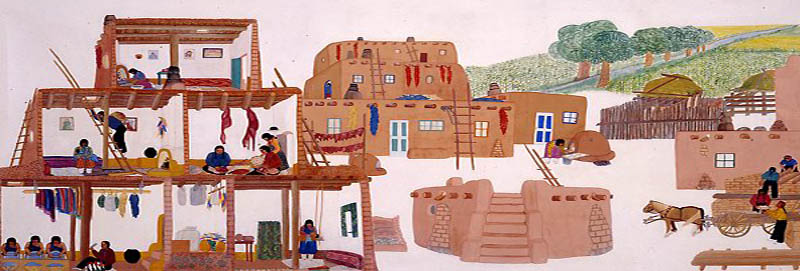
The Four Corners region, where present-day Colorado, New Mexico, Arizona and Utah meet, is not an easy place to support large agricultural communities. Yet Ancestral Pueblo people learned how to make use of the landscape over generations. At Mesa Verde, they grew corn, beans and squash, hunted animals and gathered wild plants, while gradually moving from earlier pithouses to larger adobe and stone settlements. By around 1000 CE, some communities were building multi-story houses from carefully shaped stone, creating villages that were far more substantial than the surrounding landscape might suggest.
Over the centuries, these communities became part of a much larger cultural network. The Ancestral Pueblo world stretched across the Four Corners, and at its height may have included tens of thousands of people living in different settlements. They traded, farmed, made pottery and developed traditions that connected communities separated by long distances. What survives today is therefore not the story of one isolated city, but of a broad network of people adapting to a difficult environment over many generations.
Step back in time. Discover the ancient mysteries of the Ancestral Puebloans and their breathtaking cliffside homes at Mesa Verde. A true masterpiece of human history! Watch now.
Then They Started Building Villages In The Cliffs
The famous cliff dwellings of Mesa Verde came relatively late in this long history. Beginning in the late 1100s, people increasingly built homes inside natural alcoves in the canyon walls, using sandstone blocks and mud mortar to create compact villages. Some were tiny settlements, while others became large communities with dozens or even more than 150 rooms. Cliff Palace, the best-known example, was one of these extraordinary multi-room settlements. Many cliff dwellings also contained kivas, underground spaces believed to have been used for ceremonial purposes.
The location of these villages was not simply about creating dramatic architecture. Many cliff dwellings were positioned near springs and other reliable water sources, while the alcoves themselves offered natural shelter. In a landscape where water could determine whether crops succeeded or failed, choosing where to build was an important part of survival. The sandstone walls that make the sites look almost impossible to reach today were therefore also part of a practical response to the environment.

Chaco Shows How Large Their Communities Could Become
Mesa Verde is often the image people remember, but it was only one part of the Ancestral Pueblo world. Farther south, Chaco Canyon became the center of another extraordinary period of construction between roughly 850 and 1250 CE. Chacoan builders created great houses with hundreds of rooms, plazas, terraces and kivas, using distinctive masonry and transporting timber and other materials from considerable distances. The scale suggests an organized system capable of bringing people, resources and ideas together across a large region.
Chaco also shows why the story should not be reduced to a single settlement suddenly being abandoned. Archaeologists see evidence of movement between communities, changing agricultural conditions and shifting centers of population. The National Park Service notes that after about 1300, exact migration routes remain uncertain, but Chacoan communities moved in multiple directions and joined established groups rather than simply disappearing. Some moved south toward the Zuni-Acoma area, west toward the Hopi mesas, east toward the Rio Grande and north toward the Mesa Verde region.
Then The Climate Became Much Harder To Live With
The biggest changes came during the 1200s, when drought, declining resources and social change placed increasing pressure on many communities. Tree-ring evidence preserved in ancient wooden beams shows that the region experienced prolonged droughts, including a severe dry period beginning around 1276 that lasted for decades. At Mesa Verde, archaeological evidence points to crop failures, limited resources and changes in settlement patterns during the same broad period.
Climate, however, is only part of the explanation. Centuries of farming and heavy use of forests, soils and wildlife may also have reduced the resources available locally. Population pressure, changing social relationships and the search for better opportunities could have influenced individual communities as well. The National Park Service stresses that there is no single proven explanation for why everyone moved, and the reasons may have differed from place to place.
That distinction matters because it changes the entire story. The Ancestral Pueblo people were not simply forced out by one catastrophic event, nor did an entire civilization vanish overnight. In some places, families appear to have moved gradually, village by village, over a period of decades. Migration itself was part of Pueblo history, and people had moved between communities long before the final depopulation of areas such as Mesa Verde.

The Villages Were Abandoned, But The People Were Not
By around 1300, Mesa Verde had been largely depopulated, and many of the cliff settlements no longer functioned as permanent homes. To modern eyes, that can make the sites look like the remains of a vanished civilization. But that interpretation is misleading. The people who left Mesa Verde did not simply disappear from history; many moved south into areas where related communities were already established.
The descendants of these communities are part of the Pueblo peoples who live in the Southwest today. The National Park Service identifies modern Pueblo communities, including the Hopi, Zuni, Acoma and pueblos along the Rio Grande, as descendants connected to the ancient populations of the region. Oral traditions, clan histories and continuing cultural relationships also connect modern communities with places such as Mesa Verde and Chaco.
That continuity is one of the most important parts of the story. The empty rooms and silent kivas preserved at archaeological sites are not the final chapter of a people who disappeared. They are traces of earlier homes belonging to ancestors of living communities whose histories continued elsewhere.

What Remains In The Desert Is A Record Of Movement
Today, Mesa Verde contains nearly 5,000 known archaeological sites, including hundreds of cliff dwellings, while Chaco preserves thousands of cultural sites associated with centuries of occupation. Their stone walls make it easy to imagine a civilization frozen in time, but the archaeology tells a more dynamic story. These places were built, modified, occupied and eventually left as people adapted to changing environmental and social conditions.
The most fascinating question, then, may not be why the Ancient Puebloans “disappeared.” It is how communities that had spent centuries mastering the landscape recognized when that landscape was no longer supporting the life they wanted to maintain. They built enormous stone settlements, cultivated crops in difficult conditions and maintained connections across a vast region. When circumstances changed, many moved again. The cliffs remained. The villages remained. The people continued their journey.
The Ancestral Pueblo story is far more compelling than the idea of a civilization that simply vanished. For centuries, people across the Four Corners built farms, villages and monumental stone communities in a demanding environment. At Mesa Verde and Chaco, their architecture reached remarkable scale, yet prolonged drought, declining resources and broader social changes eventually encouraged migration. By the end of the 13th century, major settlements had been left behind, but their people had moved into new communities farther south, west and east. Their descendants still live in the Southwest today.
The original Legends of America article provides a broad historical overview of the Ancient Puebloans, their settlements and the archaeological sites they left across the Southwest. National Park Service sources add important context about Mesa Verde, Chaco Canyon, migration patterns and the connection between these ancient communities and modern Pueblo peoples. Source: https://www.legendsofamerica.com/na-ancientpuebloans/