When the Titanic disappeared beneath the North Atlantic in April 1912, the world knew exactly what had happened: the great ocean liner had sunk after striking an iceberg, taking more than 1,500 lives with it. But knowing that the ship was at the bottom of the ocean was very different from knowing where to find it. For 73 years, expeditions searched for the wreck and failed. The ocean was enormous, the depth was crushing and the ship’s final position was less certain than people imagined. Then, in 1985, Robert Ballard changed the way the search was being conducted. He stopped looking for the Titanic itself and began looking for the trail it had left behind.
Everyone Knew The Titanic Had Gone Down
The Titanic sank in the early hours of April 15, 1912, after striking an iceberg during its maiden voyage from Southampton to New York. More than 1,500 people died, making the disaster one of the most famous maritime tragedies in history. Yet once the ship disappeared beneath the waves, another problem began: nobody could simply point to the exact spot on the ocean floor and say, “There it is.”
The Titanic had transmitted distress signals before sinking, but those signals did not provide a perfectly reliable final position. The ship was moving, currents were affecting the wreck and different reports about its final moments created uncertainty about where the remains had actually come to rest. Even a relatively small error in the estimated position could translate into a search area covering many square miles.
That problem was made dramatically worse by the environment. The wreck eventually came to rest more than 12,400 feet beneath the surface of the North Atlantic, where there is no sunlight and the pressure is enormous. The ocean floor was not a flat, empty parking lot waiting to reveal a ship. It contained geological features capable of producing confusing sonar echoes, while the North Atlantic itself could make deep-sea operations extremely difficult.
For decades, people knew the Titanic was down there. What they did not know was exactly where.

But Nobody Knew Exactly Where It Was
The first attempts to locate the wreck began surprisingly soon after the disaster. In 1914, Charles Smith proposed using electromagnets to locate the ship, based on the idea that the Titanic’s large amount of steel might make it detectable. Other proposals followed over the next several decades, but the technology needed to search the deep ocean simply did not exist in a practical form.
By the 1950s, new sonar technology created fresh possibilities. Later expeditions attempted to search the seafloor using increasingly sophisticated equipment, but the problem remained enormous. A ship as large as the Titanic sounded easy to find in theory. In reality, finding one particular wreck on thousands of square miles of dark ocean floor was an entirely different challenge.
The depth alone eliminated ordinary diving. Humans could not simply descend to the wreck and search around. The Titanic lay almost 2.5 miles beneath the surface, far beyond the practical limits of conventional scuba diving. Any successful expedition would require specialized deep-sea technology capable of surviving crushing pressure while transmitting images or sonar information back to the surface.
There was another problem that would become crucial decades later: the Titanic had not simply fallen intact to the bottom.
As the ship broke apart during its descent, its bow and stern followed different paths, while heavier objects such as boilers dropped more directly and lighter debris was carried by underwater currents. The result was not just a single object sitting neatly on the seafloor. It was a wreck surrounded by a vast field of scattered material. The Titanic was not merely hidden. It had been scattered.
Ever wonder why it took 73 years to find the Titanic? From failed salvage attempts to revolutionary deep-sea discovery, uncover the gripping mystery behind one of history’s greatest tragedies. Watch the full story of the wreckage, the challenges, and the truth hidden beneath the waves. Click now to see more!
The First Attempts Were Almost Impossible
By the 1970s, oceanographers were developing increasingly sophisticated methods for exploring the deep sea. But even with better sonar and underwater cameras, locating the Titanic remained a huge undertaking.
Robert Ballard was already fascinated by the possibility. In 1977, he joined an unsuccessful expedition searching for the wreck, but the failure did not end his interest. Instead, it helped convince him that finding the Titanic would require a fundamentally different approach.
Ballard understood that the biggest obstacle was not simply reaching the depth. It was covering enough of the seafloor to make the search statistically meaningful.
Imagine searching for a single object across a huge dark landscape when you cannot see more than a small area in front of you. You can search for days and still pass surprisingly close to your target without ever knowing it. A sonar system might produce strange shapes, but geological formations could look like wreckage. A camera could reveal only the small section of seabed directly beneath the search vehicle.
The technology was improving, but the search strategy mattered just as much. And Ballard was about to gain experience that would change everything.
Then The Search Turned Into A Cold War Mission
The strangest part of the Titanic’s discovery story is that the expedition that found the wreck was not originally built around finding the Titanic.
In the early 1980s, Ballard approached the U.S. Navy seeking support for the development of deep-sea robotic technology. The Navy was interested, but for its own reasons. It wanted Ballard to help investigate the wrecks of two nuclear submarines, USS Thresher and USS Scorpion.
Ballard accepted the opportunity. The mission gave him access to advanced technology and deep-sea research resources that would otherwise have been extremely difficult to obtain.
In 1984, Ballard helped locate the wreckage of Thresher. The following year, the Navy sent him to investigate Scorpion. These missions taught him something extraordinarily valuable: how objects behaved as they sank through deep water.
Heavy objects tended to fall more directly toward the seafloor. Lighter material could be carried farther by currents. When a large vessel broke apart, the result could be a recognizable trail of debris spreading away from the main wreck. Ballard had found the clue he needed. If the Titanic had broken apart during its descent, perhaps he did not need to find the Titanic first. Perhaps he could find what the Titanic had left behind.
The 1985 expedition was a joint American-French effort involving Woods Hole Oceanographic Institution and France’s IFREMER. The French team used sophisticated sonar to narrow the search area, while Ballard’s team prepared to continue the search aboard the research vessel Knorr.

Robert Ballard Had One Big Problem
By the time Ballard’s team began its part of the 1985 search, there was not much time.
The French team had already spent weeks systematically scanning the seafloor and eliminated more than 75 percent of the initial search area. But the wreck had still not been found. When Ballard’s team took over aboard Knorr, it had only about 12 days of ship time remaining.
Searching for the entire Titanic hull directly would have required a much tighter search pattern. That could consume the remaining time without guaranteeing success.
So Ballard made a gamble.
Instead of looking for the ship, his team began searching for the debris field.
It was a deceptively simple change. The Titanic was enormous, but the area in which its scattered debris could be detected was much larger. By following the trail rather than trying to locate the main wreck immediately, the team could cover more seafloor in less time.
The strategy had been informed by what Ballard had learned while studying the submarine wrecks. The seafloor itself could tell the researchers where a wreck had been, even if the wreck was not immediately visible.
The team began methodically moving across the ocean floor, repeatedly sweeping back and forth. It was slow, exhausting work. For hours, the monitors showed little more than darkness and featureless seabed. Then, shortly after 1 a.m. on September 1, 1985, something appeared.
He Stopped Looking For The Titanic
The object on the screen did not immediately look like the Titanic. It was a boiler.
But it was unmistakably man-made, and its distinctive characteristics gave the exhausted researchers their answer. They had found part of the Titanic’s wreckage. The team followed the debris trail, and the wreck itself soon emerged from the darkness. After 73 years, the Titanic had finally been found.
The discovery came at more than 12,400 feet below the surface. Ballard and French scientist Jean-Louis Michel had located the wreck roughly 380 miles southeast of Newfoundland, in international waters. The Titanic had been sitting on the seabed for more than seven decades, almost completely invisible to the world above.
The moment was extraordinary, but the way the discovery happened was perhaps even more important.
The Titanic had not been found because someone suddenly developed a perfect machine capable of seeing the entire ocean floor. It was found because researchers combined better technology with a better understanding of what they were actually looking for.
Ballard had realized that the wreck itself might be difficult to find. The debris could lead him to it. That insight transformed the search.
Then A Boiler Appeared On The Screen
The discovery immediately became one of the most famous moments in the history of ocean exploration. Images transmitted from the deep showed fragments of the great liner resting in darkness, finally giving the world a physical connection to a disaster that had previously existed largely through photographs, survivor testimony and historical accounts.
But there was also something haunting about seeing the wreck.
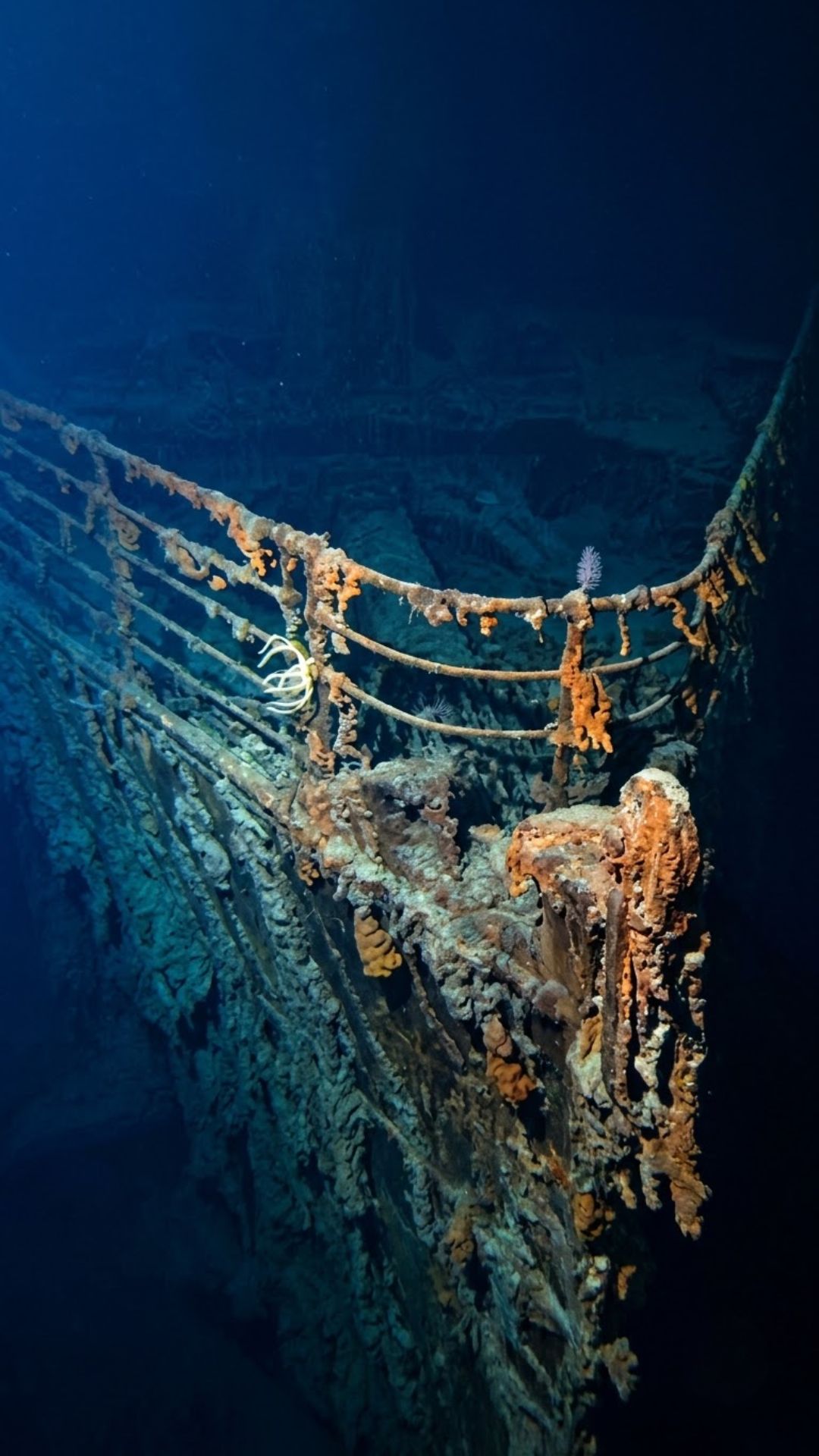
The Titanic was no longer the magnificent ocean liner that had left Southampton in 1912. Its bow rested on the seabed while the stern lay farther away, surrounded by debris scattered across the ocean floor. The structure had been exposed to decades of extreme pressure, cold water and biological processes that gradually transformed the once-famous ship.
In 1986, Ballard and a WHOI team returned to the wreck with the research submersible Alvin and the remotely operated vehicle Jason Jr. Those vehicles allowed researchers to get much closer to the wreck and capture detailed images that had been impossible during the initial discovery.
The wreck became more than a historical curiosity.
It became an underwater laboratory.
Scientists could study how metals deteriorated in the deep ocean, how microorganisms interacted with the wreck and how a major shipwreck changed over time. At the same time, the site became a powerful memorial to the more than 1,500 people who died when the Titanic sank.
The Wreck Was 12,400 Feet Below The Surface
The depth of the Titanic is one of the simplest explanations for why it took so long to find.
At more than 12,400 feet, the wreck lies in a world completely different from the ocean surface. Sunlight cannot reach it. Temperatures are extremely low, and the pressure is enormous. Ordinary diving equipment is useless at such depths.
In 1912, there was no realistic way to reach the wreck at all.
Even decades later, reaching it remained a major technological achievement. The 1985 expedition relied on remotely operated and towed systems such as Argo and ANGUS to send cameras and imaging equipment into the darkness while researchers watched from the surface.
That technology changed deep-sea exploration.
The successful use of Argo and related systems demonstrated that scientists could search huge areas of deep ocean without placing human beings directly at extreme depths. The discovery of Titanic therefore mattered for more than one famous shipwreck. It helped demonstrate a new way of exploring parts of the planet that had previously been almost inaccessible.
The Titanic had taken 73 years to find partly because the ocean had hidden it.
But it had also taken 73 years because humanity had needed time to develop the tools capable of looking properly.
Why Did It Take 73 Years?
The answer is not one dramatic failure.
It was the combination of several problems.
The Titanic’s final position was uncertain. The North Atlantic was difficult to search. The wreck lay at extraordinary depth. The ship had broken apart, scattering debris over the seafloor. Early technology could not reach the required depth, while later technology still faced the enormous challenge of searching a huge area.
And perhaps most importantly, earlier searches did not yet have Ballard’s crucial insight.
They were looking for the ship.
Ballard looked for the evidence the ship had left behind.
That distinction sounds obvious only after the fact. Before the wreck was found, however, researchers had to decide where to search, how wide their search lines should be and what kind of object they should expect to see.
The 1985 expedition combined historical research, sonar mapping, underwater imaging, knowledge gained from submarine wrecks and a willingness to change strategy when the obvious approach was not working. That is why the discovery was not simply a technological triumph. It was a triumph of reasoning.
The Discovery Became A New Chapter In Titanic History
Finding the wreck did not end the Titanic story. In many ways, it began another one.
The discovery generated enormous public fascination. The wreck became the subject of scientific research, documentaries, expeditions and later deep-sea exploration. Filmmaker James Cameron would eventually make numerous dives to the site, while the wreck itself became one of the most recognizable underwater archaeological sites in the world.
Yet the discovery also changed how people understood the disaster.
For decades, the Titanic had existed primarily as a story about the night it sank. The wreck gave researchers physical evidence of what had happened afterward. The ship had broken apart. Its bow and stern had come to rest separately. Debris had spread across the seabed, preserving a record of the final moments of the descent.
The ocean had preserved the remains, but not perfectly.
The wreck continues to deteriorate, which makes the discovery itself a race against time for scientists seeking to document what remains. The Titanic is not a frozen museum sitting untouched on the seafloor. It is an active archaeological site undergoing slow physical and biological change.
That makes the images captured in 1985 even more valuable.
They recorded the wreck at a particular moment in its long history—only seven decades after the disaster, but before decades of further deterioration changed its appearance.
The Titanic Took 73 Years To Find
The most remarkable part of the Titanic’s discovery may not be that the ship was eventually located.
It is that the search required people to rethink what “finding” something actually meant.
For decades, researchers imagined the problem as one of locating a huge ship somewhere in the Atlantic. But the ocean was too large, the wreck was too deep and the position was too uncertain for that approach to work efficiently.
Robert Ballard’s breakthrough came when he used knowledge from another set of wrecks to change the question.
Instead of asking, “Where is the Titanic?”
He effectively asked, “Where would the Titanic have left a trail?”
That question led researchers to the debris field, and the debris field led them to the ship.
On September 1, 1985, after 73 years beneath the North Atlantic, the Titanic was no longer simply a legendary ship that had disappeared into the darkness. It had become a physical wreck that scientists could finally see and study. The world had spent seven decades searching for the Titanic. In the end, the Titanic’s own debris showed them where to look.
The Titanic sank in 1912, but it took 73 years to find the wreck. The problem was not simply the depth of the ocean. Conflicting position reports, enormous search areas, scattered debris and limited technology made the wreck extraordinarily difficult to locate. In 1985, Robert Ballard changed the strategy, using lessons from submarine wrecks to search for the Titanic’s debris trail instead of the ship itself. Just after 1 a.m. on September 1, a boiler appeared on the screen. It was the clue that finally led the world back to the Titanic.
This story draws primarily on research and historical records from Woods Hole Oceanographic Institution, whose scientists were directly involved in the 1985 discovery, along with National Geographic’s reporting on Robert Ballard, the search and the Cold War mission behind the expedition. These sources provide the clearest account of why earlier searches failed and why the decision to follow the debris trail finally succeeded. Source: https://mahabahu.com/the-titanic-why-did-it-take-73-years-to-find/