For decades, visitors to New York City’s Merchant’s House Museum could walk past an ordinary-looking set of drawers without realizing that one of them concealed a remarkable secret. Beneath the bottom drawer was a wooden hatch leading into a narrow passage about 15 feet deep, complete with a ladder. The museum had known about the unusual space for decades, but its original purpose remained a mystery. Recent research into the house and its builder, Joseph Brewster, has led historians to believe that the passage may have been connected to the Underground Railroad.
The Secret Was Hidden Inside an Ordinary Drawer
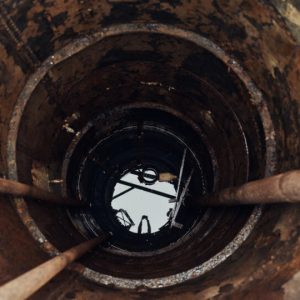
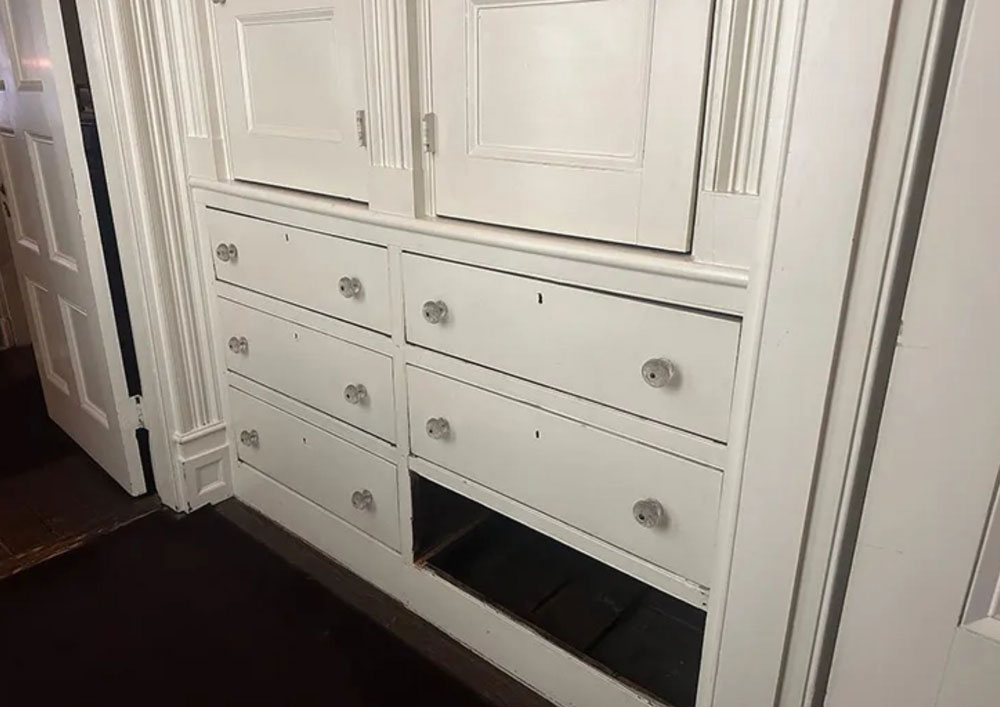
The hidden passage is located in a second-floor hallway of the Merchant’s House Museum, a historic Manhattan home built in 1832. At first glance, the built-in chest of drawers looks like an ordinary piece of furniture. But when the bottom drawer is removed, a small wooden hatch can be found underneath it. Opening the hatch reveals a narrow shaft that descends roughly 15 feet into the lower part of the house. A built-in ladder allows someone to climb down into the confined space.
The entrance is particularly intriguing because it was not openly visible. Someone standing in the hallway would have had little reason to suspect that the furniture concealed a passageway beneath the floor. The design suggests that secrecy was an important part of its construction.

For Decades, Nobody Knew What the Passage Was For
The museum had known about the passage since around the 1930s, but its original function was unclear. Over the years, several explanations were considered, including the possibility that it was related to household maintenance or the home’s unusual pocket doors.
None of those theories fully explained why the entrance had been hidden beneath a drawer or why the passage had been constructed in such an unusual way. It was not a normal staircase or an easily accessible service area. It was narrow, concealed and difficult to discover unless someone already knew where to look.
The mystery remained until researchers began taking a closer look at the history of the building itself.
The Merchant’s House was built by Joseph Brewster, a 19th-century merchant and craftsman. Research into his life revealed an important detail: Brewster was an abolitionist.
That discovery changed the way researchers viewed the hidden passage. Instead of treating it simply as an unusual architectural feature, they began considering whether it could have served a more secretive purpose.
Researchers also found evidence that Brewster had been involved with another property where workers had constructed a concealed space. That made the possibility of deliberate hidden architecture more difficult to dismiss.
If Brewster was willing to incorporate secret spaces into buildings elsewhere, the hidden passage beneath the drawer might not have been an accident.
It may have been designed for a reason that could not safely be made public.
Watch the video for a closer look inside the historic Merchant’s House and the hidden sanctuary that may reveal how Joseph Brewster and others risked helping enslaved people seeking freedom.
Why Historians Believe It May Have Been Part of the Underground Railroad
Researchers have not claimed that every detail of the passage’s history is known, and there is no complete record identifying every person who may have used it. However, several features have contributed to the theory that it may have been part of the Underground Railroad.
The entrance is deliberately concealed beneath a built-in drawer. The passage descends roughly 15 feet and is narrow enough that it would have been extremely uncomfortable for ordinary daily use. Its construction also appears to date back to the original period of the house rather than being a much later modification.
Those characteristics make the space consistent with a temporary hiding place rather than a conventional part of the home’s circulation.
The Underground Railroad was not a literal railroad. It was a loose network of people, homes, churches and other locations that helped enslaved people escape toward freedom. Safe places along these routes needed to remain hidden because helping freedom seekers could expose abolitionists and other participants to serious danger.
If the passage at the Merchant’s House was used for this purpose, its hidden entrance would have been one of its most important features. A person looking for an escape route would not want to find an obvious tunnel entrance. They would want something that looked completely ordinary. In this case, that ordinary object may have been a drawer.
New York Had Its Own Underground Railroad Story
The Underground Railroad is often associated with rural roads, forests and secret routes through the countryside, but New York City also played a role in the movement to help freedom seekers.
During the 19th century, New York was home to abolitionists and Black communities that became part of the wider struggle against slavery. At the same time, freedom seekers arriving in the city could still face serious danger from people attempting to capture and return them.
That made secrecy essential. A safe house could not necessarily advertise itself as one. A hiding place needed to be concealed from visitors, neighbors and anyone who might be searching for an escaped enslaved person.
This broader historical context makes the hidden passage at the Merchant’s House particularly interesting. If it was used to shelter freedom seekers, it would have been part of a much larger story about resistance, abolition and the dangerous journey toward freedom.
The passage would not have been a destination. It would have been a place to disappear temporarily before continuing the journey.

The Passage Still Holds Clues From the Past
The physical details inside the passage provide some of the most fascinating clues. The shaft is approximately 15 feet deep, with a ladder allowing access. It is extremely narrow, reinforcing the idea that it was never intended to function as a comfortable everyday corridor.
Researchers have also identified wax drippings inside the space and found a fragment of 19th-century newspaper. These discoveries do not prove who used the passage or exactly what happened there, but they add physical evidence to an otherwise incomplete historical story.
The entrance itself may provide another clue. The bottom drawer shows differences in wear and repairs compared with similar built-in drawers elsewhere in the house. That suggests the drawer may have experienced unusual use over the years, although the evidence cannot tell us precisely why.
These details are small, but historical discoveries are often built from small details. A worn piece of furniture, an unusual wall, an old newspaper fragment or a hidden opening can sometimes reveal something that written records never preserved.
A Historic Discovery Now Faces a Modern Threat
The discovery of the passage has also created a new preservation challenge. The Merchant’s House Museum is located next to a proposed development project, and preservationists have raised concerns about the potential effect of construction on the historic building.
The concern goes beyond the hidden passage itself. The entire structure is an important surviving example of 19th-century New York architecture, and major construction nearby could potentially affect its walls, foundation and other historic features.
That creates an unusual twist in the story. A hidden part of the house survived for nearly two centuries before researchers began to understand what it might represent, only for the building itself to face a modern preservation challenge.
Discovering history is one thing. Keeping the physical evidence of that history intact is another.
The Drawer Was Ordinary. What It Hid Wasn’t
Perhaps the most remarkable part of the discovery is how ordinary the entrance looks. There is no dramatic underground doorway, no obvious staircase and no sign announcing that something important lies beneath the floor.
There is simply a drawer. For generations, people could have walked through the hallway without realizing that the furniture concealed a passage leading deep into the building. If the researchers’ interpretation is correct, that secrecy may have been exactly what Joseph Brewster intended.
For a person seeking freedom, the passage would have represented something very different from the architectural curiosity it is today. It may have provided a temporary place to hide from those searching for them, giving them a chance to continue their journey. That possibility gives the tiny passage a significance far beyond its size.

A Hidden Piece of New York History
The Merchant’s House Museum was already an important piece of New York’s architectural history. But the discovery of the hidden passage adds another layer to the story of the building and its original owner.
The evidence does not allow historians to reconstruct every moment that may have taken place there. We do not know exactly how many people entered the passage, when they entered or where they went afterward. The Underground Railroad interpretation remains a historical conclusion based on the available evidence rather than a completely documented fact.
But the combination of the passage’s unusual design, its concealed entrance and Joseph Brewster’s connection to abolitionism provides a compelling reason to investigate further.
The story also illustrates how much of history can remain hidden in plain sight. Buildings can preserve details that written records have forgotten, and ordinary objects can sometimes conceal extraordinary stories.
A house may appear to be nothing more than walls, floors and furniture. But beneath those surfaces, there can be evidence of choices people once had to make in secret.
For nearly 200 years, an ordinary drawer concealed a passage whose true purpose was gradually forgotten. Although historians cannot prove exactly who used it or how many people passed through, its unusual design and connection to abolitionist Joseph Brewster suggest that it may have played a role in helping freedom seekers escape slavery. Today, the passage is more than a hidden architectural feature—it is a rare physical reminder of the risks people once took in pursuit of freedom, and of how much history can remain hidden in plain sight.