Absinthe has spent more than a century surrounded by mystery. Its vivid green color, unusually high alcohol content and association with artists and bohemian culture helped create an image that was both glamorous and frightening. Critics once called it the “Green Demon” and blamed it for addiction, hallucinations, violence and even murder. The controversy reached a dramatic peak after a Swiss vineyard worker named Jean Lanfray killed his family in 1905. But the story was more complicated than the headlines suggested.
The Murder That Turned Absinthe Into a Monster
On August 28, 1905, Jean Lanfray began his day in Commugny, Switzerland, with a small amount of absinthe diluted with water. Later that morning, he continued drinking, consuming other alcoholic beverages before returning to work. By lunchtime, he had several glasses of strong wine, followed by more alcohol during the afternoon. On his way home, he stopped again for coffee and brandy, and later drank more wine with his father.
That evening, a long-running dispute between Lanfray and his wife escalated into a devastating act of violence. Lanfray killed his wife and two daughters before attempting to take his own life. He survived the attempt and was later arrested.
The tragedy shocked the small community, but people soon began searching for an explanation. Lanfray was known to drink absinthe regularly, and he had consumed two glasses of it that day. That detail quickly became the center of the story, even though his drinking throughout the day involved a much larger quantity of other alcoholic beverages.
The press seized upon the connection. Newspapers portrayed the incident as the “Absinthe Murder,” and public anger toward the drink grew rapidly. A petition calling for an absinthe ban collected 82,000 signatures in the region within weeks. Another violent crime involving an absinthe drinker helped strengthen the growing campaign against the beverage.
Absinthe had already developed a controversial reputation, but the Lanfray case gave its critics something powerful: a real tragedy that could be presented as evidence of everything they feared about the drink.

Why People Believed Absinthe Could Cause Madness
The fear surrounding absinthe did not begin with Jean Lanfray. The drink had been controversial for decades, partly because of its high alcohol content and partly because of its unusual reputation.
Modern absinthe developed from preparations involving wormwood, a plant whose leaves and flowers were traditionally used in medicinal drinks. The modern beverage emerged in Switzerland and eventually became particularly popular in France. By the 19th century, absinthe had become part of everyday social culture, with people gathering during the early evening for what became known as l’heure verte, or “the green hour.”
As its popularity grew, so did concerns about its effects.
Doctors, newspapers and temperance advocates began describing a condition known as “absinthism.” It was supposedly associated with symptoms such as seizures, sleep disturbances, speech problems and hallucinations. Some claimed that prolonged absinthe consumption could eventually lead to insanity.
The idea was persuasive because it offered a simple explanation for complicated problems.
If someone drank heavily, developed health problems and eventually experienced serious mental or physical difficulties, it was tempting to blame the distinctive green drink rather than consider the broader effects of chronic alcohol consumption, underlying mental health conditions or other factors.
Not every doctor accepted the idea that absinthism was a unique medical disorder. Even during the height of the controversy, some medical professionals questioned whether the supposed syndrome was actually distinct from alcoholism more generally.
Nevertheless, the concept became deeply embedded in popular culture.
Absinthe was no longer simply an alcoholic drink. It had become a symbol of excess.
Want to learn more about the strange history of absinthe and the controversy that turned the Green Fairy into the Green Demon? Watch the video and discover the story behind one of history’s most controversial drinks.
The Experiment That Seemed to Prove the Green Demon Was Dangerous
One of the most influential figures in the scientific controversy was French physician Valentin Magnan, who worked at Sainte-Anne, a major psychiatric institution in Paris.
In 1869, Magnan conducted experiments involving animals and wormwood oil. Some animals were exposed to alcohol, while others were exposed to wormwood oil. The animals exposed to the concentrated wormwood oil experienced seizures, while the animal exposed to alcohol became intoxicated without displaying the same reaction. Magnan interpreted these results as evidence that wormwood had a distinctive toxic effect.
The experiment helped strengthen the argument that absinthe was uniquely dangerous.
But there was an important problem.
The experiment involved animals exposed to concentrated wormwood oil. That was not the same thing as consuming a diluted alcoholic beverage containing a relatively small amount of wormwood.
Other medical authorities challenged Magnan’s interpretation, arguing that his experimental conditions could not simply be applied to ordinary human consumption of absinthe. They suggested that many of the problems attributed specifically to absinthe could instead be explained by excessive alcohol consumption.
The distinction was crucial, but it did little to stop the public controversy.
The idea of “absinthism” gave temperance advocates a convenient argument: perhaps people did not have to reject alcohol altogether. Perhaps absinthe was uniquely dangerous and could simply be removed.
That made the drink an ideal target. The scientific debate was complicated. The public narrative was not.

How Absinthe Became a Symbol of Crime and Moral Decay
By the beginning of the 20th century, opposition to absinthe had become part of a much broader temperance movement.
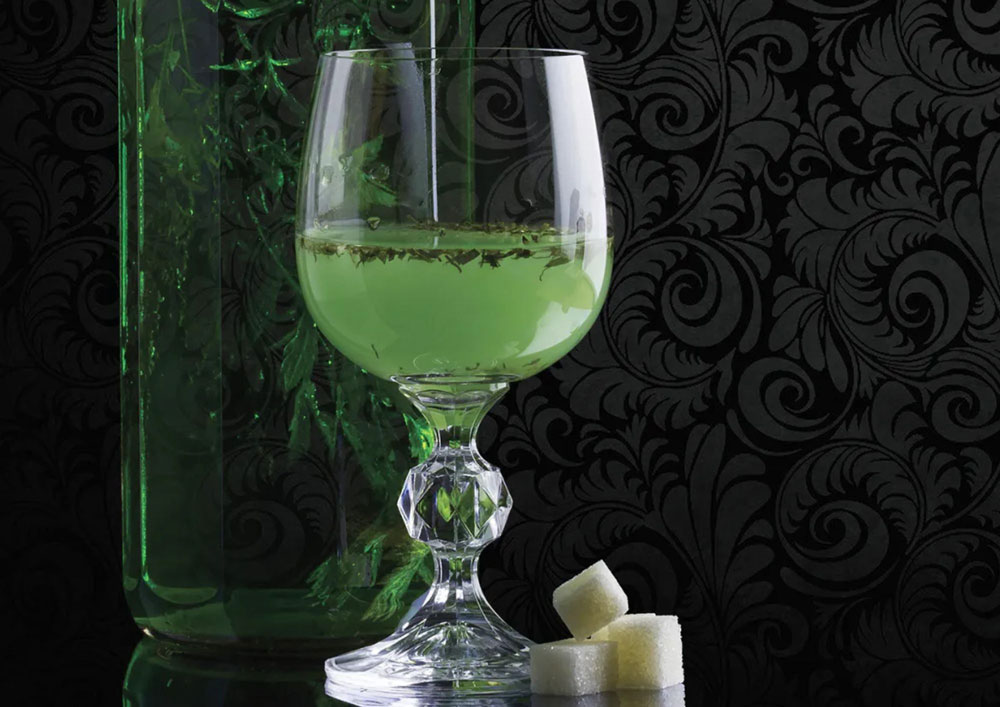
In France, absinthe had become deeply connected with everyday social life. It was consumed by people from different economic backgrounds and had become associated with cafés, artists, writers and urban culture. Its distinctive preparation, in which water was slowly added to the drink, created a theatrical ritual that added to its appeal.
But popularity also made absinthe an easy target.
Newspapers increasingly portrayed the drink as a threat to society. Illustrations showed drinkers supposedly descending from excitement into disorder and ruin. Critics connected absinthe with addiction, crime and the decline of respectable society.
The Lanfray murders dramatically intensified those fears.
Instead of seeing the tragedy primarily as the result of a man who had consumed enormous quantities of alcohol and had a history of conflict within his family, many people focused on the two glasses of absinthe he had consumed that morning.
The drink became the villain.
Public officials joined the campaign. Newspapers described absinthe as a major cause of violent crime, while petitions demanding prohibition attracted enormous numbers of signatures.
The controversy demonstrates how moral panics can develop.
A real tragedy occurs.
People search for a simple explanation.
A controversial product is already available as a target.
The press repeats the connection.
Politicians respond to public pressure.
And eventually, the original evidence can become less important than the story built around it.
In the case of absinthe, that story was remarkably powerful.
The Green Fairy Was Eventually Banned
The consequences came quickly.
Jean Lanfray was eventually convicted on four counts of murder. Three days after his conviction, he died by suicide in prison. Less than a month later, the canton of Vaud, where Commugny was located, banned absinthe. Geneva soon followed, and Switzerland eventually prohibited the drink nationwide.
Other countries followed their own paths.
Belgium banned absinthe in 1905, the Netherlands followed in 1909 and France, despite having one of the world’s strongest absinthe cultures, banned it in 1914. The drink was pushed out of much of Europe, although some countries remained exceptions.
The United States developed a somewhat different relationship with absinthe.
It never became as widespread in America as it had in France, but it developed a particularly strong association with New Orleans. The city’s famous Old Absinthe House became a gathering place associated with the drink and attracted visitors and cultural figures. Absinthe also appeared in New York, Chicago and San Francisco, particularly among artists, wealthy urbanites and bohemian circles.
American newspapers nevertheless warned about the drink. In the late 19th and early 20th centuries, reports described absinthe as addictive and dangerous, reflecting the broader temperance movement of the period. By the end of 1911, the U.S. government announced that imports of absinthe would be prohibited beginning January 1, 1912.
The ban did not immediately make the drink disappear. Absinthe continued to circulate, and its forbidden reputation arguably strengthened its appeal among some writers and members of the counterculture. Ernest Hemingway was among the literary figures associated with absinthe, and his cocktail Death in the Afternoon became one of the drink’s best-known cultural associations.
After nearly a century of restrictions, absinthe was once again permitted to be imported and consumed in the United States in 2007. The Green Fairy had returned.

Was Absinthe Really the Villain?
The history of absinthe is ultimately less about a mysterious green drink than about how societies respond to fear.
Jean Lanfray committed a horrific crime, but the historical record shows that absinthe represented only a small part of the enormous amount of alcohol he consumed that day. The case nevertheless became a powerful symbol for the anti-absinthe movement because the drink already carried a reputation for causing addiction, madness and violence.
The science surrounding “absinthism” was also far more complicated than the popular stories suggested. Some physicians argued that absinthe had unique effects, while others questioned whether the supposed syndrome could really be separated from the broader consequences of excessive alcohol consumption. Even the animal experiments that appeared to support the case against wormwood were later criticized because the experimental conditions did not closely resemble ordinary absinthe consumption.
That does not mean absinthe was harmless, nor does it erase the risks associated with consuming a very strong alcoholic beverage. It means the historical controversy cannot be reduced to the simple idea that absinthe itself turned ordinary people into violent criminals.
For decades, the drink became a convenient symbol of everything society feared about alcohol, urban culture and moral decline. Its green color and unusual ritual made it visually distinctive, while its association with artists and bohemian life made it even easier to portray as mysterious and dangerous.
In the end, absinthe’s greatest power may have been the story people created around it.
The “Green Fairy” became the “Green Demon,” and a controversial drink became a symbol of crime, madness and social decay. Nearly a century later, when the bans began to disappear, the drink returned without the same cultural panic that had once surrounded it. Its history remains a fascinating reminder that when fear, politics, media and incomplete scientific understanding come together, an ordinary object can become something much larger than itself.