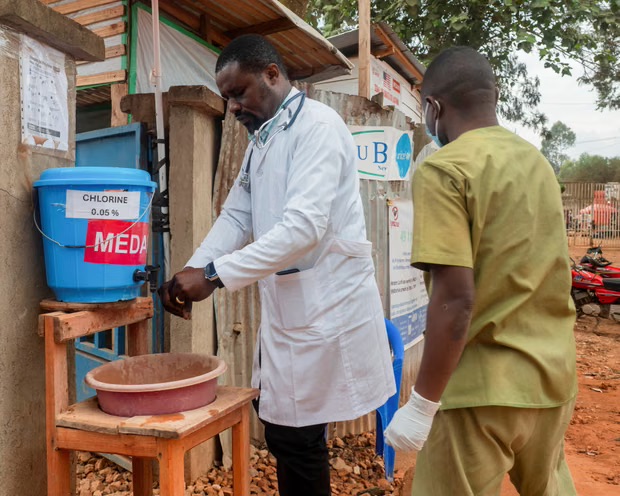
For the first time in months, there is a reason for cautious optimism in the Democratic Republic of the Congo. Health officials say the number of new Ebola cases has fallen from about 120 a day at the outbreak’s peak to around 80. Several health zones have gone weeks without reporting a new case, and authorities say transmission is slowing. But the World Health Organization is not ready to declare that the outbreak has passed its peak. With more than 7,200 confirmed cases and more than 3,500 deaths, the virus is still spreading in some parts of the country.
The Numbers Are Finally Moving In The Right Direction
The latest figures contain a mixture of encouraging news and reasons for caution.
According to Congolese health authorities, daily new infections have fallen substantially from the estimated peak in mid-August. Ten of the country’s affected health zones have gone more than 22 days without recording a new case, while six have gone more than 42 days. These are important signs that transmission has slowed in some locations.
The improvement is particularly noticeable in Ituri province, where the outbreak began and where most cases have occurred. Jean-Jacques Muyembe, director of the DRC’s National Institute for Biomedical Research, said indicators in Ituri had changed from “red” to “green,” although he emphasized that this did not mean the epidemic was over. That distinction matters.
An outbreak can improve in one region while continuing to grow somewhere else. And that is exactly what is happening in parts of the DRC.
Discover the powerful, animated story of how one village fought to survive during an Ebola outbreak. This essential guide helps visualize the virus, explains how it spreads, and shares crucial steps to protect your family and community. Watch to learn, stay safe, and help stop the spread of disease today!
The Outbreak Is No Longer One Single Story
The current Ebola outbreak has now affected seven provinces of the Democratic Republic of the Congo, with the most recent expansion reaching Sud-Ubangi in the northwest. More than 7,200 confirmed cases and more than 3,500 deaths had been reported by September 15, according to government figures.
The situation also looks very different from one province to another.
In Ituri, where the outbreak has been concentrated, transmission is showing signs of slowing. But North Kivu is moving in the opposite direction. As of September 12, the province had recorded 555 new confirmed cases during the previous 21 days, and health officials described the situation there as alarming.
That makes the phrase “the outbreak has peaked” more complicated than it sounds.
There may not be a single moment when an outbreak suddenly reaches its highest point everywhere at once. Instead, different communities can experience their peaks at different times, especially when people are moving between regions and health systems are struggling to identify cases quickly.
The United Nations has therefore warned that the epidemic remains massive and could take months to bring under control. WHO epidemiologist Olivier le Polain said it was still too early to confidently conclude that the overall outbreak had passed its peak.
This Is A Different Ebola Virus
Another reason this outbreak has been so difficult is hidden in its name: Bundibugyo virus.
Most people associate Ebola with the Zaire species responsible for the devastating West African outbreak of 2014–2016. The current outbreak in the DRC, however, is being caused by the much rarer Bundibugyo virus. Before 2026, this virus had been responsible for only two known outbreaks, in 2007 and 2012.
That difference has major consequences for the response.
There is no approved vaccine specifically targeting Bundibugyo virus and no approved treatment specifically for the strain. Scientists have instead been testing potential treatments while researchers work on vaccines. Clinical trials involving treatments including remdesivir and MBP134 began earlier in the outbreak, while vaccine trials are also under way.
The DRC has also received more than 70,000 doses of the Ervebo vaccine, which is approved for the more common Zaire Ebola virus. That vaccine can play a role in protecting against Zaire Ebola, but it does not solve the central problem posed by the Bundibugyo outbreak.
So health workers have had to rely heavily on the fundamentals of outbreak control: finding cases, isolating patients, tracing contacts and preventing further transmission.

Why A Falling Case Count Does Not Mean The Virus Is Gone
This is the part that can be easy to misunderstand.
When daily case numbers fall, it is tempting to assume the outbreak is ending. But epidemiologists need to know why the numbers are falling and whether the decline is occurring consistently across affected areas.
One important question is whether new cases are coming from people who were already known to be contacts of infected patients. If most new infections can be traced back to known contacts, health teams have a much clearer picture of where the virus is moving.
Earlier in the outbreak, African health officials warned that a large share of deaths were occurring in the community and that the list of contacts being monitored continued to grow. That suggested transmission was occurring beyond the networks that health workers could easily track.
The problem becomes even harder when people move between provinces, communities distrust health authorities or insecurity prevents medical teams from reaching certain areas.
The outbreak was officially declared in May, but genetic sequencing later indicated that it had actually begun months earlier, in February. That delay shows why the visible numbers at any particular moment do not necessarily represent the full picture of transmission. A falling curve is encouraging. It is not, by itself, proof that the virus has been defeated.
North Kivu Shows Why The Warning Matters
North Kivu may be the clearest reason international health officials remain cautious.
While Ituri has begun showing improvement, North Kivu has experienced sustained growth in transmission. The province also faces difficult security conditions, high population movement and densely populated communities, all of which make outbreak control more complicated.
This creates a difficult situation for health workers.
A successful response in one province does not automatically stop transmission in another. If the virus continues spreading in an area where surveillance and contact tracing are difficult, new infections can eventually spill back into places where case numbers had already begun falling.
That is why WHO officials have emphasized that the current outbreak should not yet be treated as a single victory or defeat.
There are places where the response is clearly working. There are also places where the virus is still gaining ground.
The Real Turning Point Will Come Later
The most encouraging development is that the response now appears to be bending the transmission curve in some of the areas hardest hit by the outbreak.
But the real test will be whether that improvement continues.
Health authorities will need to see sustained declines in new infections, fewer areas with active transmission, stronger contact tracing and fewer cases appearing outside known chains of transmission. They will also need to prevent the virus from establishing itself in newly affected provinces.
That is why the difference between “the outbreak has peaked” and “the outbreak is over” is so important.
The first means transmission may have reached its highest point and begun to decline. The second means the virus is no longer spreading in the community. The DRC has not reached that second point.
For now, the country is in a more hopeful position than it was several weeks ago, but the fight is far from finished. The latest numbers suggest that the response is beginning to work in some places. They do not yet prove that the virus has stopped finding new paths through others.
The most important number may therefore not be today’s 80 new cases a day. It will be whether that number keeps falling — across every affected region — for long enough to show that the transmission chains are genuinely being broken.
This outbreak has already become the largest known outbreak of Bundibugyo virus and the second-deadliest Ebola outbreak on record. More than 7,200 confirmed cases and more than 3,500 deaths have been reported in the DRC.
For the first time, however, there are signs that the curve may finally be turning. The challenge now is making sure it stays that way.
The latest developments show why declaring an epidemic “past its peak” is not the same as declaring victory. In parts of the Democratic Republic of the Congo, Ebola transmission is clearly slowing, while other regions continue to report substantial numbers of new cases. With more than 7,200 confirmed cases, more than 3,500 deaths and a rare Ebola strain that has no approved vaccine or specific treatment, health workers still face a long fight. The next few weeks will show whether the recent decline is the beginning of the end — or only a temporary pause.
This article was based on the latest reporting from The Guardian, WHO and other public-health sources tracking the 2026 Bundibugyo virus outbreak in the Democratic Republic of the Congo. Source: https://www.theguardian.com/global-development/2026/sep/15/ebola-outbreak-in-drc-has-peaked-say-authorities-as-infection-rates-slow