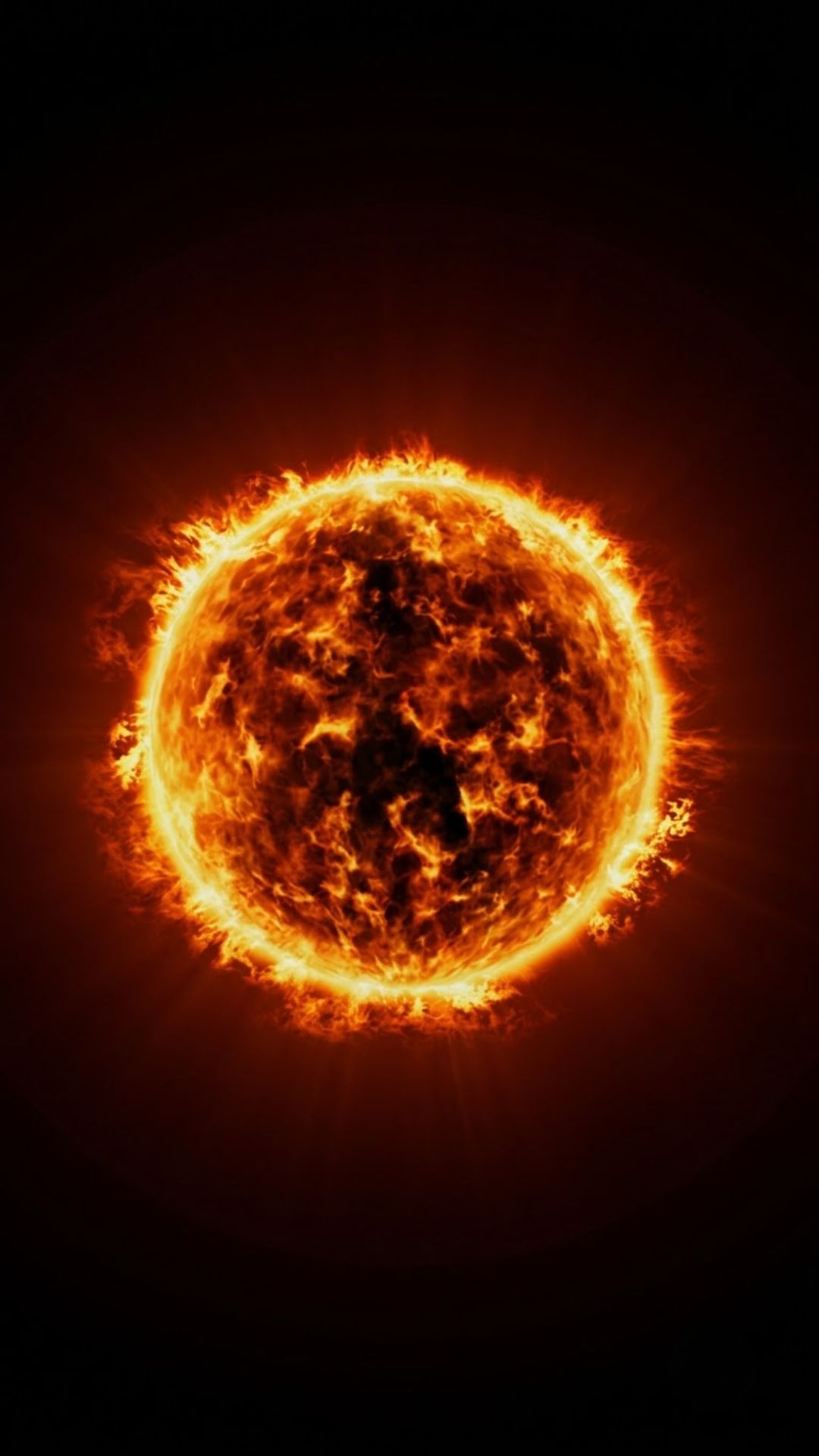
On September 1, 1859, British astronomer Richard Carrington was studying a cluster of dark sunspots when he suddenly saw two brilliant patches of white light erupt across the Sun. The flash lasted only a few minutes, but about 17 hours later, something extraordinary happened on Earth: the night sky lit up with auroras far beyond their usual range, while telegraph systems began failing, sparking and even catching fire. The event became known as the Carrington Event, one of the most powerful geomagnetic storms ever recorded—and a remarkable warning from the Sun that technology was never completely isolated from space.
Richard Carrington Saw The Sun Suddenly Flash
Carrington was observing the Sun from his private observatory near London on the morning of September 1 when he noticed an unusually bright eruption emerging from a group of sunspots. He sketched what he saw and recorded the short-lived flash, making one of the earliest direct observations of what we now understand as a major solar flare. Another astronomer, Richard Hodgson, independently observed the same phenomenon.
At the time, scientists had no modern concept of space weather, coronal mass ejections or the magnetosphere. Carrington could see something happening on the Sun, but there was no way to monitor the space between the Sun and Earth in real time or warn distant telegraph operators that an enormous disturbance was heading their way.
The connection became obvious only afterward. Roughly 17 hours after Carrington’s observation, the storm reached Earth and the effects were suddenly visible across enormous distances. NASA describes the event as the first documented case linking a white-light solar flare with a major geomagnetic storm and what we now recognize as a coronal mass ejection.
Seventeen Hours Later, The Sky Over Earth Lit Up
The first thing many people noticed was not a technological failure. It was the sky.
Auroras appeared at unusually low latitudes, far beyond the regions where people normally expected to see them. Reports described brilliant red and other colored lights bright enough to illuminate streets and landscapes. The display was visible as far south as Cuba and Panama, and eyewitnesses in parts of the United States initially wondered whether nearby buildings or forests were burning.
The brightness was so intense that some people mistakenly thought morning had arrived. Birds began singing, workers started their daily routines and people stepped outside to watch what looked like an enormous celestial fire spreading across the night.
Today, auroras are usually associated with places such as Alaska, Scandinavia and northern Canada. In 1859, the storm pushed the auroral display dramatically farther toward the equator because Earth’s magnetic environment had been disturbed on a much greater scale than normal.
For many observers, the event looked beautiful. They had no way of knowing that the same invisible disturbance producing the spectacular sky would soon begin interfering with one of the most important technologies of the industrial age.

The Telegraph System Started Acting Strangely
By the middle of the 19th century, telegraph networks had transformed communication. Messages that once took days or weeks could travel between cities almost instantly, making the telegraph something like the world’s first high-speed communications network.
The Carrington Event exposed just how closely that new technology was connected to Earth’s electromagnetic environment.
Telegraph operators reported abnormal currents running through their equipment. Sparks flew from machines, operators received electric shocks and some stations experienced fires. Telegraph paper reportedly ignited when surges passed through equipment, while components were pushed close to their limits.
The strange behavior was occurring because the geomagnetic storm was producing strong electrical currents in long conducting wires. The telegraph system had effectively become an enormous network of conductors stretching across the ground—and the disturbed magnetic field was driving electricity through it.
The technology was behaving as if an electrical source had suddenly appeared where nobody expected one.
Some Operators Discovered They Did Not Need Batteries
The most astonishing reports came from telegraph operators who realized that the disturbance itself could provide enough electrical current to transmit messages.
In Boston, operators attempting to communicate with Portland found that after disconnecting their batteries, they could still send signals using the electrical current induced by the geomagnetic storm. The transmissions were slower and less reliable than normal, but they worked.
It was an extraordinary demonstration of what the storm was doing. Telegraph networks were normally powered by dedicated batteries. Yet during the Carrington Event, the Earth’s own disturbed electromagnetic environment became powerful enough to drive current through the wires.
For the people operating the system, this must have seemed almost impossible. The same event that was disrupting their equipment was also providing the energy needed to keep some of it operating.
The episode is particularly fascinating because it revealed a vulnerability that had not been obvious before: a technology does not need to be directly struck by the source of a disturbance to be affected by it.

In 1859, Telegraphs Were The Cutting Edge Of Technology
The Carrington Event is sometimes remembered as a strange Victorian spectacle involving colorful lights and broken telegraph machines. But the deeper story is about infrastructure.
In 1859, telegraph networks connected businesses, governments, newspapers and individuals across continents. They were part of the communication system on which an increasingly industrial society depended. When the geomagnetic storm disrupted them, it provided an early real-world demonstration that solar activity could interfere with human technology on a continental and even global scale.
The event also changed what historians and scientists could learn about the relationship between the Sun and Earth. The brilliant flare observed by Carrington could be connected in time with the extraordinary disturbances experienced by telegraph systems and with the widespread auroras.
More than a century later, NASA describes the event as a landmark in the history of space weather because it linked an observed solar eruption with a major geomagnetic storm. The difference is that the definition of “critical technology” has changed dramatically since then.
Could a massive solar storm bring our modern world to a sudden standstill? Dive into the fascinating history of the 1859 geomagnetic disaster with this short documentary. Don’t miss this gripping history lesson. Watch the full video today to learn what happened and what it means for us.
Today, Earth Depends On Far More Than Telegraph Wires
If an event of comparable strength occurred today, the technology at risk would extend far beyond wires strung between telegraph stations.
Modern societies rely on large electric grids, satellites and satellite communications, GPS and other systems that can be affected by severe space weather. NASA and other scientific agencies monitor solar activity precisely because a major geomagnetic storm can interfere with technological infrastructure on Earth and in orbit.
That does not mean a repeat of the Carrington Event would automatically shut down modern civilization. Today’s infrastructure includes forecasting, monitoring and protective measures that did not exist in 1859. Scientists can observe solar eruptions and, depending on the event, have some warning before the disturbance reaches Earth. But the basic lesson has not changed.
In 1859, the Sun reached across space and found the longest wires humans had built. The result was a spectacular sky and a technological disruption that nobody had anticipated. Today, those wires have been joined by power grids, satellites and digital infrastructure on a vastly larger scale.
The Carrington Event remains memorable not simply because it produced an extraordinary aurora, but because it showed something surprisingly simple: Earth’s technology lives beneath a much larger system, and sometimes the Sun reminds us.
The Carrington Event remains one of the clearest historical examples of how closely modern technology is connected to the space environment. In 1859, a solar eruption produced auroras that lit up the night and generated electrical currents powerful enough to disrupt telegraph networks. Operators even discovered that some messages could be transmitted without batteries. More than a century later, the technology has changed completely, but the underlying vulnerability remains. The event is a reminder that the infrastructure connecting modern life ultimately operates beneath the influence of forces far beyond Earth.
The original HISTORY article provides a detailed account of Richard Carrington’s observation, the extraordinary auroras and the damage experienced by telegraph networks during the 1859 storm. It also examines what a similar solar event could mean for modern infrastructure, making the historical episode relevant far beyond the 19th century. Source: https://www.history.com/articles/a-perfect-solar-superstorm-the-1859-carrington-event