In February 1947, a Boeing B-29 Superfortress made an emergency landing on a frozen lake in one of the most remote parts of Greenland. The 11-man crew survived and was rescued, but the aircraft was left behind on the ice, where it remained for 39 years. Then, in the 1990s, a team of aviation enthusiasts returned with an ambitious plan: rebuild the abandoned bomber and fly it out. They replaced its engines, propellers and tires, repaired its controls and prepared a rough runway on the frozen lake. The B-29 was finally moving under its own power again—until a fire brought the entire rescue effort to a devastating end.
The B-29 Was Sent Into The Arctic On A Secret Mission
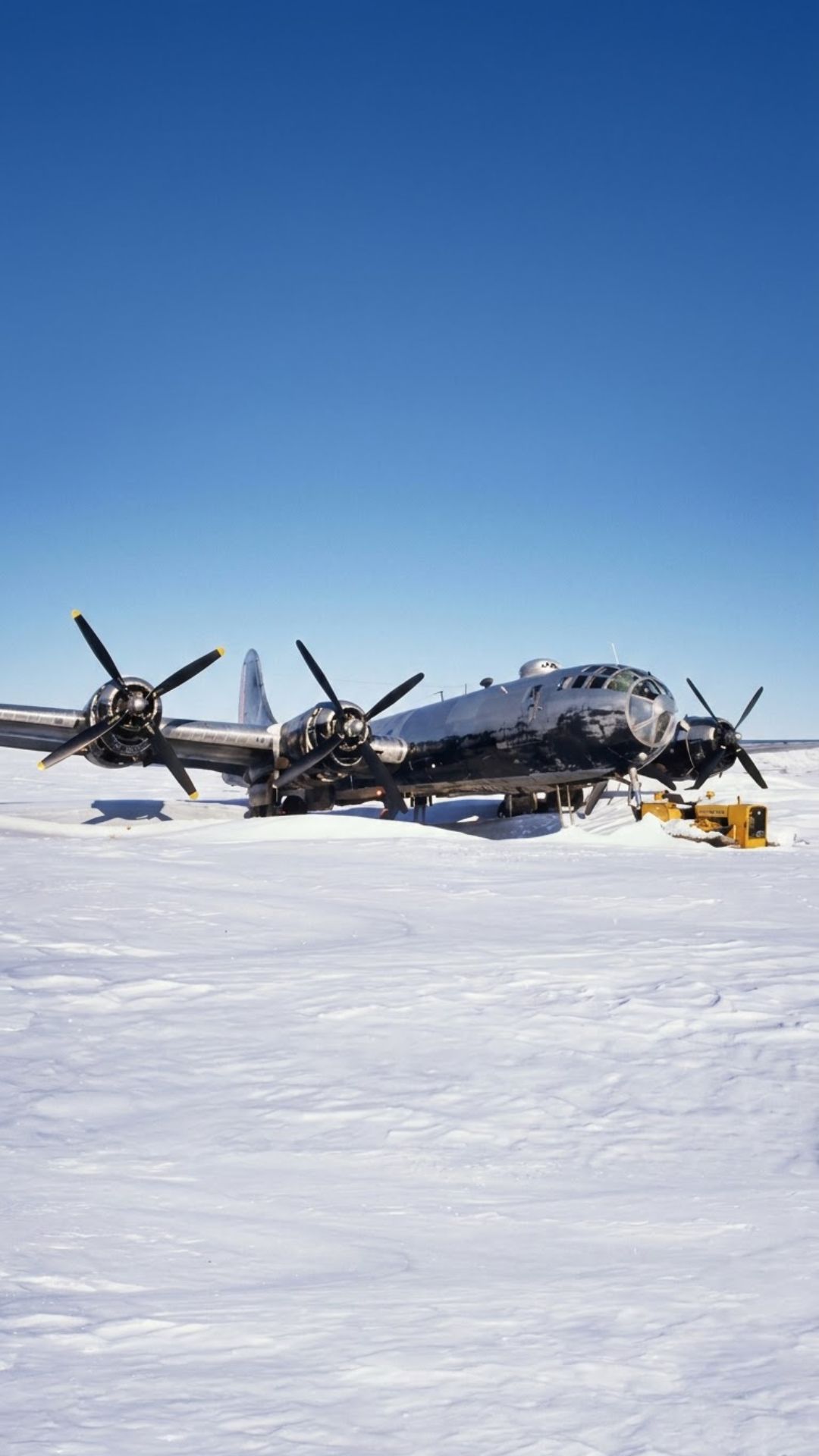
The aircraft, known as the Kee Bird, had originally been built as a B-29 Superfortress during World War II. But unlike the famous bombers that attacked Japan, Kee Bird was later assigned to the 46th Reconnaissance Squadron for long-range photographic reconnaissance.
Its bomb bays were modified to carry cameras and additional fuel tanks. The aircraft was used to map northern Greenland, study weather conditions, develop polar navigation techniques and search for signs of Soviet activity during the early Cold War. Before its final flight, Kee Bird had already completed seven missions in the demanding Arctic environment.
The B-29 was an extraordinary aircraft for its time. It was a pressurized, long-range, high-altitude bomber with four engines and a wingspan of roughly 141 feet. Its ability to fly long distances made it valuable not only during World War II but also during the new strategic competition that followed the war.
In February 1947, that technology was about to be tested against an environment far more unforgiving than any ordinary airfield.
Discover the incredible, true story of Darryl Greenamyer and his team as they attempt to resurrect a B-29 Superfortress abandoned on a remote Greenland icecap for nearly 50 years. This gripping documentary captures the perilous journey, engineering ingenuity, and the ultimate, heartbreaking struggle to bring a warbird back home.
The Crew Had Only Minutes Of Fuel Left
Kee Bird took off from Ladd Field in Alaska on February 20, 1947, for a mission that would take it toward the geographic North Pole before returning south. The aircraft carried 11 men and enough fuel for a flight lasting as long as 26 hours.
The mission went wrong when the aircraft encountered a storm and became lost. On the morning of February 21, radio operators received an alarming message from the crew: they were almost out of fuel and would have to land on land or ice. The nearest help was hundreds of miles away, across an Arctic landscape where weather could make rescue operations extremely difficult.
The pilots managed something remarkable. Rather than crashing at high speed, they brought the enormous B-29 down on a frozen lake in northwest Greenland. The aircraft survived the landing well enough for the crew to escape.
But the men were now stranded in one of the most isolated places on Earth.
The Crew Survived — But The B-29 Was Left Behind
A rescue operation was launched to locate the missing aircraft and its crew. According to the Vintage Aviation News account, the men were found three days later and were eventually flown out of Greenland. They survived the ordeal relatively unharmed, but their aircraft was another matter.
The Air Force marked Kee Bird as lost and abandoned it on the frozen lake.
For the next several decades, the B-29 remained where it had landed. The extreme Arctic cold helped preserve the aircraft far better than might have been expected. Instead of being reduced to a pile of rust, Kee Bird remained recognizable as a complete four-engine bomber sitting on the ice. For 39 years, almost nobody did anything with it. Then someone found it again.

After 39 Years, Someone Wanted To Bring It Back
In 1985, a British pilot spotted the abandoned B-29 and helped bring the aircraft back to public attention. By the early 1990s, the idea of recovering it had evolved from curiosity into an ambitious restoration project.
In 1994, the rights to restore Kee Bird were acquired by a group known as Kee Bird LLC, led by aviation record-holder and test pilot Darryl Greenamyer. Their plan was extraordinary but straightforward in principle: make the aircraft operational enough to fly from the frozen lake to Thule Air Base, about 250 miles away, and complete the remaining restoration there.
The team had to turn an isolated crash site into something resembling an aircraft workshop. A 1962 de Havilland Caribou was used as a shuttle aircraft to transport people and equipment. During the summer of 1994, the restoration crew brought in replacement engines, propellers, tires and other equipment.
They repaired the control surfaces and replaced major components that had spent decades exposed to the Arctic environment. The project was becoming real.
But Greenland’s winter forced the team to leave before everything was finished. There was also a devastating setback when chief engineer Rick Kriege became ill and later died from a blood clot. The restoration would have to wait until the following year.
The B-29 Finally Started Moving Again
The team returned in May 1995 to complete the work.
One of their biggest challenges was the runway. There was no conventional airfield waiting for Kee Bird. Instead, the crew prepared a crude runway across the frozen lake using equipment brought to the remote site. The goal was to get the aircraft airborne and then fly it to Thule Air Base, where the restoration could continue under more manageable conditions.
After three years of work and an estimated investment of about $1 million, the moment finally arrived. The B-29’s four rebuilt engines were started.
The aircraft that had been sitting motionless on Greenland’s ice since 1947 was alive again.
Darryl Greenamyer began taxiing the enormous bomber across the frozen surface. After nearly half a century on the ice, Kee Bird appeared to be on the verge of escaping its Arctic prison. Then smoke appeared near the tail.
The Fire Destroyed What Years Of Ice Had Preserved
The fire began in the auxiliary power unit near the rear of the aircraft. Investigators later believed that gasoline leaked from the system and ignited during the taxi attempt. The crew tried to fight the fire, but the flames spread rapidly through the aircraft.
The people aboard escaped, but the restoration project was over.
After three years of work, millions of dollars in modern value and an extraordinary amount of effort, the B-29 was destroyed just as it was preparing to leave the frozen lake.
The irony was particularly painful. The restoration team had modified the fuel system partly to reduce the risk of fire, a known problem associated with B-29s. Yet it was an auxiliary power unit and its fuel system that ultimately ended the aircraft’s second chance at flight.
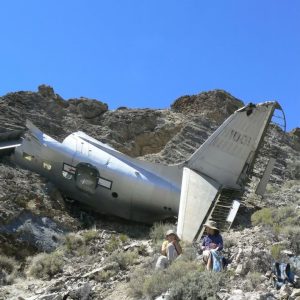
The story did not end with the fire, however. Photographs taken years later show the remains of Kee Bird still lying crumpled on the ice, partially covered by snow and surrounded by the same Arctic landscape where the aircraft had spent most of its later life.
Kee Bird Became A Lesson In How Fragile History Can Be
Kee Bird’s story is unusual because the aircraft effectively had two endings.
The first came in 1947, when a secret Arctic reconnaissance mission ended with an emergency landing. The crew survived, and the B-29 was abandoned.
The second came nearly half a century later, when people tried to give the aircraft a new life. They succeeded in doing something that had seemed almost impossible: after 48 years, they got its engines running and began taxiing it under its own power. But before it could leave Greenland, a small mechanical failure turned the restoration into a fire.
Today, Kee Bird is remembered not simply as a lost B-29, but as one of the most ambitious aircraft recovery attempts ever undertaken in the Arctic. Its remains also illustrate how difficult it can be to preserve history. Sometimes the greatest threat to an old machine is not decades of snow and ice, but the final attempt to bring it back to life.
Kee Bird spent nearly half a century frozen in the Greenland ice before anyone seriously attempted to save it. The restoration team replaced engines, propellers, tires and control components, bringing the forgotten B-29 remarkably close to flying again. Yet after three years of work, the aircraft was destroyed by a fire during its final taxi attempt in 1995. Today, its remains still lie on the Arctic ice, a reminder that restoring a piece of history can be almost as difficult—and unpredictable—as preserving it in the first place.
The story of Kee Bird is preserved through historical photographs, restoration records and the recollections of people who worked on the aircraft. You can read the detailed account of its final chapter and see photographs of the B-29 before and after the failed recovery effort below. Source: https://vintageaviationnews.com/warbird-articles/frozen-in-time-the-tragic-end-of-the-b-29-superfortress-kee-bird.html