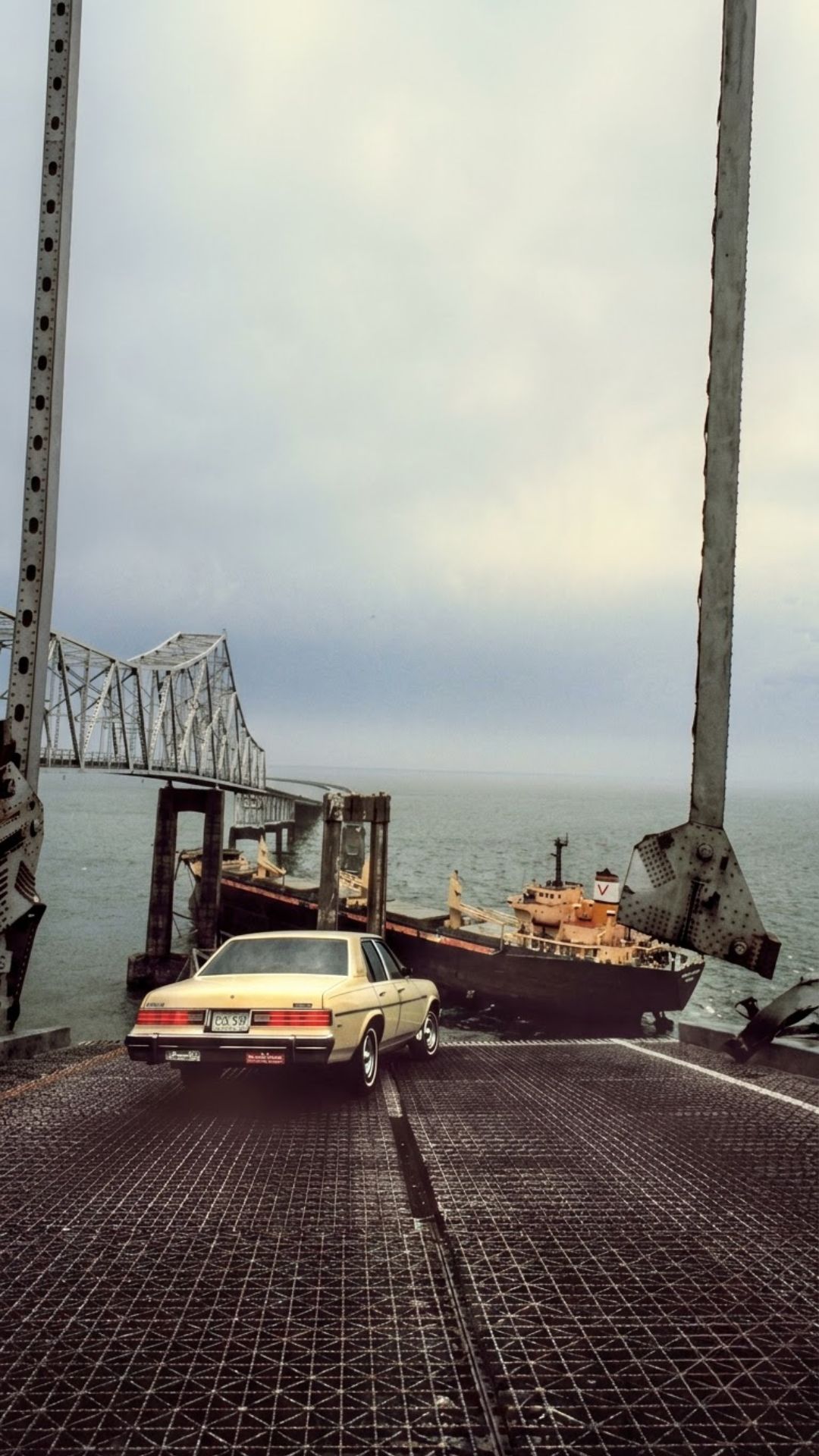
At about 7:34 a.m. on May 9, 1980, the Sunshine Skyway Bridge stretched across Tampa Bay as traffic moved through a powerful spring storm. Then the freighter Summit Venture struck one of the bridge’s support piers, and about 1,297 feet of roadway suddenly collapsed into the water below. A Greyhound bus, six cars and a pickup truck went down with it, killing 35 people. Yet one driver saw the broken roadway ahead and managed to stop only moments before his car reached the gap.
The Storm Hit Just Before the Bridge
The morning of May 9 had begun like any other workday around Tampa Bay, but conditions changed rapidly as the Summit Venture approached the Sunshine Skyway. The vessel was being guided through the shipping channel by harbor pilot John Lerro when a line of intense thunderstorms moved across the area, bringing heavy rain and sharply reducing visibility. Lerro later reported losing both visual and radar references to the channel and bridge as the storm intensified.
Despite the deteriorating conditions, the ship continued toward the bridge. At approximately 7:34 a.m., the Summit Venture struck one of the bridge’s support piers on the western span, destroying the support and leaving a massive section of roadway without structural support. The deck and superstructure then fell roughly 150 feet into Tampa Bay.
Drivers on the bridge had almost no time to react. Several vehicles were carried into the collapse, while others were traveling toward a section of road that suddenly no longer existed. In a matter of seconds, an ordinary bridge crossing had become one of Florida’s worst transportation disasters.
Discover the tragic story of the Sunshine Skyway Bridge disaster in this gripping documentary. Learn how a sudden storm led to a catastrophic collapse in 1980, claiming 35 lives. Dive into the investigation, the aftermath, and the lessons learned from this haunting event in Florida’s history. Watch now to uncover the truth.
One Driver Saw the Gap in Time
Among the motorists approaching the bridge was Richard Hornbuckle, who was driving through the storm when he suddenly encountered the disaster ahead. He saw the roadway disappear and managed to stop before his car reached the collapsed section. That decision, made in the middle of heavy rain and confusion, saved his life.
Others were not so fortunate. The falling section carried a Greyhound bus, a pickup truck and six automobiles into the bay, while debris from the bridge came down around the ship below. Thirty-five people were killed, making the collapse one of the deadliest bridge disasters in the United States caused by a vessel collision.
The aftermath was chaotic. Rescue and recovery crews had to search the water and the damaged structure while the Summit Venture remained lodged beneath the bridge. Bob Raiola, an underwater bridge inspector for the Florida Department of Transportation, later recalled spending about six hours a day in the water for nearly three weeks during the recovery effort.
For many responders, the physical work ended long before the emotional impact did.

Why Did the Bridge Collapse?
The immediate cause was straightforward: the Summit Venture struck a support pier with enough force to destroy it. But the National Transportation Safety Board concluded that the disaster resulted from a chain of circumstances, including severe weather, the lack of a severe-weather warning for mariners and the pilot’s decision to continue after losing visual and radar references to the channel and bridge.
The bridge itself also had no structural pier protection system capable of absorbing or redirecting a major ship impact. Once the vessel destroyed the support, the section of bridge above it no longer had the support required to remain standing. The NTSB also identified the absence of a motorist warning system as a factor that contributed to the loss of life.
That last point is particularly important because the disaster was not simply about a ship and a bridge. It was also about what happened between them: the weather warning system, navigation information, structural protection and the lack of any system to stop traffic once a critical section of the bridge was struck.
The investigation therefore turned the disaster into a much larger engineering lesson. A bridge spanning a major shipping channel had to be designed for more than everyday traffic. It also had to survive what could happen beneath it.
The New Bridge Was Built Differently
The original Sunshine Skyway was not simply repaired after the collapse. Florida ultimately built a new bridge, which opened in 1987 with major changes intended to reduce the consequences of another vessel collision. The new design was elevated, the navigation channel was widened and large concrete structures called “dolphins” were installed around vulnerable bridge supports.
These dolphins were designed to provide a protective barrier around the piers, giving a ship something to hit before it could reach the main structural supports. The goal was not to make a bridge impossible to damage; it was to prevent one ship strike from immediately removing a critical support and causing a catastrophic collapse.
The new bridge also became part of a broader shift in thinking about how major bridges should be protected from vessels. The Sunshine Skyway experience demonstrated that structural safety could not be considered separately from maritime navigation, weather monitoring and traffic control.
The rebuilt bridge therefore represents more than a replacement structure. It is a physical response to everything that went wrong in 1980.
The Pilot Was Blamed, but the Story Was More Complicated
John Lerro, the harbor pilot aboard the Summit Venture, became one of the most controversial figures in the aftermath. Some later accounts argued that he was unfairly blamed for a disaster caused by a combination of extreme weather and inadequate systems. The legal and investigative history was more complicated than the simple image of one man making one fatal mistake.
The NTSB’s findings did identify the pilot’s decision to continue after losing navigational references as part of the probable cause. But the same investigation also cited the severe weather and the failure of the National Weather Service to issue a severe-weather warning for mariners. The agency further identified the lack of structural pier protection and the lack of a motorist warning system as contributors to the deaths and damage.
That distinction matters because the disaster was ultimately a system failure as much as an individual decision. A pilot made a judgment in rapidly worsening weather, but the consequences of that judgment became catastrophic because the bridge lacked the protection that might have prevented the collapse.
Lerro died in 2002, but the question of how responsibility should be divided remained part of the story. The disaster continues to be studied not simply as an example of human error, but as a case in which weather, navigation, engineering and emergency protection all interacted.

What the Sunshine Skyway Left Behind
The Sunshine Skyway disaster is remembered for one extraordinary image: a ship beneath a bridge, with more than a thousand feet of roadway suddenly missing above the bay. But its lasting importance lies in what happened afterward. The new bridge incorporated protections and design changes intended to reduce the chance that another ship collision could produce the same kind of catastrophic collapse.
In 2025, 45 years after the disaster, the National Transportation Safety Board placed the current Sunshine Skyway among 68 U.S. bridges it wanted evaluated for vulnerability to vessel collisions. The agency emphasized that being on the list did not mean the bridge faced an immediate danger of collapse; the effort was part of a broader assessment of bridges built before updated standards were introduced in 1991.
That detail offers an important perspective on the legacy of the disaster. Engineering standards evolve because disasters reveal risks that earlier designs did not fully account for. The Sunshine Skyway became one of those lessons, helping shape the way engineers think about protecting bridge supports in busy waterways.
The tragedy cannot be undone, but the knowledge gained from it has become part of the bridge that stands there today.

On May 9, 1980, a sudden storm, a freighter and a vulnerable bridge came together with devastating consequences. The Summit Venture destroyed a support pier, sending nearly 1,300 feet of the Sunshine Skyway into Tampa Bay and killing 35 people. Yet the disaster also produced lasting lessons about weather warnings, navigation, bridge protection and emergency response. The new Sunshine Skyway opened in 1987 with major safety improvements, turning a catastrophic failure into an enduring engineering lesson. What disappeared that morning was a section of bridge; what remained was a warning about how quickly infrastructure can fail when several risks converge.
P.S. This story was reconstructed from FOX 13 Tampa Bay’s reporting on the 45th anniversary of the Sunshine Skyway disaster, with the accident’s causes and safety findings cross-checked against the National Transportation Safety Board’s official investigation. Source: https://www.fox13news.com/news/sunshine-skyway-bridge-disaster-45-years-later