She fell from a plane at nearly 3,000 meters—and somehow woke up alive in the Amazon. But that was the easy part. Seventeen-year-old Juliane Koepcke had no idea where she was, her mother was gone, rescue planes could not see her through the jungle canopy, and she was badly injured with almost no food. To survive, she had to do something more difficult than endure the fall: walk alone through the Amazon and trust the knowledge her parents had taught her.
The Flight That Broke Apart in the Sky
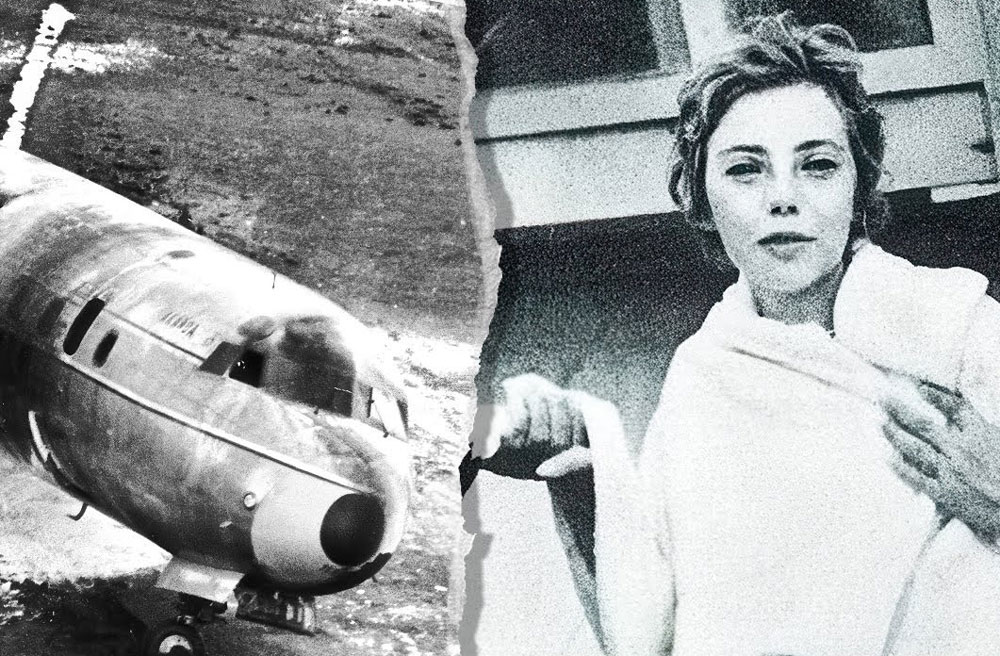
On December 24, 1971, Juliane was flying with her mother, Maria, from Lima toward Pucallpa in Peru. They were planning to reach the family research station in the Amazon for Christmas, but about 15 minutes before the scheduled stop, the plane entered a violent thunderstorm.
Juliane later recalled the aircraft shaking violently as lightning flashed around it and luggage flew from the overhead compartments. Then came a huge white flash near the wing, and the aircraft appeared to plunge downward; moments later, the cabin around her was gone.
Still strapped to her seat, Juliane was suddenly falling through open air. The ground was about 3,000 meters below, and she briefly saw the dense rainforest beneath her before losing consciousness. When she woke, it was Christmas Day, and the jungle canopy was above her rather than the airplane.
Juliane Koepcke fell 10,000 feet from a plane and survived—then spent 11 days alone in the Amazon. Watch the video to see how a 17-year-old girl survived one of history’s most extraordinary disasters and walked out of the jungle alive.
She Survived the Fall—and Found Herself Alone
Juliane’s survival was already extraordinary, but she was far from safe. She had a concussion, a broken collarbone and deep cuts on her shoulder and calf, while her glasses were gone and she had only one sandal and a torn sleeveless dress.
Her first thought was to find her mother. Instead, after searching through the rainforest, she encountered three other passengers who had struck the ground still strapped to their seats; one was a woman, and Juliane checked her fingernails to make sure it was not Maria. Her mother never used nail polish, and the woman had polished toes.
Juliane could hear rescue aircraft overhead, but the dense rainforest canopy hid her from view. She was becoming weaker, the wet-season rain made fire nearly impossible, and she knew that eating unfamiliar plants could be dangerous, so she had to keep moving without knowing exactly how far she was from help.

Her Parents Had Secretly Prepared Her for This
This is where Juliane’s childhood became crucial. Her German parents, zoologist Hans-Wilhelm Koepcke and tropical-bird researcher Maria Koepcke, had established the Panguana biological research station in the Peruvian rainforest, where Juliane spent much of her early life. She described herself as a “jungle child” and had learned to recognize the sounds and conditions of the forest.
One lesson mattered more than almost anything else: follow the water. Juliane found a river and began walking along it, trusting that a waterway would eventually lead toward people instead of taking her deeper into the jungle. She also remembered her father’s warnings about piranhas and understood that many rainforest plants could be poisonous.
Her knowledge did not make the journey easy, but it prevented her from making some of the mistakes that could have killed her. She recognized familiar frogs and birds, understood that she was in the same ecosystem she had known at Panguana and used the river as her guide while rescue teams searched unsuccessfully above her.
On the Tenth Day, She Was Almost Out of Strength
By the fourth day, the rainforest gave her another terrifying reminder of what had happened. She heard king vultures and followed their calls, expecting to find something dead; instead, she discovered three crash victims still trapped in their seats and realized again that she was completely on her own.
Days of walking through wet jungle left her sunburned, starving and exhausted. By the tenth day, she was close to giving up, spending cold, miserable nights beneath trees or bushes while the rain soaked her thin dress. Then, around a bend in the river, she saw something she had been searching for without knowing whether it existed: a small hut with a palm-leaf roof.
Inside the hut was a can of petrol. Juliane’s shoulder wound had become infected with maggots, and she remembered that her father had once used petrol to treat a family pet. She poured it over the wound, endured the intense pain and removed about 30 maggots before spending the night there.
Eleven Days After the Crash, Someone Finally Heard Her
The next morning, Juliane woke to the sound of men’s voices. She rushed from the hut and encountered local Peruvian fishermen, who were initially startled by the sight of a thin, injured blonde teenager emerging from the rainforest. They took her into their canoe and began the journey back toward civilization.
There was one final advantage her parents had given her. Juliane spoke Spanish, so she could explain who she was and what had happened: she was a passenger from the LANSA crash. The fishermen were able to understand her and take her to safety.
She had spent 11 days alone in the Amazon after surviving a 3-kilometer fall from the sky. Ninety other people aboard the flight, including her mother, died; ABC reported that about 14 people may initially have survived the crash itself, but Juliane was the only one who managed to make the journey out of the jungle.

No One Can Fully Explain Why She Survived
Juliane herself has never claimed to know exactly why she lived when so many others did not. She has suggested that the thunderstorm may have created powerful updrafts that slowed her descent and that the dense canopy could have cushioned the impact, while the way her seat rotated through the air may also have mattered.
There is no single confirmed explanation in the ABC account for how she survived a fall from roughly 3,000 meters. What is much clearer is what happened after she reached the ground: her survival depended on a combination of physical luck, calm decisions and knowledge she had acquired growing up in the rainforest.
Her later life makes the story even more remarkable. Juliane became a biologist specializing in bats and continued the work associated with her family, including the Panguana research station. The rainforest that once became the setting for her fight for survival eventually became the subject of her scientific life.
Juliane Koepcke’s story began with a plane breaking apart in a thunderstorm and a 17-year-old girl falling roughly 3,000 meters into the Amazon. But the fall was only the first part of the ordeal; she then spent 11 days injured and alone, following a river, avoiding unfamiliar plants and using lessons from her scientist parents to navigate the rainforest. Exactly why she survived the crash remains uncertain, but one thing is clear: luck got her to the ground, while knowledge helped get her out.