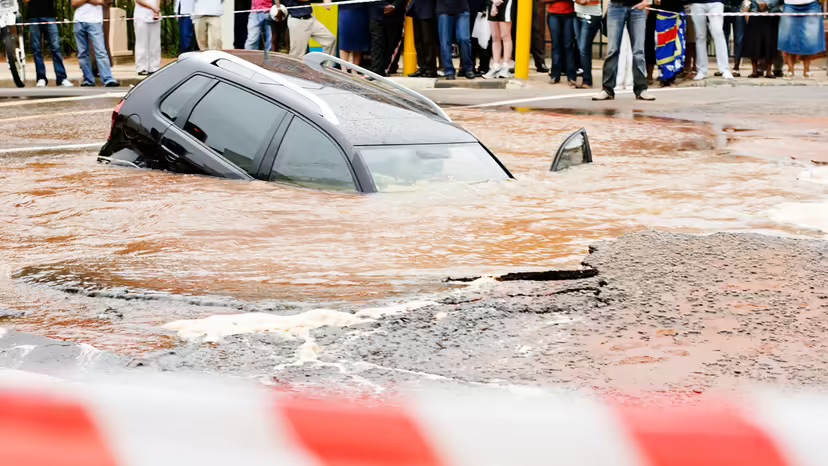
Few emergencies are more terrifying than finding yourself trapped inside a car that has entered the water. One moment, you may be driving normally; the next, the vehicle is sinking, water is rising around you and panic is making every second feel shorter. In that situation, instinct can sometimes work against you. Repeatedly trying to force open a door, searching for personal belongings or waiting too long for help may waste valuable time. Knowing a simple escape sequence in advance can help you react more effectively when every second matters. The general priority is to get your seat belt off, create an exit through a window and leave the vehicle as quickly as conditions allow.
The First Few Seconds Are The Most Important
When a car enters the water, the first reaction is often shock. People may freeze, scream, grab their phones or immediately start pulling at the door handle. The problem is that panic can quickly consume the time needed to make a clear decision.
The first priority should be getting yourself ready to leave the vehicle. Unbuckle your seat belt and immediately look for the fastest available exit. If children or other passengers are inside, the situation becomes even more urgent because everyone may need assistance.
Do not spend valuable time trying to collect phones, bags, wallets or other belongings. A car can be replaced. Your life cannot.
The most useful mindset is simple: escape first, deal with everything else later.

Forget The Door — Try The Window First
A common instinct is to use the door because it is the normal way to leave a car. During a sinking-car emergency, however, the door may quickly become difficult or impossible to open because of the force of water acting against it.
That is why side windows should generally be considered the first potential escape route. If the vehicle’s electrical system is still functioning, try opening a side window immediately. Acting quickly is important because the window controls may not remain usable indefinitely as the vehicle takes on water.
If a window does not open, the next option may be to break a side window using an appropriate emergency escape tool.
The windshield is generally not the preferred target. Modern windshields are typically made from laminated glass, which is designed to resist shattering. Side windows are often more practical escape points because many vehicles use tempered glass for them, although vehicle glass designs can vary.
The goal is not to fight the vehicle. It is to find the fastest available opening.
Why Opening The Door Can Be Much Harder Than You Expect
As water surrounds a sinking vehicle, the difference between the pressure outside and inside can make pushing a door open extremely difficult. The more water pressing against the exterior, the more force may be required to open the door.
Eventually, once enough water enters the cabin, the pressure inside and outside may become closer to equal. At that point, a door might theoretically become easier to open.
The danger is that waiting for this stage can create serious problems.
By the time the cabin has filled with water, visibility may be poor, passengers may be disoriented and everyone inside may already be struggling to breathe. Finding the door handle or identifying the correct direction can become far more difficult than it was just moments earlier.
For that reason, waiting for the vehicle to fill completely with water should not be treated as a preferred escape strategy when another exit is available.
The best opportunity to escape may come much earlier.
Watch the video below to learn what you should do if your car suddenly ends up in the water. In an emergency like this, knowing the right steps before panic takes over could make all the difference.
If The Windows Won’t Open, Break The Side Glass
An emergency escape tool can provide an additional option if a side window cannot be opened normally. Specialized tools may combine a seat-belt cutter with a glass-breaking mechanism designed for vehicle side windows.
If you ever need to break a window, aim for an appropriate side window rather than the windshield. Protect your face and eyes from falling or remaining glass as much as possible, then move through the opening carefully.
Trying to punch or kick the glass with bare hands or feet can result in serious injuries and may not work effectively. Ordinary objects may also fail when used against modern vehicle glass.
This is why preparation can matter before an emergency ever occurs. A dedicated escape tool is designed for a specific purpose, but it is only useful if you can reach it quickly. Keeping such a tool buried inside a glove compartment or hidden somewhere difficult to access may reduce its usefulness during a real emergency.
A simple tool within easy reach can be more valuable than an expensive piece of equipment you cannot find when the vehicle is filling with water.

Seat Belts Can Become Another Obstacle
Seat belts save countless lives in crashes, but in a water emergency they must be released before you can leave the vehicle.
Stress can make even a familiar action difficult. A person who normally unbuckles a seat belt without thinking may suddenly struggle with the mechanism when submerged in cold water and surrounded by panic.
Release the seat belt as soon as you have identified an escape route. If the buckle is jammed or inaccessible, a seat-belt cutter may provide another option.
When children are present, adults should avoid creating unnecessary confusion by attempting to move everyone at once. The safest approach depends on the circumstances, including the number and age of passengers and the available exit. In general, people should work toward getting everyone through the available opening as efficiently as possible.
The situation may be frightening, but a simple sequence can help prevent chaos from taking over.
Get Out Before The Car Becomes A Water-Filled Trap
A vehicle can remain partially afloat for some time, but the exact duration varies widely depending on the vehicle, damage, water conditions and how it entered the water.
That uncertainty is exactly why delaying can be dangerous.
If you have an accessible exit, use it. Do not assume you have plenty of time to wait for the vehicle to sink. Once the cabin fills with water, the interior may become dark, objects may float around and the vehicle’s orientation can become confusing.
After leaving the vehicle, move away from it and toward the surface or a safe area. Do not return to retrieve personal belongings.
Your phone, wallet, laptop and other possessions may feel important in the moment, especially if they contain valuable information. None of them is worth returning to a sinking vehicle for.
The only objective is getting yourself and, when possible, other passengers out safely.

The Best Escape Plan Is The One You Already Know
A sinking-car emergency leaves little time to learn what to do. That is why the most important preparation happens long before a vehicle ever enters the water.
Remembering a simple sequence can help create order during a chaotic situation:
Unbuckle → Open or break a side window → Get out.
Some emergency guidance uses the memorable phrase “Seatbelts, windows, out.” The exact circumstances of every accident can differ, and there is no single response that fits every possible scenario. A vehicle may be upside down, passengers may be injured or the available exits may be blocked.
However, having a basic plan is still better than relying entirely on instinct.
You may never experience a sinking-car emergency, and hopefully you never will. But emergencies are exactly the situations in which preparation can matter most. You do not need to memorize complicated instructions. Sometimes, remembering just a few priorities can make a critical difference.
A car entering the water can turn into a life-threatening emergency within moments, and panic can make the situation even more dangerous. The key is to act quickly, release your seat belt, use the fastest available exit and prioritize the side windows rather than repeatedly fighting against a door. If a window cannot be opened, an appropriate emergency escape tool may provide another way out. You may never need to escape from a sinking car, but knowing what to do before panic takes over could give you a far better chance of getting out.