In the early 1980s, Detroit was under pressure from a flood of fuel-efficient Japanese cars, and Washington wanted to slow their advance. Japan agreed to limit passenger-car exports to the United States, initially capping shipments at 1.68 million vehicles a year. The restriction was intended to ease pressure on American automakers, but it created an unusual incentive for Japanese manufacturers: when the number of cars they could sell was constrained, making each vehicle more valuable became more important. Toyota’s answer would eventually be called Lexus.
Detroit Was Losing Ground to Smaller Japanese Cars
The battle over Japanese automobiles did not begin with Lexus. By 1980, Japanese automobile production had passed 10 million vehicles, while exports reached a record 5.97 million units, as fuel-efficient Japanese cars became increasingly attractive following the second oil crisis. Toyota alone exported more than one million passenger cars that year, while trade tensions with the United States were becoming increasingly difficult to ignore.
For American manufacturers, the timing was painful. Consumers who had spent years buying large, fuel-hungry domestic cars were suddenly paying much more attention to smaller vehicles with lower fuel consumption and competitive prices. The pressure was intensified by the broader economic problems of the period, including recession and the effects of the second oil shock, making imported cars an increasingly visible threat to Detroit’s traditional market.
Washington responded through trade pressure rather than simply allowing the market to run its course. In February 1981, legislation was introduced in Congress that would have restricted Japanese passenger-car imports, while the Reagan administration pressed Tokyo for an agreement. On May 1, 1981, Japan announced a voluntary export restraint limiting passenger-car exports to the United States to 1.68 million units for the first year.
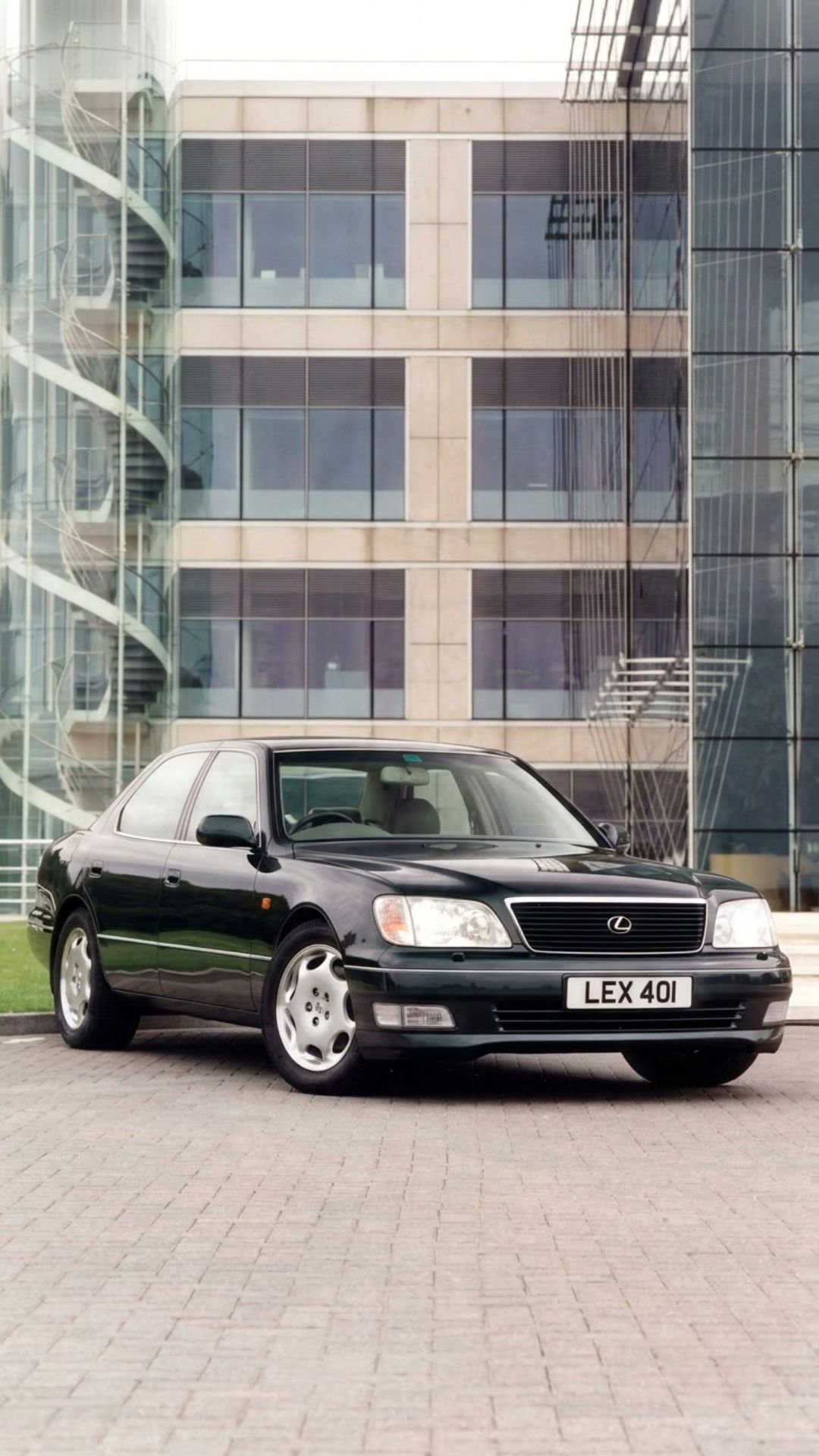
Discover how the US government accidentally created an automotive legend! In this deep dive, Jason Cammisa explores how trade restrictions forced Toyota to build the game-changing Lexus LS 400. Watch as he reveals the obsession, engineering, and audacity behind the car that shook the luxury market forever. Don’t miss it!
The Catch: Fewer Cars Did Not Mean Less Competition
The restraint was designed around quantity, not the total dollar value of Japanese automobiles entering the United States. That distinction created an important economic incentive: when manufacturers cannot simply sell more units, they have stronger reasons to improve the profitability of the units they are allowed to sell. Economists studying the policy later found evidence that Japanese manufacturers shifted toward higher-priced and higher-quality models after the restraint was introduced.
The effect was visible across the Japanese lineup. Research by Robert C. Feenstra found that models such as the Toyota Cressida, Toyota Celica Supra, and Datsun 810 Maxima experienced substantial increases in price, quantity, and quality during the period following the restraint. Much of the increase in Japanese import prices reflected improvements in vehicle quality rather than simply charging more for exactly the same product.
Toyota itself recognized the challenge almost immediately. Its American sales organization reviewed the model mix of the limited number of vehicles it could sell and sought ways to improve profitability under the new constraint. The company was effectively confronting a new economic question: if you cannot sell as many cars, what kind of cars should you sell?
That question would eventually lead Toyota far beyond its familiar compact and midsize models.

Toyota Saw a Problem Above the Corolla
Toyota already had something that established luxury manufacturers desperately wanted: a reputation for engineering, reliability, and manufacturing discipline. What it did not have was a true luxury brand capable of taking a buyer from a mainstream Toyota into the territory occupied by Mercedes-Benz and BMW. Toyota later identified both the U.S. import restrictions and this customer migration as important factors behind the development of Lexus.
The logic was straightforward. If American buyers wanted a premium car and Toyota had no premium offering of its own, some of those customers would eventually leave Toyota altogether. Creating a luxury vehicle could therefore solve two problems at once: make better use of a constrained import opportunity and keep existing customers inside the Toyota ecosystem.
But Toyota did not simply decide to build a more expensive Camry.
In August 1983, chairman Eiji Toyoda challenged Toyota’s executives to create what the company later described as the “best luxury car in the world.” The project that followed became known internally as Circle F, with the “F” standing for flagship. Development began in 1984, several years before the world would even hear the name Lexus.
Project F1 Was Anything but a Normal Toyota
The scale of the project was extraordinary. Toyota assembled around 1,400 engineers, 2,300 technicians, and dozens of designers to develop the new flagship, while teams studied the lifestyles and expectations of American luxury-car owners directly in the United States. The goal was not simply to make a technically competent automobile, but to understand what American buyers actually expected from a premium vehicle.
The engineering effort became almost obsessive. Toyota eventually built approximately 450 vehicle prototypes, while development and testing covered millions of kilometers. The company’s historical record says the LS 400 program took roughly six years and involved more than 3.5 million kilometers of driving tests, while Lexus later cited more than 4.4 million kilometers across 450 test cars in its development history.
The engineers also attacked areas buyers might never consciously notice. The LS 400 used vibration-damping materials and precision manufacturing techniques to reduce noise and vibration, while flush-fitting glass and door handles helped produce a drag coefficient of approximately 0.29. Toyota was spending enormous resources on details that were almost invisible because the goal was not simply to make the car impressive—it was to make it feel effortless.
That philosophy produced a very different kind of flagship. The LS 400 did not need to shout that it was expensive; its engineering was supposed to communicate the message quietly.

Lexus Entered a Market Dominated by European Luxury
The result finally appeared in 1989. Toyota unveiled the LS 400 at the North American International Auto Show in Detroit in January, while Lexus became a dedicated luxury sales channel in the United States later that year. Sales of the LS 400 and the smaller ES 250 began in September 1989 through the new Lexus dealer network.
This was an unusual move for Toyota because the company was not merely adding a high-end model to an existing lineup. It was creating a new identity specifically for the American luxury market. Lexus was separated from the Toyota name in an attempt to give the flagship a different image, while the LS 400 itself shared no direct visual identity with Toyota’s existing mainstream models.
The strategy placed Lexus directly against established European luxury manufacturers. Mercedes-Benz and BMW had decades of brand history in the premium segment, while Cadillac had deep roots in the American market. Toyota arrived with none of that heritage, but it brought something different: a willingness to spend extraordinary amounts of engineering effort on quality, refinement, manufacturing consistency, and reliability.
The result was not an overnight accident. It was the culmination of six years of development, hundreds of prototypes, and an unusually expensive attempt to create a new standard for what a Japanese luxury car could be.
The Trade Restriction Helped Change What Japanese Cars Looked Like
The most fascinating part of the story is that the connection between trade policy and Lexus was indirect. The export restraint did not explicitly tell Toyota to build a luxury car, and it would be too simplistic to say that the policy alone created Lexus. Toyota’s own history identifies two relevant factors: the U.S. import restrictions created room and incentives around limited imports, while Toyota also wanted to stop customers from moving to Mercedes-Benz or BMW when they sought a higher-end vehicle.
Economic research supports the broader mechanism. Because the restraint applied to the number of cars rather than their total value, Japanese manufacturers had an incentive to shift toward higher-priced vehicles, effectively extracting more revenue from each permitted unit. Feenstra’s research found substantial quality upgrading among Japanese imports and concluded that approximately two-thirds of the increase in Japanese import prices after the restraint could be explained by higher quality.
That does not mean every luxury Japanese car of the era was a direct product of Washington’s policy. The Japanese industry was already improving rapidly, and consumer demand, exchange rates, competition, and corporate strategy all mattered. But the restraint changed the economic environment in which Japanese automakers made decisions, and one consequence was a stronger incentive to compete higher up the market. Toyota took that incentive to an extreme.

The LS 400 Became the Proof of Concept
The LS 400 demonstrated what happened when a mass-market manufacturer decided to enter the premium segment with almost unlimited attention to detail. Toyota engineered a new V8-powered flagship, developed a dedicated luxury sales channel, and built a car that emphasized quietness, refinement, durability, and aerodynamic efficiency rather than simply loading an existing Toyota with expensive equipment.
The scale of the development effort became part of the car’s mythology. Six years of work, roughly 450 prototypes, thousands of engineers and technicians, and millions of kilometers of testing were invested in a single flagship model. Lexus later stated that it became America’s best-selling luxury import brand two years after the LS 400’s introduction, illustrating how quickly the newcomer established itself in the market.
The significance went beyond one successful sedan. Toyota had discovered that its reputation for mass-market reliability could be converted into something much more valuable if paired with premium design, engineering, dealership experience, and brand positioning. Lexus gave Toyota access to a part of the market previously dominated by companies with much longer luxury pedigrees.
And suddenly, the very country that had been pressured to restrict car exports was producing a Japanese luxury brand designed specifically to challenge America’s and Europe’s established premium manufacturers.
What the Lexus Story Reveals About Trade Policy
The history of Lexus is often told as a story about brilliant engineering, and it is certainly that. But there is another layer underneath it: policies designed to restrict competition do not always produce the competitive outcome policymakers expect. In this case, the export restraint reduced the number of Japanese cars entering the U.S. market, but it also altered the incentives facing Japanese manufacturers and contributed to a shift toward higher-value products.
The economic effects were complicated rather than one-directional. Feenstra’s research estimated that the restraint caused higher prices for Japanese imports and found a relatively small employment effect in the first year, while later research examined the policy’s effects on consumer welfare, producer profits, and other economic outcomes through 1990. The historical record therefore supports a more nuanced conclusion than simply saying the policy either “worked” or “failed.”
But one unintended consequence is difficult to overlook. A restriction intended to address the competitive pressure from Japanese automobiles did not stop Japanese automakers from moving upmarket; instead, it formed part of the environment in which they had stronger reasons to make each permitted vehicle more valuable. Toyota’s response became Lexus, and the LS 400 gave that strategy a face.
America Tried to Limit the Cars. Toyota Changed the Game.
The birth of Lexus was not caused by a single government decision, a single Toyota executive, or a single engineering breakthrough. It emerged from the collision of several forces: Detroit’s difficulties, Japanese export restrictions, changing American consumer preferences, Toyota’s desire to retain customers, and an extraordinary corporate commitment to engineering. The 1981 restraint changed the competitive environment, while Toyota turned that constraint into an opportunity to move into a segment where it previously had little presence.
That is what makes the LS 400 story so memorable decades later. A policy intended to limit the volume of Japanese automobiles did not prevent Toyota from becoming a serious player in America’s luxury market; instead, the company invested heavily in making fewer permitted cars more valuable and used the opportunity to build an entirely new brand. By 1989, Lexus had arrived, backed by one of the most ambitious automotive development programs of its generation.
The lesson is bigger than one car. Markets respond not only to what governments restrict, but also to the incentives those restrictions create. Sometimes the most consequential result of a policy is not the behavior it directly commands, but the strategy companies develop to work around the new rules.
This article was developed from Toyota’s official historical archive on the 1981 U.S.-Japan automobile export restraints and the development of Lexus, alongside economic research by Robert C. Feenstra and the American Economic Association on the effects of the voluntary export restraint. Source: https://bangshift.com/general-news/videos/historic-videos/the-lexus-ls-400-happened-when-the-government-tried-to-protect-detroit-the-tariff-game-isnt-new-and-didnt-work-before/