For centuries, Icelandic folklore has told of a mysterious book called Rauðskinna, or “Red Skin,” said to contain some of the darkest magic ever recorded in Iceland. According to the legend, its author, Bishop Gottskálk the Cruel, took the book to his grave when he died in 1520, supposedly ensuring that its secrets would never be passed on. Nearly two centuries later, another magician became obsessed with finding it and attempted to summon the dead bishop at Hólar. The book was never recovered, and the magician’s story ended in tragedy.
The Book That Was Supposed To Control The Devil
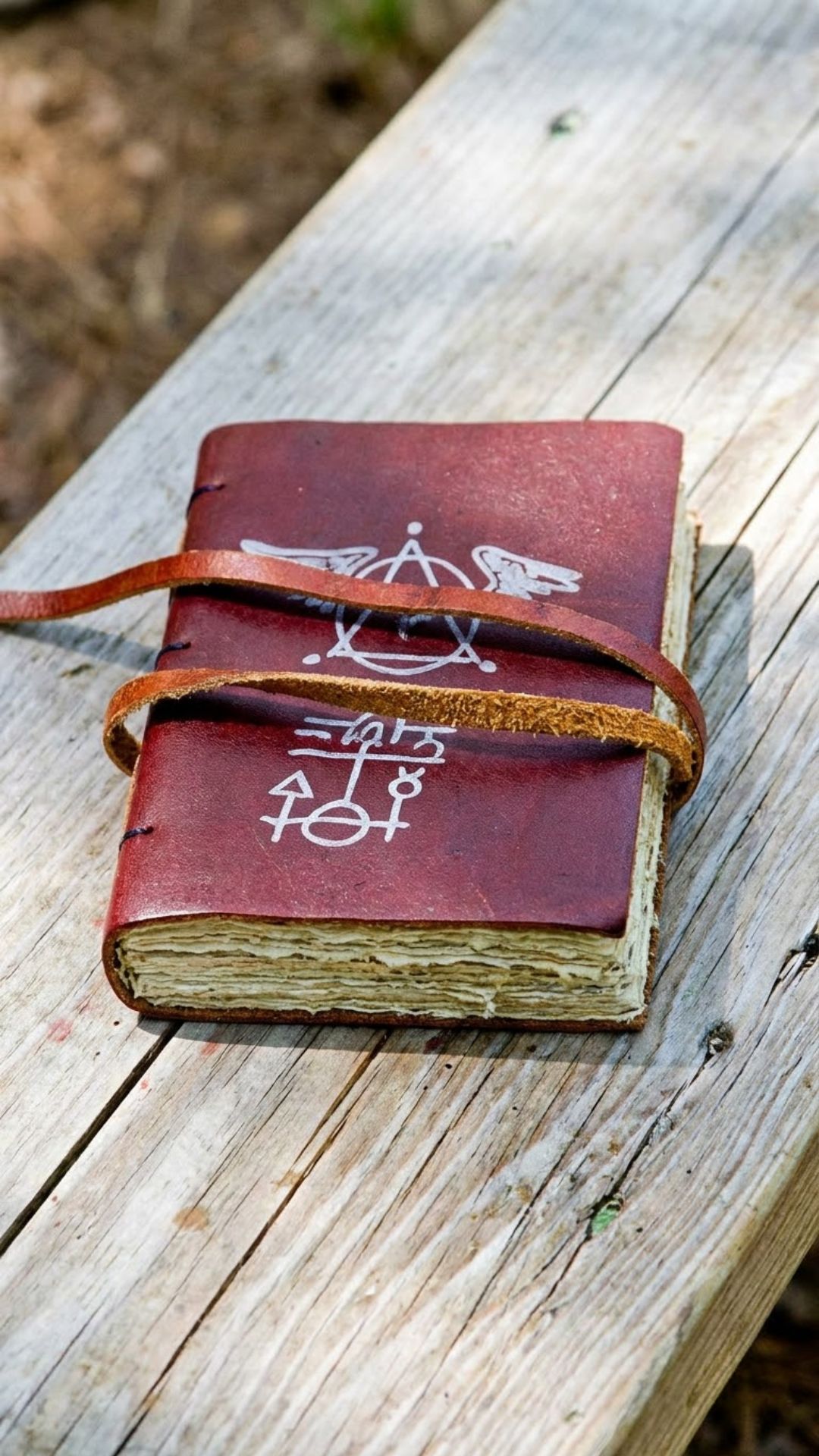
Rauðskinna occupies an unusual place in Icelandic folklore. The story describes it as a powerful grimoire associated with black magic, supposedly bound in red leather and inscribed with golden runes. Its reputation became extraordinary because legend claimed that its ultimate purpose was to give the practitioner enough power to control Satan himself.
The name Rauðskinna translates roughly as “Red Skin,” which became part of the book’s mystique. Later accounts portray it as one of the most powerful magical books in Iceland, sometimes calling it the “bible of all wizards.” These descriptions, however, belong to folklore rather than a surviving manuscript that historians can examine today.
At the center of the story was a real historical figure: Gottskálk grimmi Nikulásson, the Catholic bishop of Hólar in northern Iceland. Historical records establish Gottskálk as a bishop who served there from the late 15th century until his death in 1520, while his reputation as a master of dark sorcery developed through later tradition.
According to the legend, Gottskálk’s most dangerous possession was not simply knowledge. It was the book in which that knowledge had supposedly been collected.
Discover the dark secrets of Raudskinna, the legendary Icelandic book of black magic! Uncover the haunting story of a corrupt bishop and the student who risked everything to claim his forbidden power. Watch this chilling exploration of occult history now and find out if the book still exists today!
The Bishop Who Took His Secrets To The Grave
The traditional story says Gottskálk wanted to keep Rauðskinna’s secrets away from everyone who might try to use them. When he died on December 8, 1520, the book was supposedly buried with him at Hólar, making the bishop’s grave the final resting place of the legendary grimoire.
That detail transformed Rauðskinna from a forbidden book into a lost one. Anyone who wanted its knowledge would first have to locate the grave and somehow obtain a manuscript that was supposed to remain with its owner forever.
For generations, the legend remained attached to Hólar and its cathedral. Then, roughly two centuries later, another student of magic became consumed by the story.
His name was Loftur Þorsteinsson, better known in Icelandic folklore as Galdra-Loftur, or Loftur the Magician. He studied at the Hólar cathedral school and, according to traditional accounts, spent years searching through forbidden magical texts in pursuit of knowledge that had supposedly been lost.
Eventually, ordinary study was no longer enough. Loftur wanted Rauðskinna itself.

Another Magician Came Looking For The Lost Book
According to the legend, Loftur had already mastered Gráskinn, or “Grey Skin,” another magical book said to contain lesser spells. But the legendary Red Skin represented something much greater, and Loftur became convinced that possessing it would give him extraordinary power.
There was only one obstacle: Gottskálk had been dead for almost two hundred years.
So, according to folklore, Loftur devised a plan that was far more ambitious than searching for a forgotten manuscript. He would call the dead bishop back and force him to reveal where the book was—or hand it over himself.
The ritual supposedly took place at Hólar with the help of another student. Loftur began invoking the dead bishops buried at the cathedral, while his companion remained near the bell rope, ready to intervene if necessary. What happened next became the most famous part of the Rauðskinna legend.
The Night A Dead Bishop Supposedly Returned
The story says Loftur intensified the ritual, calling upon the dead and even turning Christian psalms into invocations directed toward the devil. After a long struggle, a heavy sound was heard and a dead man supposedly rose, carrying a staff and a red book beneath his arm. The apparition was said to be Gottskálk himself.
Loftur had finally reached the moment he wanted. Yet the dead bishop did not simply hand over Rauðskinna.
According to the tale, Gottskálk refused to surrender the book. Loftur continued his attempts, becoming increasingly desperate as the cathedral supposedly shook around them. Meanwhile, the frightened student in the belfry watched the ritual unfold and waited for the signal to intervene.
Eventually, the student believed he saw Gottskálk extend the red book toward Loftur. Thinking that the moment had come, he grabbed the church bell rope and rang it.
The apparition vanished. The ritual was broken. And Rauðskinna remained with the dead bishop.

The Man Who Wanted The Book Paid A Price
The folklore does not portray Loftur as someone who simply accepted failure and moved on. Instead, the unsuccessful attempt to obtain Rauðskinna supposedly marked the beginning of his decline.
According to later tradition, the experience left Loftur mentally disturbed and eventually led to his being placed under the care of a priest in a remote part of Iceland. He later escaped and went to sea, where the legend gives him a final and supernatural fate.
One version says that a strange black, furry claw emerged from the water and dragged him beneath the waves. Loftur was never seen again.
There is no historical evidence that a supernatural hand pulled him into the sea. Like the resurrection of Gottskálk, this belongs to the folklore surrounding Galdra-Loftur.
But as a story, the ending is almost perfect: the man who tried to obtain forbidden knowledge supposedly disappeared while pursuing powers he could never control.
Was Rauðskinna Ever A Real Book?
This is where the story becomes more interesting, not less.
There is no authenticated Rauðskinna manuscript known today, and no surviving document allows historians to verify the legendary book’s contents or even establish that it existed exactly as folklore describes it. Historic Mysteries itself notes that the book’s fate remains unknown and offers several possibilities, including that it could have been destroyed, lost or never existed in the legendary form.
At the same time, the world surrounding the legend was real. Gottskálk was a historical bishop, Hólar was an important religious and educational center, and Iceland genuinely had a tradition of magical manuscripts. Surviving Icelandic grimoires show that people did write down magical symbols and formulas, even though they do not prove the existence of Rauðskinna.
That distinction is crucial. The history gives us the setting, the people and the cultural tradition. The supernatural elements belong to the stories that developed around them.
Why The Legend Has Survived
Rauðskinna remains compelling because its mystery has never been resolved by a surviving book. There is no final manuscript sitting in a museum that can settle the matter. Instead, the legend has passed from one generation to another as a story about knowledge that was supposedly powerful enough to frighten even the people who wanted it most.
Gottskálk supposedly took the book to the grave. Loftur supposedly tried to bring him back. The bishop refused, and the book disappeared with him.
That makes Rauðskinna less a story about proving that black magic works and more a story about the human obsession with forbidden knowledge. The book is always somewhere just beyond reach, and every attempt to obtain it only makes the mystery larger.
Perhaps that is why the legend has endured for centuries. A lost book can be found, a manuscript can be translated, and a historical mystery can sometimes be solved. But a book that may never have existed can remain mysterious forever.
Rauðskinna is one of Iceland’s most enduring legends: a supposedly powerful book of black magic associated with Bishop Gottskálk the Cruel, who died in 1520 and was said to have been buried with it. Nearly two centuries later, folklore says the magician Galdra-Loftur became obsessed with obtaining the book and attempted to summon the dead bishop at Hólar. The ritual supposedly brought Gottskálk back, but he refused to surrender Rauðskinna before a church bell broke the spell. Whether the legendary book ever existed remains unknown. What is certain is the power of the story itself—a tale of forbidden knowledge, ambition and a secret that was supposedly valuable enough to remain buried with the dead.
P.S. This article treats Rauðskinna and the story of Galdra-Loftur as Icelandic folklore rather than established supernatural fact. The primary source is Historic Mysteries, which draws on traditional Icelandic stories and cited historical references. Source: https://www.historicmysteries.com/unexplained-mysteries/raudskinna-black-magic-book/40061/