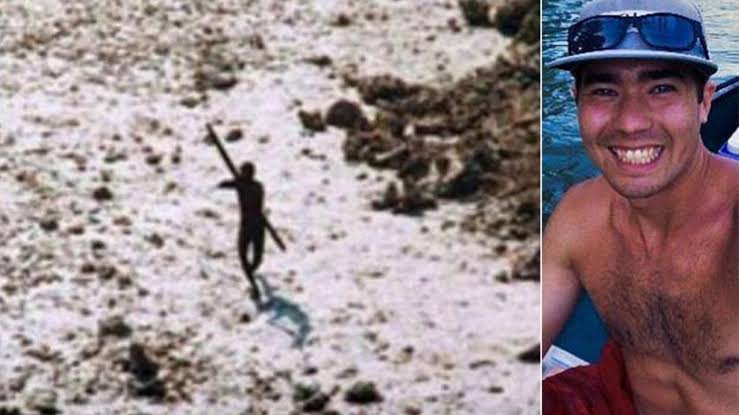
What would make someone knowingly enter an island that the outside world has been ordered to leave alone? In November 2018, 26-year-old American missionary John Allen Chau traveled to India’s North Sentinel Island despite strict restrictions protecting the isolated Sentinelese community. He reached the shore, encountered the islanders, survived the first confrontation and then made the decision to go back. After that, the mystery became not only what happened to Chau, but why rescuers could not simply go ashore to retrieve him.
An Island Built Around Staying Away From the Outside World
North Sentinel Island lies in India’s Andaman and Nicobar Islands, surrounded by the Bay of Bengal and the Andaman Sea. The Sentinelese have maintained an extremely isolated way of life, and the Indian government has adopted an “eyes-on, hands-off” policy designed to prevent outsiders from entering and to minimize direct contact.
The restrictions are not simply about enforcing a border. Government officials have said the entire island and the surrounding coastal waters are protected as a tribal reserve, with outsiders—including foreigners and tourists—prohibited from entering. One reason is the danger that ordinary diseases carried by outsiders could be devastating to a community with little exposure to them.
The Sentinelese have also shown repeatedly that they do not want outside contact. Their response to approaching boats and aircraft has included shooting arrows, and authorities have continued to patrol the waters around the island rather than encouraging direct encounters.
Ever wondered about the most isolated tribe on Earth? Dive into the story of the Sentinelese and why their privacy is so heavily protected. Watch now to learn more!
Chau Came to the Island With a Plan
John Allen Chau had visited India’s Andaman and Nicobar Islands before, in 2015 and 2016, and later organized another trip specifically to reach North Sentinel. According to police, a friend hired seven fishermen for $325 to take him near the island, with his kayak being towed behind their boat.
Chau went ashore in his kayak on November 15, 2018, while the fishermen stayed offshore at a prearranged location. He attempted to communicate with the Sentinelese and offered gifts including fish and a football.
The encounter quickly turned into a warning. According to police, an islander fired an arrow that struck the book Chau was carrying. His kayak was damaged, and he retreated to the fishermen’s boat. The message was difficult to misunderstand: the people on the island did not want him there.

He Had Already Been Warned. Then He Went Back.
After returning to the boat, Chau spent the night writing about what had happened. He then made a decision that changed the outcome of the trip: he went back to the island on November 16.
What happened during that final encounter remains unknown. The fishermen waiting offshore did not witness the confrontation itself, but on the following morning they reported seeing islanders dragging Chau’s body along the beach.
They returned to Port Blair and informed Chau’s friend, who contacted his family, U.S. officials and Indian authorities. Police then began investigating not only Chau’s death but also how he had been taken into a prohibited area in the first place.

Why Couldn’t Police Simply Go In and Bring Him Back?
This is where the story becomes unusual. Under normal circumstances, the obvious response to the death of an American on a remote island would be to send a team to recover the body. North Sentinel was different.
Indian authorities said they were consulting anthropologists who had knowledge of the region before deciding how to approach the island. The government had a longstanding policy of avoiding direct contact with the Sentinelese, and entering the island could create risks for both rescuers and the tribe.
There was also the legal issue. The island and its surrounding waters were protected, and unauthorized entry was prohibited. Seven fishermen involved in taking Chau toward the island were arrested and charged with endangering his life by bringing him into a restricted area.
The result was an extraordinary situation: the authorities believed an American was dead on the island, yet the safest response was not necessarily to send armed officers onto it.
Discover the chilling story of North Sentinel Island and the tragic journey of John Allen Chau. This video explores the history of one of the world’s most isolated tribes and the fatal consequences of crossing their boundaries. It is a gripping must-watch for those fascinated by the dangers of the unknown.
The Islanders Had Given the Same Warning Before
Chau’s death did not happen in a vacuum. In 2006, two Indian fishermen were killed after their boat drifted ashore, showing how dangerous an unwanted encounter could become even before the 2018 incident.
The Sentinelese response is also rooted in a much longer history. Representatives of organizations defending tribal rights have pointed to the devastating impact of colonial contact on other Andaman communities, arguing that the Sentinelese’s suspicion of outsiders has historical reasons.
The Indian government therefore faces a difficult balance. It has to enforce the law against people who attempt to enter the island while also avoiding the kind of sustained contact that could endanger the Sentinelese themselves.
That is why North Sentinel remains one of the rare places where “do not go there” is not merely advice. It is official policy.

The Biggest Mystery Was a Choice
The final mystery is not simply how Chau died. Police said he was apparently killed with arrows, but because his body was never recovered, even the precise cause of death was initially not formally confirmed.
What is known is that Chau had already encountered resistance and retreated safely to the fishermen’s boat. He had an opportunity to leave the island behind. Instead, he returned the next day.
That decision transformed the expedition. What began as an attempt to make contact with an isolated community ended with a death that authorities could not address through a conventional rescue mission. The island’s isolation, the government’s restrictions and Chau’s own choices all collided in a matter of hours.
John Allen Chau deliberately traveled to North Sentinel Island in November 2018 despite India’s ban on outside entry. After his first encounter ended with an arrow striking the book he carried, he returned the next day and was apparently killed. Fishermen later reported seeing his body on the beach, but authorities did not simply send a recovery team onto the island because of the protected status of the Sentinelese and the risks of direct contact. The tragedy remains a stark example of what can happen when a clear boundary is crossed.