In the early 1960s, Chrysler built a car that sounded like a jet, could run on fuels ranging from diesel to kerosene, and looked as though it had driven straight out of the future. But Chrysler did something even more remarkable: it gave ordinary Americans the chance to drive one. Fifty of the futuristic cars were loaned to the public for free, and 203 people in 133 cities eventually put more than a million miles on them. Then the experiment ended. Chrysler rounded up the cars and destroyed 46 of the 55 it had built. Only nine survived.
The Car That Looked Like The Future
In 1963, the American automobile industry was obsessed with the future. Jet aircraft were transforming travel, the space race was dominating headlines and designers were imagining a world in which technology would change almost every part of everyday life. Cars were no exception. If the jet engine could propel an aircraft through the sky, why couldn’t a similar idea transform the family automobile?
Chrysler had already spent decades exploring that possibility. Its turbine research had begun in the late 1930s, initially through aviation work, before engineers started asking whether the same basic technology could power a car. By the 1950s, Chrysler was testing turbine engines in modified production vehicles and demonstrating that the idea was more than a science-fiction fantasy.
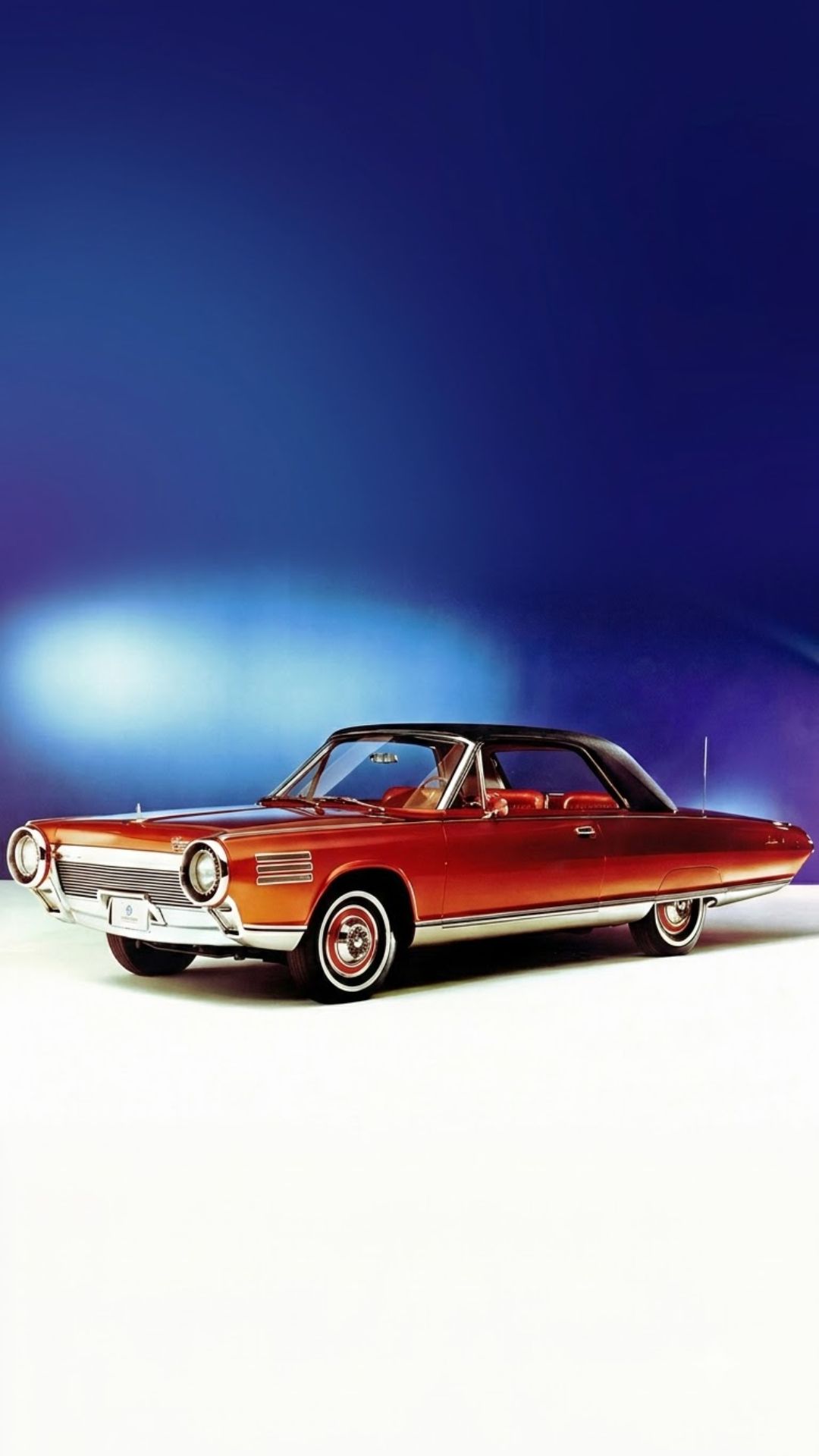
The result was the 1963 Chrysler Turbine Car, a machine that looked unlike almost anything else on an American road. Designed under Elwood Engel and Charles Mashigan and bodied by Italy’s Carrozzeria Ghia, it was covered in visual references to turbine blades. The headlamp bezels, wheel covers, console, steering-wheel hub and even small details inside the cabin repeated the same circular turbine motif.
Almost every example was painted in a distinctive copper-colored shade Chrysler called Turbine Bronze, with a black vinyl roof. Inside were four individual bucket seats, brushed aluminum trim and a futuristic instrument panel made up of three large round pods. It was unmistakably a product of the jet age.
But the strangest thing about it was not the styling. It was what sat underneath the body.
Ever dreamed of driving a jet-powered car? Dive into the fascinating story of the 1963 Chrysler Turbine! Jay Leno explores this rare, revolutionary vehicle, sharing vintage footage, exclusive assembly line history, and an epic road test. Discover why this bold engineering marvel changed automotive history. Watch the full episode now!
It Didn’t Have A Normal Car Engine
Instead of the conventional piston engine used by almost every automobile of the period, the Turbine Car was powered by Chrysler’s fourth-generation A-831 gas turbine.
The basic principle was radically different. A conventional piston engine repeatedly moves pistons up and down inside cylinders, converting combustion into mechanical motion. The turbine engine instead compressed air, burned fuel and used the resulting expanding gases to spin turbine wheels.
That design gave Chrysler some remarkable advantages. The A-831 had far fewer moving parts than a conventional piston engine and did not require a radiator, antifreeze, crankshaft or connecting rods. It could also tolerate an astonishing variety of fuels. Diesel, kerosene, JP-4 jet fuel and several other fuels could be used, while engineers even demonstrated the engine’s ability to run on unusual alternatives.
One of the most famous demonstrations came in Mexico. President Adolfo López Mateos reportedly operated a Turbine Car using tequila as fuel.
It was a spectacular party trick, but it also illustrated one of the technology’s most intriguing characteristics. Chrysler’s engineers were investigating an engine that was far less dependent on a particular type of petroleum fuel than the conventional gasoline engines of the era.
The engine itself was tiny compared with what many people might expect from such a futuristic machine. It weighed about 410 pounds and produced 130 horsepower at an astonishing 36,000 rpm. At 120 mph, the turbine could reach 60,000 rpm. And when it ran, people knew it.
The sound was often compared to a vacuum cleaner or a small jet engine. Chrysler eventually discovered that roughly 60 percent of the people involved in its public testing actually liked the distinctive sound, while about 20 percent disliked it. The rest were indifferent.
For people accustomed to the rumble of a V8, the experience must have been extraordinary.

Chrysler Did Something Almost Unthinkable
Most experimental cars never leave the hands of engineers. They appear at an auto show, attract a crowd, perhaps make a few demonstration runs and then disappear into a corporate warehouse.
Chrysler took a very different approach.
After showing its turbine technology around North America, Europe and Mexico and giving rides to nearly 14,000 people, the company decided to let ordinary Americans experience the car in everyday life. Fifty Turbine Cars were built for a public testing program, with the remaining five of the 55 built serving as prototypes.
Beginning in October 1963, Chrysler loaned the cars to members of the public for three months at a time, free of charge. The participants paid for their own fuel and agreed to provide Chrysler with detailed feedback about their experiences.
Eventually, 203 people—180 men and 23 women, ranging in age from 21 to 70—participated in the program. They lived in 133 cities across the 48 contiguous states and Washington, D.C. About 60 percent were already Chrysler owners. Together, the drivers accumulated more than one million miles.
Think about what that meant.
A futuristic turbine-powered automobile was no longer sitting behind a velvet rope. It was parked in an ordinary American driveway.
A neighbor could see one outside a house. A family could take one shopping. Someone could drive it to work. Children could watch their parents climb into a car that sounded more like an aircraft than an automobile.
Crowds reportedly gathered around the vehicles even when they were simply parked in the testers’ driveways. For a brief period, the future had become part of everyday American life.

Then Reality Caught Up With The Future
The Turbine Car proved that the technology worked. But proving that something can be done is very different from proving that it should become a mass-market product.
The public testing program exposed both the strengths and weaknesses of the turbine engine.
Starting the car could be complicated. Acceleration was not particularly impressive, partly because the vehicle was heavy. Fuel economy was poor, and the distinctive turbine sound could become tiring. Some drivers also experienced starting difficulties at higher elevations.
The turbine did have impressive qualities. It ran smoothly, required relatively little maintenance and could start reliably in many conditions. It also demonstrated remarkable durability.
But the economics were brutal.
The Turbine Car was extraordinarily expensive to build. Old Cars Weekly notes that Chrysler’s cost may have reached approximately $55,000 per vehicle at the time, with about $20,000 of that going toward the hand-built Ghia body. In modern purchasing-power terms, that would represent hundreds of thousands of dollars per car.
That was not a realistic path toward putting turbine engines in millions of family sedans. The dream was beginning to collide with reality.

America Drove The Future—Then Chrysler Destroyed It
The final chapter is the part that makes the Turbine Car story so difficult to forget.
By April 1966, Chrysler had decided that the test cars would be retired regardless of whether the turbine technology moved into production. The company ultimately destroyed 46 of the 55 cars it had built. Forty-five were destroyed at a scrapyard south of Detroit, while another was demolished at Chrysler’s Chelsea Proving Grounds.
The decision has generated decades of speculation, including a persistent theory that the cars were destroyed primarily because of import duties associated with their Italian-built Ghia bodies. But automotive historian Steve Lehto and people involved with the program have challenged that explanation. The larger concerns included liability, serviceability and Chrysler’s reluctance to have experimental turbine cars circulating on the used-car market.
There was also a practical problem.
These were not ordinary cars that could simply be maintained at any Chrysler dealership. Their engines, parts and technology were unique. Chrysler had no intention of supporting hundreds of turbine-powered vehicles indefinitely after the experiment ended. So the cars disappeared.
One by one, machines that had represented the future of transportation were crushed.
The irony is extraordinary. Chrysler had spent decades developing turbine technology, built a futuristic car, allowed hundreds of ordinary Americans to drive it and accumulated more than a million miles of real-world experience. Then almost the entire fleet was gone.

Nine Cars Survived
Of the 55 Turbine Cars built, only nine are known to survive today. Chrysler retained three, while six went to museums or collections. At least three surviving examples are known to remain operational, including the car owned by Jay Leno, an example at the National Museum of Transportation and the Turbine Car featured by Old Cars Weekly at the Stahls Motors & Music Experience in Michigan. That makes every surviving car more than just a rare classic.
It is a physical reminder of a road the automobile industry almost took.
The Stahls example has passed through several notable collections and is still displayed and occasionally demonstrated. When one of these cars runs today, the sound offers something that photographs can never capture. The turbine spins, the engine produces its strange aircraft-like whine and, for a moment, the optimism of the early 1960s seems to return.
You can almost imagine an ordinary American family standing in a driveway in 1964, looking at the copper-colored machine and wondering whether this was what every car would eventually become. It wasn’t.
The automobile industry stayed with piston engines. Gasoline remained dominant. The turbine car became an intriguing dead end rather than the beginning of a new age.

The Future That Never Arrived
The Chrysler Turbine Car failed as a mass-market automobile, but that does not make the experiment a failure in the historical sense.
It answered questions that could not have been answered inside a laboratory. Chrysler discovered what happened when real people lived with turbine-powered cars. It learned what drivers liked, what they disliked and which engineering problems remained too difficult to overcome.
More importantly, the cars captured something about America in the early 1960s that is difficult to reproduce today.
This was a period when people genuinely believed technology could transform everyday life. The space race suggested that humans might soon travel beyond Earth. Jet aircraft were shrinking the world. Nuclear power promised limitless energy. Designers imagined cities, homes and automobiles that looked completely different from anything their parents had known.
The Turbine Car belonged perfectly to that moment. It was bold, excessive and perhaps impractical—but it represented optimism. And that may be why its destruction feels so strange more than six decades later. The most fascinating part of the story is not that Chrysler built a car powered by a turbine. It is that ordinary Americans actually got to drive it. For a brief moment, the future wasn’t sitting on a drawing board or behind glass at an auto show. It was in someone’s driveway. Then Chrysler came back for it.
The 1963 Chrysler Turbine Car was never destined to become America’s everyday automobile, but for a few remarkable years it offered a glimpse of an entirely different automotive future. Fifty cars were placed in the hands of ordinary drivers, 203 people drove them across 133 cities and together they covered more than a million miles. The experiment proved both the promise and the limitations of turbine power. Then Chrysler destroyed 46 of the 55 cars it had built. Only nine survived, leaving behind one of the strangest chapters in American automotive history: a future that people actually drove, but never got to keep.
This article is based on the reporting and historical information published by Old Cars Weekly on the 1963 Chrysler Turbine Car. Source: https://www.oldcarsweekly.com/car-of-the-week-1963-chrysler-turbine-car