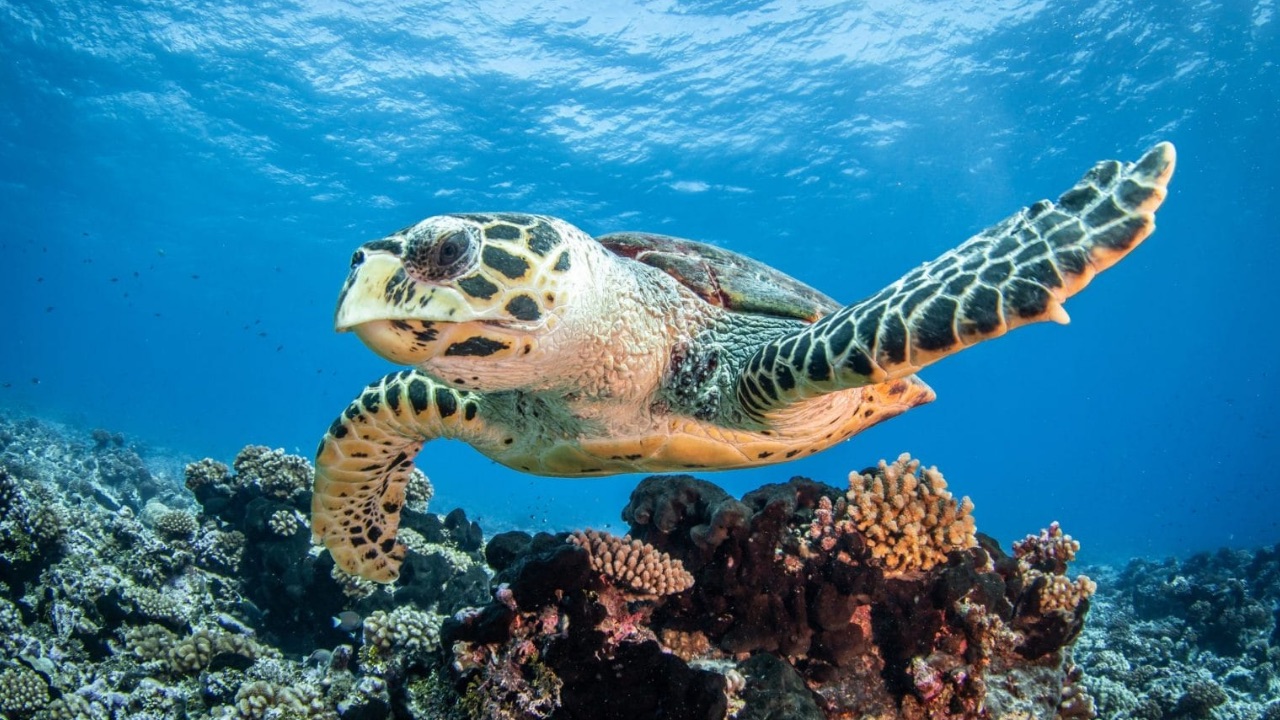
For more than four decades, Jorge the loggerhead sea turtle lived inside the limited boundaries of captivity, far from the Atlantic Ocean where his species naturally belongs. His food arrived from humans, his surroundings rarely changed and the vast distances of the open sea became a world he could no longer experience. Then, at around 60 years old, Jorge was finally given another chance. After years of careful rehabilitation, he returned to the Atlantic—and within just 70 days, the turtle traveled more than 1,700 miles toward freedom.
He Entered the Ocean After More Than 40 Years
On April 11, 2025, Jorge was released into the Atlantic Ocean near Mar del Plata, Argentina. For most people, watching a sea turtle return to the water might appear to be a simple moment of freedom. In Jorge’s case, however, it represented the end of an extraordinary chapter and the beginning of a completely uncertain one. He had reportedly spent more than 40 years in captivity, meaning the ocean he entered was no longer the world he had known for most of his life.
Once Jorge disappeared beneath the waves, there would be no enclosure, no predictable feeding schedule and no people nearby to intervene if something went wrong. He would have to find food, respond to changing water conditions and navigate independently. The people involved in his rehabilitation could prepare him for the challenge, but they could not control what happened once he reached the open sea. That uncertainty made his first days of freedom especially important.

For Decades, His Entire World Was a Tank
Jorge’s story began many years earlier when he was reportedly caught in fishing nets and later placed under human care. He eventually spent decades at an aquarium in Mendoza, Argentina, a city located far from the Atlantic coast. Over time, Jorge became a familiar animal to many people, but his long captivity also created a difficult question: what should happen to an ocean animal that has spent most of its life away from the ocean?
For a loggerhead sea turtle, the natural world is defined by movement. These animals are capable of traveling through enormous areas of water and navigating between feeding and nesting grounds. Jorge, however, had lived within a far smaller environment. His food was supplied by humans, and his daily life was shaped by the limits of an enclosure. The longer he remained there, the more difficult the possibility of release appeared.
Eventually, keeping Jorge in captivity was no longer the only question. Scientists and animal welfare specialists had to consider whether decades of confinement had made a return to the wild impossible—or whether he still had a chance to live independently.
Watch the video below to follow Jorge’s incredible journey from more than 40 years in captivity to freedom in the open Atlantic. His remarkable 1,700-mile swim proves that sometimes, even after decades away, the instinct to keep moving forward never truly disappears.
Freedom Was Not as Simple as Opening a Gate
Releasing Jorge directly into the Atlantic after more than 40 years in captivity could have created serious risks. An animal accustomed to human care may lose physical conditioning or struggle to perform behaviors that are essential for survival in the wild. Jorge therefore needed to be prepared before his release.
According to the source story, his rehabilitation lasted several years. His environment was gradually adjusted to better resemble natural conditions, while his diet was changed to encourage him to behave more like a wild turtle. Instead of relying entirely on food delivered by people, Jorge was reportedly introduced to live prey such as crabs and snails.
The rehabilitation team also needed to consider his swimming ability. A turtle can survive in a controlled pool without confronting the powerful currents and changing conditions of the open ocean. Artificial currents reportedly became part of Jorge’s preparation, allowing him to rebuild strength and adapt to more demanding swimming conditions.
The goal was not simply to make Jorge healthy enough to leave captivity. It was to give him a realistic chance of surviving after leaving it.

At Around 60, Jorge Had to Become Wild Again
Jorge was estimated to be around 60 years old when he returned to the Atlantic. His age made the story even more extraordinary because he had spent most of his adult life under human care. By that point, nobody could know exactly how much of his natural behavior remained.
Could he still hunt effectively? Would he understand where to travel? Could he respond to currents, changing temperatures and the other challenges of open-ocean life? These were questions that could not be fully answered while Jorge remained inside a rehabilitation facility.
Years of preparation could strengthen his body and encourage natural behavior, but the ocean would provide the final test. Once released, Jorge would have to make his own decisions. There would be no humans directing him toward food or showing him which direction to swim.
His release therefore became more than an emotional wildlife story. It became a remarkable test of whether an animal could recover its independence after an extraordinary period of captivity.
Scientists Attached a Tracker and Waited for Answers
Before Jorge was released, researchers attached a satellite tracking device to his shell. The device would allow them to follow his movements after he disappeared into the Atlantic, providing valuable information about whether he was actively traveling and how he responded to life in the wild.
For the people who had spent years preparing him, the first tracking signals must have carried enormous significance. Jorge’s release had created a possibility, but the data would reveal whether that possibility was becoming reality.
The signals showed that Jorge was moving. More importantly, he was not simply remaining near the location where he had been released. His journey gradually carried him north along the South American coast.
The turtle who had spent decades inside a limited space was now moving through an environment without visible boundaries. Every new signal became another indication that Jorge was alive, active and continuing his journey.

Then He Swam More Than 1,700 Miles
Within approximately 70 days of his release, Jorge had traveled more than 1,700 miles. His route took him north from Argentina, past Uruguay and toward Brazil, carrying him through a vast area of the Atlantic Ocean.
The distance was astonishing because Jorge had spent more than 40 years away from open-ocean life. But the journey was important for another reason: it suggested that he was doing more than simply surviving near the place where he had been released.
Jorge was moving.
His route carried him toward warmer waters, and his continued progress demonstrated that he could travel independently across significant distances. For the researchers following his tracker, this was evidence that the rehabilitation process had prepared him for far more than a symbolic return to the sea.
The image was difficult to ignore. For decades, Jorge had swum within the same limited boundaries. Now he was crossing hundreds of miles of open water with nothing surrounding him but the ocean.
His Instincts Had Never Completely Disappeared
Jorge’s journey raised a fascinating question about the nature of instinct. How much of an animal’s natural behavior can remain after decades of captivity?
There is no universal answer. Long periods under human care can affect animals in different ways. Some may lose physical conditioning, while others may become accustomed to receiving food or living in environments that no longer resemble their natural habitats.
Jorge’s story was therefore not proof that every long-term captive animal can safely return to the wild. His release required extensive preparation, and the success of one individual cannot automatically be applied to every species or situation.
But his journey suggested something remarkable. Despite spending more than four decades away from the open ocean, Jorge was still capable of traveling through it. Some of the behaviors needed for life in the wild appeared to remain deeply rooted.
Decades had changed the circumstances of his life. They had not completely erased his connection to the sea.
Jorge’s Journey Became a Major Test for Wildlife Rehabilitation
The success of Jorge’s early journey also highlighted the importance of rehabilitation before release. Returning an animal to nature is not always as simple as opening a gate or removing it from an enclosure. If an animal cannot find food, move effectively or respond to its environment, freedom alone may not be enough to ensure survival.
Jorge’s case involved years of preparation. His diet was adjusted, his swimming ability was developed and natural behaviors were encouraged before his release. The dramatic moment when he finally entered the Atlantic was only the visible conclusion of a much longer process.
That process may provide useful lessons for future wildlife rehabilitation efforts. Every case is different, but Jorge demonstrated the value of preparing an animal for independence rather than treating release as the beginning of rehabilitation.
In his case, freedom was not an instant event. It was something he had to be prepared for—and something he had to prove he could handle.
From a Concrete Tank to the Vast Atlantic Ocean
Perhaps the most powerful part of Jorge’s story is the contrast between the two worlds he experienced. For decades, his movements were defined by the walls around him. His environment was familiar, predictable and controlled.
Then he returned to the Atlantic.
There were no walls anymore. The water stretched toward the horizon, and every decision was his own. He had to move through natural currents, find food and navigate an environment that was larger than anything he had experienced in more than four decades.
At around 60 years old, Jorge was given an opportunity that many people might have considered impossible. He was allowed to begin again.
And instead of remaining close to the place where he was released, he kept swimming.
The Turtle Who Kept Swimming
Nobody could predict exactly what Jorge would do when he entered the Atlantic. His rehabilitation had created the possibility of a successful release, but there was never a guarantee.
Then the tracking signals began arriving.
They showed Jorge moving north. They showed him traveling farther from his release point. And over the course of approximately 70 days, they documented a journey of more than 1,700 miles.
The turtle who had spent more than 40 years inside a limited environment was now covering distances that reflected the true scale of his natural world.
For decades, Jorge could only swim where the walls allowed him to swim. Then those walls disappeared.
And he kept going.
Jorge’s journey began with decades of captivity and ended with one of the most remarkable wildlife releases imaginable. After spending more than 40 years in a tank, the loggerhead turtle underwent years of rehabilitation before finally returning to the Atlantic Ocean at around 60 years old. Nobody could know whether he would successfully adapt to freedom, but his satellite tracker soon provided an extraordinary answer. In approximately 70 days, Jorge traveled more than 1,700 miles through open water. His story became a powerful reminder that freedom sometimes requires preparation—but even after decades away from where they belong, some animals may still remember the way forward.