Brake fluid is one of the most important fluids in a vehicle, yet it is easy to overlook during routine maintenance. It transfers the force from the brake pedal through the hydraulic system, allowing the brakes to slow and stop the vehicle. Over time, however, brake fluid can absorb moisture and become contaminated. Knowing how to check its condition and replace it when necessary can help keep your braking system working as it should.
Why Brake Fluid Matters More Than You Think
When you press the brake pedal, you are not directly pushing the brake pads against the rotors. Instead, the pedal operates the master cylinder, which pressurizes brake fluid inside the hydraulic lines.
That pressure travels through the brake system to the calipers or wheel cylinders, ultimately applying the brakes.
Because brake fluid is responsible for transmitting this pressure, its condition matters.
Brake systems can generate considerable heat, particularly during repeated or hard braking. The fluid therefore needs to maintain its properties under high temperatures.
Brake fluid also has to remain relatively stable over time. Unfortunately, it does not stay in perfect condition forever.
Moisture can gradually enter the system, and contaminants can accumulate. As the fluid deteriorates, its performance under demanding conditions can be affected.
That is why brake fluid deserves attention alongside more obvious maintenance items such as brake pads, tires and engine oil.

Brake Fluid Can Absorb Moisture Over Time
One of the biggest concerns with brake fluid is moisture.
Many brake fluids are hygroscopic, meaning they can absorb water from the surrounding environment. Moisture can enter through microscopic amounts of permeability in rubber components and through the fluid reservoir’s exposure to air.
At first, the change may not be noticeable.
But as moisture content increases, the fluid’s boiling point decreases.
That matters because braking produces heat. Under severe braking conditions, contaminated fluid can potentially reach its boiling point. When liquid brake fluid boils, vapor can form within the hydraulic system.
Unlike liquid, vapor is compressible.
That can produce a soft or spongy brake pedal and reduce the hydraulic pressure reaching the brakes.
Moisture is therefore not simply a matter of making old brake fluid look dirty. It can affect the way the braking system behaves under high temperatures.
The age and condition of the fluid also depend on the vehicle, the type of brake fluid and the conditions in which the car is driven.
A vehicle that spends years in a hot or humid environment may face different conditions from one driven occasionally in a dry climate.
Want to know how to check your brake fluid and spot signs that it may need attention? Watch the video for a quick look at this often-overlooked part of basic car maintenance.
How to Check the Condition of Your Brake Fluid
The first step is usually a simple inspection of the brake fluid reservoir.
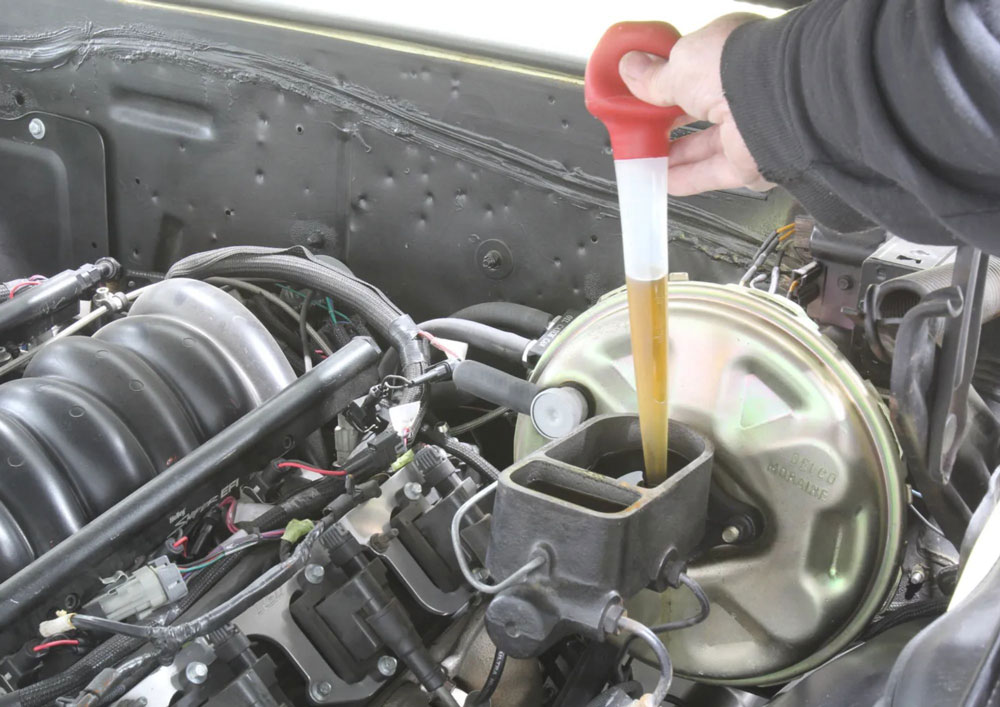
Open the hood and locate the reservoir, which is generally mounted near the master cylinder. The reservoir should have markings indicating the appropriate fluid level.
Check whether the fluid is between the specified minimum and maximum levels.
A low level deserves attention.
It can occur as brake pads wear, because more fluid is required in the calipers as the pistons move farther outward. However, a significant or sudden drop can also indicate a leak.
Simply adding more fluid without finding out why the level has fallen is not a proper solution.
Next, take a look at the fluid itself.
Fresh brake fluid is generally relatively clear or light in color, depending on its type. As it ages and becomes contaminated, it can become darker.
However, appearance alone is not a reliable way to determine moisture content.
Fluid that looks acceptable can still contain enough moisture to warrant replacement. Conversely, darker fluid does not automatically mean that the braking system is unsafe.
For a more useful assessment, moisture-testing tools can be used to determine the approximate water content of the brake fluid.
That gives you information that a visual inspection cannot provide.

Know When Your Brake Fluid Needs to Be Replaced
There is no single replacement interval that applies to every vehicle.
The correct service interval depends on the vehicle manufacturer’s recommendations, the type of brake fluid and the conditions in which the vehicle is operated.
That means the owner’s manual should be the starting point.
Some manufacturers specify a time interval for brake-fluid replacement, while others provide different recommendations depending on the model.
It is also important to use the correct specification.
Brake fluids are available in different classifications, including DOT 3, DOT 4 and DOT 5.1, while DOT 5 is a different type of fluid with different characteristics. They should not simply be treated as interchangeable products.
Using the fluid specified by the vehicle manufacturer is essential.
A fluid change may also be appropriate when testing shows excessive moisture or when the fluid has become significantly contaminated.
If the brake pedal suddenly feels soft or spongy, however, the answer should not simply be “change the fluid.”
A soft pedal can have several possible causes, including air in the hydraulic system, a leak or another brake-system problem. The system should be properly inspected.
How to Replace Brake Fluid Safely
Replacing brake fluid involves more than simply removing the old fluid from the reservoir and pouring in new fluid.
The old fluid needs to be removed from the hydraulic system while fresh fluid is introduced, typically through the brake-bleeding process.
Before beginning, make sure you have the correct brake fluid for the vehicle.
You will generally need fresh fluid, a suitable container, a clear hose and the appropriate wrench for the bleeder screws. Depending on the vehicle and procedure, the wheels may also need to be removed to access the brake components.
Work on a level surface and make sure the vehicle is securely supported.
Brake fluid can also damage automotive paint, so avoid spilling it on painted surfaces and clean up any accidental spills promptly.
Begin by checking the reservoir and removing the old fluid according to the appropriate procedure.
The brake system is then bled through the bleeder screws at the wheels. Fresh fluid is introduced through the reservoir while old fluid is expelled from the system.
One important point is to never allow the reservoir to run completely dry during bleeding.
If the reservoir empties, air can enter the hydraulic system, creating additional work and potentially requiring the bleeding process to be repeated.
The exact bleeding sequence can vary by vehicle, so the manufacturer’s recommended procedure should be followed rather than assuming that every car uses the same order.
Continue until clean, fresh fluid is coming through the system without air bubbles, then secure the bleeder screws and return the reservoir to the correct level.
Afterward, the brake pedal should be checked carefully.
It should feel firm and consistent rather than unusually soft or spongy.
Before returning to normal driving, inspect the system for leaks and make sure everything has been properly tightened and reinstalled.

Don’t Ignore the Signs of a Brake Problem
Brake-fluid maintenance is only one part of maintaining a healthy braking system.
A change in brake-pedal feel can be an important warning sign.
If the pedal suddenly feels soft, spongy or unusually low, the vehicle should be inspected rather than simply driven until the problem becomes worse.
A brake pedal that requires repeated pumping to become firm can also indicate air or another hydraulic problem.
Similarly, a noticeable loss of brake fluid should never be treated as something that can be permanently solved by topping off the reservoir.
There may be a leak somewhere in the system.
Brake fluid around a caliper, wheel cylinder, brake line or master cylinder can indicate a problem that requires repair.
This is one area of vehicle maintenance where guessing can be particularly risky. The braking system is directly responsible for controlling the vehicle, so any unexplained change in braking performance deserves attention.
For drivers who are not comfortable bleeding brakes themselves, having a qualified mechanic perform the service is a sensible option.