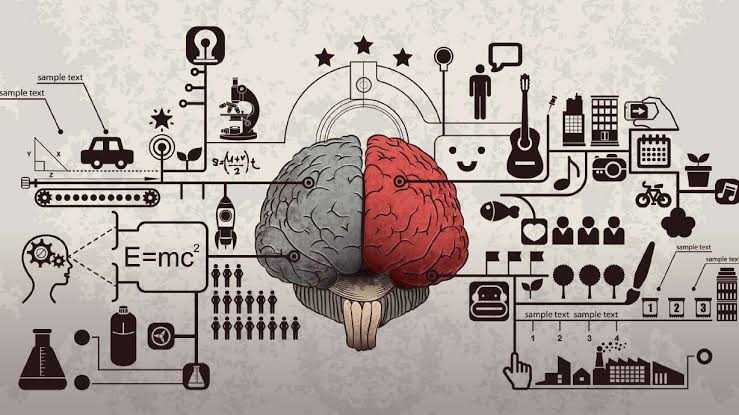
For decades, people have been told that they use only 10% of their brains, leaving the other 90% as a mysterious reserve of untapped potential. The idea has inspired movies, books and countless discussions about human intelligence. But modern neuroscience paints a very different picture. Brain scans show activity throughout the brain, while cases of brain injury reveal how important even specific regions can be. So if the famous 10% claim isn’t true, why has one of the most enduring myths about the human brain survived for so long?
The 10% Brain Myth Is Almost Completely Wrong
The idea that humans use only 10% of their brains is one of the most persistent misconceptions about neuroscience. It is easy to see why people find it appealing. If 90% of the brain were genuinely unused, humans might supposedly possess extraordinary abilities that have never been discovered.
Popular culture has repeatedly used this idea. Movies such as Lucy have imagined what could happen if someone suddenly gained access to supposedly unused portions of the brain.
But there is a fundamental problem with the claim: there is no massive 90% portion of the brain simply waiting to be activated.
According to ThoughtCo, a 2013 survey found that about 65% of Americans believed people use only 10% of their brains. Even among psychology students, the misconception has persisted. A 1998 study found that about one-third of students surveyed accepted the claim.
The problem partly comes from misunderstanding how brain activity works. Different regions become more active when we perform different tasks, but a region that is less active at one moment is not necessarily useless or switched off.

Brain Scans Show That We Use Our Whole Brain
Modern technologies such as PET and fMRI allow scientists to observe activity inside the brain. These scans show that different regions become more active during different activities, including reading, speaking, moving, remembering and solving problems.
That does not mean that only those highlighted areas are functioning.
The brain operates as an interconnected network. When someone performs a particular task, some regions may become especially active while others operate at lower levels. Once the task changes, the pattern of activity can change as well.
Even when a person is resting, the brain does not simply shut down. It continues consuming energy and maintaining a variety of internal processes.
This is why a brain scan cannot simply be interpreted as a picture showing which parts of the brain are “on” and which parts are “off.” The darker areas may still be performing important work.
In reality, the entire brain is being used, but not every region is working at maximum intensity at the same time.
Check out the video to learn more about the 10% brain myth, where it came from, and what science actually tells us about how much of our brain we use.
Even Small Brain Injuries Can Change What We Can Do
Evidence from people with brain injuries provides another powerful argument against the 10% myth.
If 90% of the brain were genuinely unnecessary, losing large portions of it should have relatively little effect. But neurological cases show the opposite.
Damage to specific areas can interfere with particular abilities. For example, damage to Broca’s area can seriously affect a person’s ability to produce speech.
Other regions are involved in movement, vision, hearing, memory and numerous cognitive processes. Brain functions are often distributed across networks, so the relationship between one region and one ability is not always simple.
Nevertheless, the overall evidence is clear: losing brain tissue can have significant consequences.
ThoughtCo also discusses cases in which extensive brain damage resulted in major changes to cognition, memory, emotions and other abilities. These examples make it difficult to argue that most of the brain is simply unnecessary.
The brain can sometimes reorganize itself after injury, a phenomenon known as neuroplasticity. But the ability to adapt does not mean that the damaged areas were useless in the first place.

Evolution Makes the 10% Claim Even Harder to Believe
The brain is one of the most energy-demanding organs in the human body.
Although it accounts for only around 2% of body weight, the brain consumes more than 20% of the body’s energy. That means maintaining a human brain comes with a substantial biological cost.
From an evolutionary perspective, this creates another problem for the 10% theory.
Why would the human body maintain an enormous, energy-hungry organ if 90% of it provided no useful function?
The brain requires oxygen, nutrients and a constant blood supply. Maintaining this complex organ is expensive, so it would be difficult to explain why evolution would preserve such a large amount of completely useless tissue.
Of course, this does not mean every region is equally active throughout the day.
When you read, certain networks become more active. When you walk, different systems coordinate movement and balance. When you sleep, the brain continues performing important processes even though you are not consciously solving problems.
The activity changes constantly.
That is very different from saying that 90% of the brain is permanently inactive.
So Where Did the 10% Myth Come From?
The exact origin of the 10% claim is difficult to establish, but ideas about untapped human potential appear to have played an important role.
Self-help literature has long encouraged people to believe that they have abilities they have not yet developed. ThoughtCo points to Dale Carnegie’s How to Win Friends and Influence People as one example of literature that helped popularize the broader idea that ordinary people fail to develop much of their mental potential.
Over time, the idea of unused potential may have become confused with the idea of unused brain tissue.
Those are completely different things.
A person can improve their memory, learn a new language, develop better reasoning skills or become more creative. None of this requires activating a previously dormant 90% of the brain.
The myth has also sometimes been incorrectly attributed to psychologist William James. James wrote about people failing to reach their intellectual potential, but that is not the same as claiming that humans physically use only 10% of their brains.
Early neuroscience may have contributed to the confusion as well. Scientists once described some brain regions as “silent areas” because their functions were not yet understood.
As research progressed, however, scientists discovered that many of these areas had important roles.
The problem was not that those regions were useless.
The problem was that scientists had not yet figured out what they did.

The Real Mystery Isn’t the 90% We Don’t Use
The truth is actually more interesting than the myth.
Humans already use the entire brain, yet scientists are still learning how its enormous networks of neurons communicate and coordinate our thoughts, memories, movements and emotions.
The brain can learn throughout life. It can adapt to new experiences and, under some circumstances, reorganize after injury. It can process huge amounts of information while allowing us to perform complicated tasks that often feel effortless.
So the real question is not “How do we unlock the other 90%?”
There is no hidden 90% waiting to be switched on.
A better question is: How can we make better use of the brain we already have?
Learning difficult skills, gaining knowledge, practicing new abilities and challenging ourselves intellectually can all change how the brain functions. Human potential is real, but it comes from the brain’s ability to learn and adapt—not from a mysterious reserve of unused brain tissue.
The claim that humans use only 10% of their brains makes for an exciting story, but modern neuroscience does not support it. Brain imaging shows activity throughout the brain, while brain injuries demonstrate that different regions can play important roles. The enormous amount of energy required to maintain the brain also makes the idea of a permanently unused 90% difficult to explain. The real untapped potential is not hidden inside a dormant portion of our brains. It lies in our ability to learn, adapt and develop the remarkable brain we already use every day.