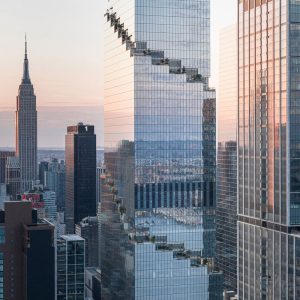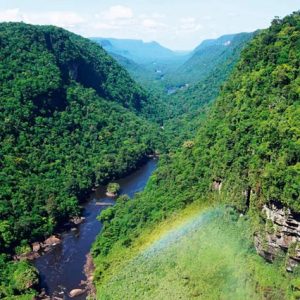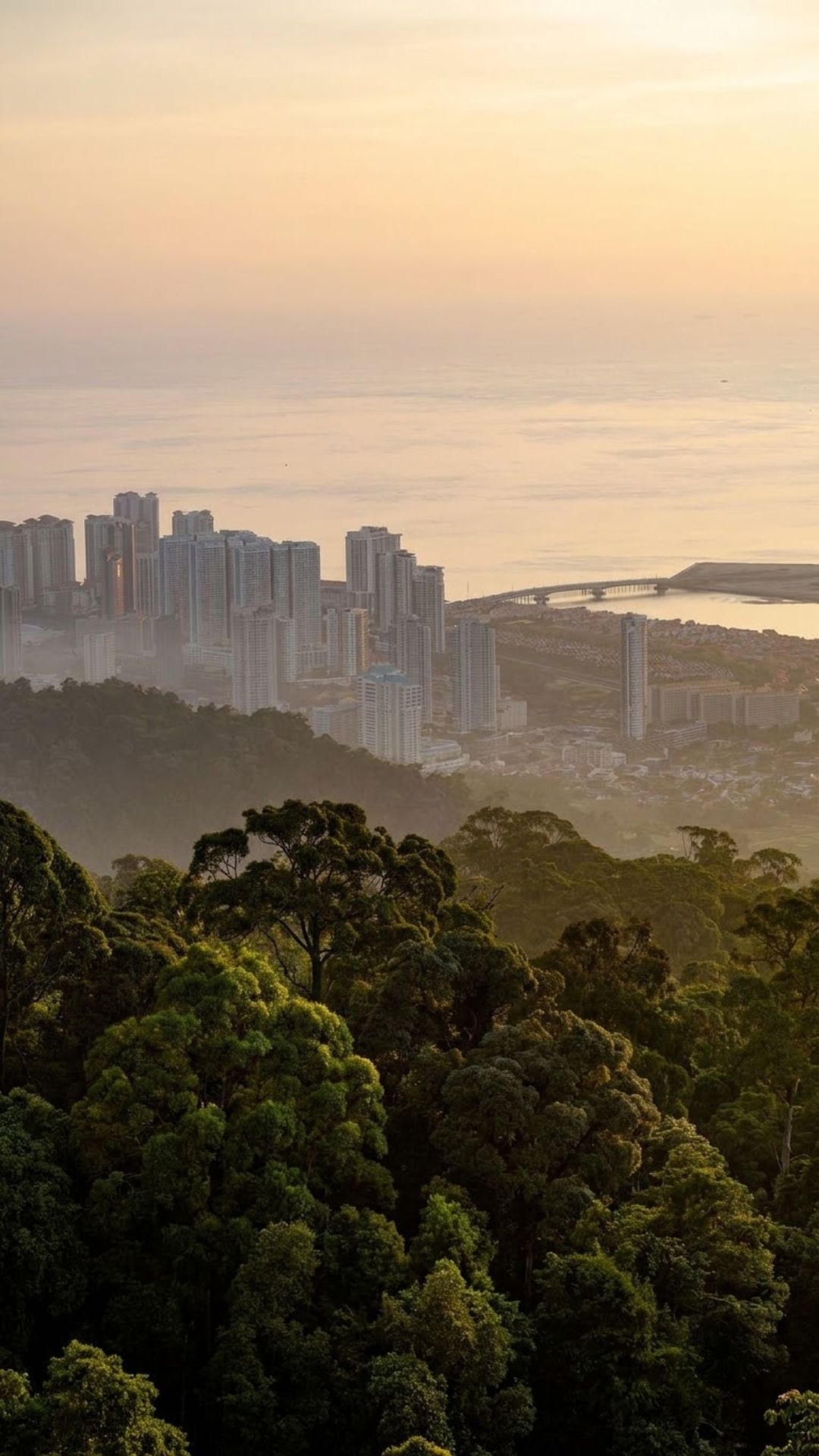
Forest City was supposed to become a futuristic paradise near Singapore, built on artificial islands with enough homes for more than 700,000 people. Instead, rows of luxury towers rose beside quiet roads, empty storefronts and stretches of undeveloped land. The project was valued at roughly $100 billion, yet years after construction began, only about 9,000 people were reported to live there. A city designed for hundreds of thousands had somehow become a place where emptiness was one of its most noticeable features.
The City That Was Supposed To Rise From The Sea
Forest City was one of the most ambitious real-estate projects ever attempted in Southeast Asia. Located on artificial islands in the Straits of Johor, just across the water from Singapore, it was designed as a massive residential and commercial development surrounded by greenery and marketed as a futuristic, eco-friendly place to live.
The original vision called for four artificial islands and a city capable of eventually housing more than 700,000 residents. Country Garden, the Chinese developer behind the project, imagined a place where affluent international buyers could own second homes, invest in property and enjoy easy access to Singapore and the rest of Southeast Asia.
Construction began with land reclamation in early 2014. Towers followed quickly, with the development eventually producing enough high-rise and bungalow housing to accommodate around 100,000 people—even though the city itself had nowhere near that many residents.
The physical city was arriving much faster than the population needed to fill it.
What happens when $100 billion is spent on a megacity, but almost nobody moves in? Join the exploration of Malaysia’s massive failed ghost city to see what’s left behind in this empty metropolis.
It Was Built For A Real-Estate Boom
Forest City’s business model depended heavily on overseas buyers, particularly wealthy Chinese investors. At the height of China’s property boom, potential buyers were flown to Malaysia to tour apartments, many of which were sold before construction was complete.
A two-bedroom apartment could cost around $165,000, a relatively attractive price compared with major Chinese cities such as Beijing or Shanghai. The project’s location was another major selling point: it was close to Singapore without Singapore’s exceptionally high property prices.
But the development quickly encountered obstacles.
Only months after land reclamation began, Malaysian regulators halted the work over concerns about environmental studies. Singaporean officials also raised concerns about the project’s possible impact on the nearby border and environment. These early problems were followed by political resistance inside Malaysia, where critics argued that the development was being designed largely for foreign buyers rather than ordinary Malaysians.
Then the market that had helped fuel the project began to change.

The Buyers Stopped Coming
China’s government tightened restrictions on citizens taking money abroad to purchase property, creating another problem for a development that had relied so heavily on Chinese buyers. Investors who had already purchased apartments began to worry about whether Forest City would actually develop into the international community they had been promised.
Then came COVID-19.
Travel restrictions effectively cut Forest City off from many of the international buyers and visitors on whom the project depended. Country Garden pulled workers from the development, while many of the foreign residents who had been living there left. What had already been a difficult property project suddenly faced a global shutdown.
The result was striking. The buildings were there, but the people weren’t.
Architectural Digest reported that Forest City had attracted only about 9,000 residents, despite its original ambition to accommodate more than 700,000. Bloomberg likewise reported roughly 9,000 residents while noting that the developer had built enough housing for around 100,000 people on the first completed island.
The Most Unusual Thing Was How Empty It Felt
Photographs of Forest City helped turn it into an internet curiosity.
The architecture looked impressive: tall white residential towers, carefully landscaped grounds, broad roads and lush vegetation surrounding buildings overlooking the sea. But much of the public space appeared strangely quiet, with empty sidewalks and storefronts that struggled to attract enough customers.
Bloomberg described groundskeepers tending immaculate greenery while security guards watched a trickle of vehicles. Architectural Digest similarly highlighted the deserted streets, silent boulevards and empty stores and apartments.
This produced one of the strangest contrasts in modern real estate.
Forest City looked like a finished city in photographs.
In everyday life, it often did not feel like one.
Yet calling it completely abandoned would be misleading. Residents, workers and visitors were still there, and the developer disputed the idea that the project had simply failed. Country Garden pointed to property sales, jobs created in the area and the development’s location as evidence that Forest City still had a future.
The deeper problem was not whether buildings existed. It was whether a real community could form around them.

Owning An Apartment Wasn’t The Same As Living There
This became one of Forest City’s central problems.
According to Bloomberg, Country Garden said about 80% of the first island’s 26,000 residential units had been sold. But ownership and occupancy were two very different things. A person could buy an apartment as an investment, a second home or a place to store wealth without ever becoming a permanent resident.
That distinction explains much of the eerie atmosphere.
A city needs more than apartments. It needs workers, schools, restaurants, stores, services, transportation and enough permanent residents to create the ordinary activity that makes a place feel alive.
Forest City had some of these things, but not enough people to support them at the scale originally imagined. Bloomberg found shopping areas where many storefronts were empty, while some of the most successful businesses were duty-free liquor stores serving visitors rather than a large resident population.
The project had solved the problem of building homes. It had not solved the problem of filling a city with people.
Country Garden Had Bigger Problems Of Its Own
Forest City’s difficulties were not happening in isolation.
Its developer, Country Garden, was once China’s biggest property developer, but by 2023 it was facing serious financial pressure amid a broader crisis in China’s real-estate sector. The company missed payments on dollar-denominated bonds, raising concerns that its problems could affect projects far beyond China.
That made Forest City particularly vulnerable.
The project required enormous spending not only on towers but also on artificial land. Bloomberg noted that land reclamation created costs that many conventional developments do not face, making it difficult to evaluate whether the project could ultimately deliver an adequate return.
The irony was hard to miss.
Forest City had been designed during a period when Chinese property developers were willing to think on enormous scales. But by the time those ambitions collided with a slowing market, tighter capital controls, political resistance and a pandemic, the same scale that once looked visionary had become a burden.
The city was simply too big to survive on optimism alone.
The City Is Still Trying To Find A Future
Forest City did not simply shut its doors and disappear.
Malaysia later designated it as a Special Financial Zone, with incentives intended to attract businesses, workers and residents. Those measures included multiple-entry visas and a 15% income-tax rate for certain knowledge workers, part of a broader effort to make the development more attractive to people connected to Singapore.
The project has also tried to attract visitors through tourism, sporting events and other activities. The developer has continued to argue that the city can grow into the community it was originally meant to become.
Whether that happens remains the central question.
Forest City is not a city that vanished. It is something stranger: a city that appeared before its population did.
Its towers, roads and landscaped spaces exist on a scale that suggests a bustling metropolis. But for years, the human activity needed to match that scale never arrived.
And that may be the most revealing lesson of all.
Forest City was built around an enormous assumption: that if you created enough luxury homes in the right location, people would eventually come. Instead, the project became a striking example of the difference between constructing a city and creating one. Roughly $100 billion was envisioned for a development meant to house more than 700,000 people, yet only a small fraction of that population ever arrived. Political opposition, buyer restrictions, COVID-19 and Country Garden’s financial problems all played a role. The buildings remain, but the real challenge is still the same: turning a spectacular development into a living city.
P.S. This article draws primarily on Architectural Digest’s report on Forest City, supplemented by Bloomberg’s detailed investigation into the project’s development, residents, financial challenges and attempts to attract a real community. Source: https://www.architecturaldigest.com/story/forest-city-an-abandoned-dollar100-billion-development