For centuries, the Amazon rainforest looked to outsiders like one of the world’s great untouched wildernesses. Then scientists began flying laser-scanning equipment over the trees. Beneath the dense canopy, they found geometric earthworks, roads and ceremonial structures built by people who lived in the rainforest long before European arrival. In a 2026 study, researchers surveyed nearly 4,500 square kilometers of southwestern Amazonia and detected 432 earthworks, 396 of them previously unknown. Their results suggest that the wider Aquiry region could contain as many as 24,000 to 30,000 ancient earthworks. The forest was hiding an enormous human landscape.
The Amazon Was Never An Empty Wilderness
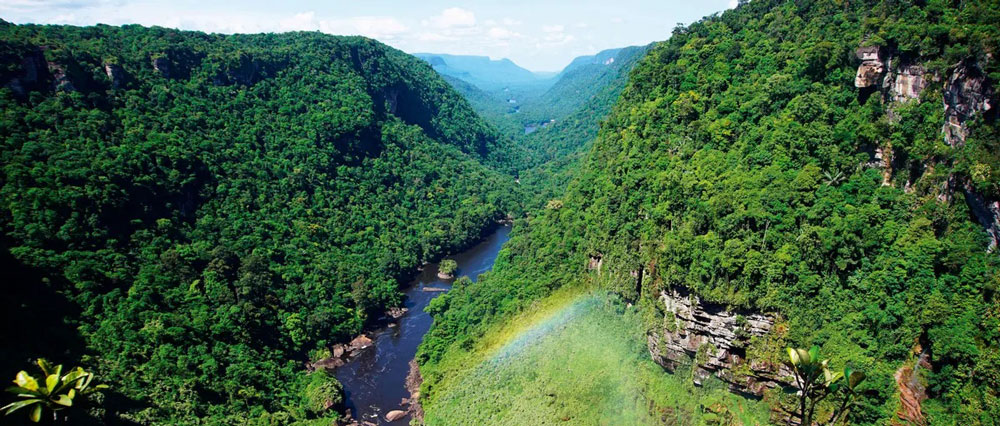
The traditional image of the Amazon is easy to understand: an enormous green forest stretching for thousands of kilometers, seemingly untouched by large-scale human settlement.
Archaeology has been steadily changing that picture. People have lived in Amazonia for thousands of years, cultivated plants, managed landscapes and altered parts of the forest long before Europeans arrived. Earlier discoveries had already revealed large earthworks and settlements, but dense vegetation made it extraordinarily difficult to determine how extensive these societies really were.
That created a major problem for archaeologists. Walking through a rainforest with thick vegetation means that even a substantial structure can become almost invisible from the ground. A raised platform, ditch or road may still exist beneath the trees, but a researcher standing only a few meters away might never recognize it. The forest was not necessarily hiding a few isolated ruins. It could be hiding an entire landscape.
Uncover the Amazon’s biggest mystery! For centuries, we believed it was an untouched wilderness, but LiDAR technology is now revealing massive, lost ancient cities hidden beneath the dense canopy. Dive into this fascinating journey to explore forgotten civilizations and rewrite history. Watch this eye-opening video to see the truth!
The Forest Hides Human Landscapes
The scale of the discoveries became particularly clear in southwestern Amazonia, where ancient societies built geometric structures from earth rather than stone.
These earthworks can take the form of large circular or rectangular enclosures surrounded by ditches and embankments. Some are associated with roads, canals and other engineered features. Researchers believe many of the structures built by the Aquiry civilization served ceremonial, political or public functions rather than being simple houses.
Other discoveries in Amazonia have revealed large settlements connected by roads and sophisticated systems for managing water. In Ecuador’s Upano Valley, for example, LiDAR surveys exposed streets, residential areas, agricultural features and interconnected settlements beneath dense vegetation. The discoveries demonstrated that some Amazonian societies created complex built environments on a scale that was previously underestimated.
The important point is not that the Amazon contained cities identical to those of Europe or Asia. These societies developed according to the geography, climate and resources of the rainforest.
Their architecture simply did not leave behind the kind of stone monuments that are easy to see today.

LiDAR Can See What A Person On The Ground Cannot
The technology changing Amazonian archaeology is called LiDAR, short for light detection and ranging.
A LiDAR instrument sends enormous numbers of laser pulses toward the ground and measures how long they take to return. Most of those pulses encounter leaves and branches, but some pass through small gaps in the canopy and reach the ground. By combining millions of measurements, researchers can build detailed three-dimensional maps of the terrain.
The most important step comes afterward. Computers can filter away much of the vegetation data, leaving a model of the ground surface underneath.
Suddenly, features that are almost impossible to see from ground level become obvious. A straight road appears as a line. A ditch becomes a geometric depression. An artificial embankment forms a shape that nature is unlikely to have produced by chance. In other words, archaeologists do not need to cut down the forest to see what lies beneath it. That has fundamentally changed what can be discovered in remote parts of Amazonia.

A 2026 Survey Found Hundreds Of Structures
The latest Aquiry research shows just how much the technology can reveal.
Researchers used airborne LiDAR to survey about 4,497 square kilometers in southwestern Amazonia. The survey detected 432 earthworks, of which 396 had not previously been documented. The mapped structures included large geometric enclosures associated with the ancient Aquiry civilization.
The remarkable part is that the surveyed area represents only a small portion of the larger region associated with the civilization.
Using the observed density of structures together with existing archaeological and satellite evidence, the researchers estimated that the wider Aquiry region, covering about 183,000 square kilometers, could contain roughly 24,000 to 30,000 earthworks. The researchers also estimate that the civilization reached its greatest population around the first few centuries CE, with a possible population of approximately 1.25 million to 3 million people.
Those population figures are estimates derived from archaeological modeling rather than a direct count of ancient inhabitants. They are therefore best understood as an indication of the potential scale of the society, not a precise census. Even with that qualification, the physical evidence is striking.
An Amazonian landscape that once appeared almost empty can now be read as a network of human-made structures.

These Were Engineered Landscapes, Not Random Ruins
The earthworks become even more interesting when researchers look at how they relate to one another.
In parts of Amazonia, ancient settlements were connected by roads and causeways. Communities also developed methods for dealing with water, including canals, drainage systems and reservoirs. Recent research on the Casarabe culture in Bolivia has found evidence of intensive agricultural and water-management systems designed to cope with both wet and dry seasons.
The Aquiry discoveries fit into this broader picture of Amazonian societies that actively engineered their surroundings.
That changes the question researchers are asking.
Instead of wondering only how people survived in the rainforest, archaeologists can now investigate how communities deliberately reorganized parts of the forest to support agriculture, transportation, political activity and ceremony.
The Amazon was not simply a difficult environment that humans learned to endure. In many places, people were actively designing landscapes within it.

The Amazon May Still Be Hiding Thousands More
Perhaps the most exciting part of the discoveries is that the survey does not represent the end of the story.
Only a fraction of Amazonia has been mapped at comparable archaeological resolution. Dense forest remains one of the greatest obstacles to traditional fieldwork, but LiDAR means researchers can now identify promising areas from the air before deciding where to conduct detailed excavations.
The 2026 Aquiry study itself points toward a much larger research opportunity. If similar concentrations of earthworks are found elsewhere, estimates of pre-Columbian populations and the scale of human influence across Amazonia may need to be revised again.
That possibility makes the rainforest feel very different.
What looks from above like an endless blanket of trees may contain roads, agricultural fields, ceremonial centers, settlements and other traces of societies whose stories disappeared beneath centuries of vegetation. And the technology revealing them does not require the forest to be removed. It simply allows researchers to look through the canopy.


The Amazon is often described as one of the last great wildernesses on Earth, but archaeology is revealing a more complicated history. Beneath the trees are roads, earthworks, agricultural landscapes and ceremonial centers built by societies that understood and reshaped their environment long before Europeans arrived. New LiDAR surveys are now exposing structures that were invisible from the ground, with thousands more potentially waiting to be mapped. The remarkable discovery is not simply that ancient people lived in the Amazon. It is how much of their landscape may still be hidden beneath the forest.
The original BBC Science Focus article explores the Amazon’s biodiversity, climate systems and hidden archaeological landscapes, including how LiDAR has revealed ancient settlements beneath the rainforest canopy. New research published in 2026 adds an even larger picture, suggesting that thousands of previously unknown earthworks may still be hidden across southwestern Amazonia. Source: https://www.sciencefocus.com/planet-earth/the-amazon-rainforest