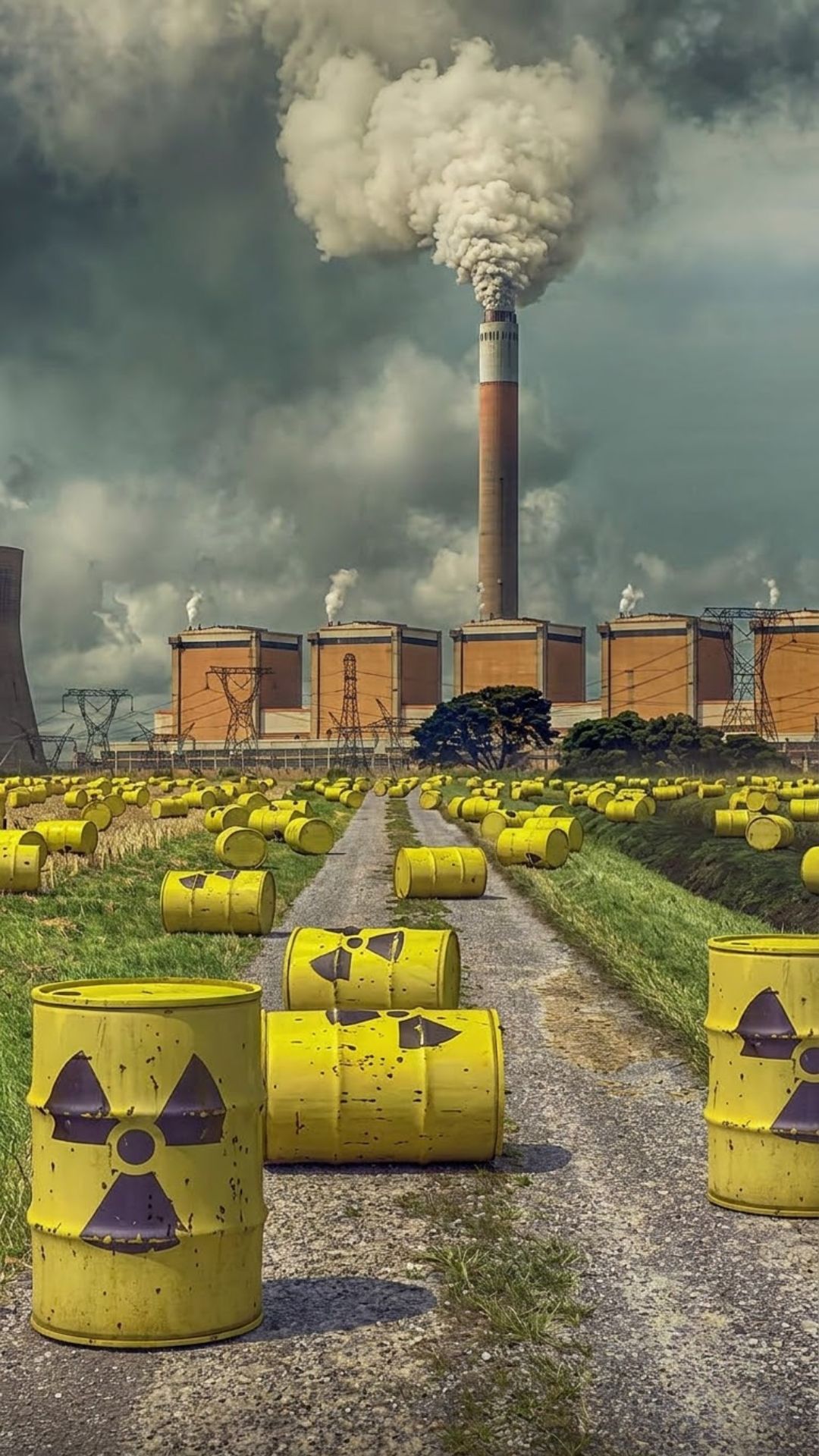
Every nuclear power plant produces something that sounds like the ultimate dead end: spent nuclear fuel. The fuel is intensely radioactive, generates heat and must be stored in heavily shielded containers for decades or longer. Yet there is a remarkable twist. Much of that fuel is not truly “used up.” More than 90 percent of its potential energy can remain after several years inside a reactor, leading some companies to ask an intriguing question: what if nuclear waste could become fuel again? The idea sounds obvious. The problem is that recycling it creates another set of difficult questions—especially because recovering the useful material can also make plutonium more accessible.
The “Waste” Still Contains A Lot Of Energy
When people hear the phrase nuclear waste, it is easy to imagine something that has become completely useless. In reality, spent nuclear fuel is more complicated.
Fuel assemblies removed from a reactor still contain mostly uranium, along with newly created elements such as plutonium and radioactive fission products. The fuel is no longer efficient enough for the reactor to keep using it in the same way, but it has not simply turned into radioactive garbage with no remaining value. The U.S. Department of Energy says that more than 90 percent of the potential energy in spent fuel can remain after five years of operation.
That changes the way the problem looks.
Instead of asking only where to put the material for thousands of years, engineers can ask whether some of it can be recovered and used again. If that worked economically and safely, recycling could reduce the amount of new uranium that needs to be mined and potentially reduce the quantity of material that ultimately requires permanent disposal.
This idea is not science fiction. Countries including France have operated commercial reprocessing programs, and new nuclear companies in the United States are developing reactors that they say could use recycled material as fuel. Oklo and Curio are among the companies pursuing technologies designed around this concept. So why isn’t everyone doing it? Because the moment you try to recycle nuclear fuel, the problem becomes much more complicated.
Ever wonder why we bury nuclear waste when 96% of it is actually recyclable? We visited France’s cutting-edge facility to uncover the truth behind nuclear fuel recycling, the challenges, and why it remains a rare, complex process. Watch the full video to see how this hidden energy source works!
Recycling Nuclear Fuel Is Not Like Recycling Aluminum Cans
The word “recycling” makes the process sound deceptively simple.
You take something that has already been used, recover the valuable part and put it back into circulation. But nuclear fuel is nothing like an ordinary recyclable material. Spent fuel remains extremely radioactive and produces heat, so it must first be cooled and stored under carefully controlled conditions. In the United States, fuel is initially stored in pools and later transferred to dry casks made with heavy shielding.
Actual nuclear reprocessing is even more complicated.
Reprocessing means separating usable nuclear materials from the rest of the spent fuel. Some of the recovered uranium and plutonium can then potentially be turned into new reactor fuel. “Recycling” refers to the later step of putting those materials back into a reactor. The distinction matters because the most controversial part is not simply using the fuel again—it is the process of separating valuable nuclear material in the first place. And that is where plutonium enters the story.
Plutonium is produced inside nuclear reactors as uranium atoms absorb neutrons. Some forms can be used as reactor fuel, which is one reason it is attractive for recycling. But plutonium can also be used in nuclear weapons. That creates the central dilemma. The same material that makes spent fuel potentially valuable also makes the recycling process a major nuclear-security issue.

The Biggest Problem Is Not The Radiation. It Is Plutonium.
The radioactive nature of spent fuel is an obvious danger, but it is not the only reason the material is so difficult to recycle.
Nuclear-security experts worry about what happens when reprocessing separates plutonium from the other materials surrounding it. Once separated, plutonium is more accessible than it was when it remained embedded within spent fuel. That creates a proliferation concern: if more countries acquire the ability to reprocess nuclear fuel, more countries could potentially gain access to material that can be used in nuclear weapons.
This is not merely a theoretical concern.
The history of nuclear reprocessing is closely connected to the history of nuclear weapons. During the Manhattan Project, plutonium was separated from reactor fuel at Hanford, Washington, for use in nuclear weapons. Decades later, India’s 1974 nuclear test used material derived from reprocessed reactor fuel, alarming governments around the world and intensifying concerns about the spread of reprocessing technology.
That episode changed the political debate.
In the 1970s, the United States became increasingly concerned that civilian nuclear programs could create a pathway toward nuclear weapons. President Gerald Ford directed federal agencies to pause commercial reprocessing activities in 1976, and President Jimmy Carter continued that policy after taking office. Ronald Reagan later lifted the U.S. moratorium in 1981, but commercial reprocessing never returned to the country. The United States therefore made a choice that can seem strange at first.
It had a material containing enormous amounts of unused energy. Yet it decided that recovering some of that energy was not worth the additional proliferation risks and other complications—at least with the technologies and economics available at the time.

There Is Another Problem: Recycling Does Not Make The Waste Disappear
There is an intuitive argument for nuclear recycling that sounds almost impossible to disagree with. If spent fuel contains valuable material, use the valuable material again. Then there will be less waste left over. But the reality is more complicated.
Reprocessing does not eliminate radioactive waste. It separates different components of the spent fuel, allowing some material to be reused while leaving behind highly radioactive fission products and other waste. The Nuclear Regulatory Commission explicitly recognizes both spent fuel and the radioactive materials remaining after reprocessing as forms of high-level radioactive waste. The process can also create additional contaminated materials.
Equipment, chemicals and other materials that come into contact with the fuel can themselves become radioactive waste. So while recycling may reduce the amount of certain materials that ultimately need disposal, it does not produce a magical system in which nuclear waste simply disappears.
And there is an economic question.
Reprocessing facilities are extraordinarily complicated industrial operations. The United States already has a large stockpile of spent fuel stored safely at reactor sites, while uranium has historically been available at prices that made recovering additional fuel value less attractive. In other words, the question was never simply whether recycling was technically possible. It was whether the additional cost and risk were justified by the energy recovered.
For decades, the answer in the United States was effectively no.
New Reactors Are Changing The Argument
Now the calculation is beginning to change.
The recent revival of interest in nuclear power has created a new market for technologies designed to extract more energy from nuclear fuel. Advanced-reactor companies argue that newer reactor designs could use materials that conventional reactors leave behind, potentially turning today’s spent fuel into tomorrow’s energy source.
Some companies are also working on different approaches to reprocessing.
One technology being investigated is called pyroprocessing. Unlike conventional approaches that can separate relatively pure plutonium, pyroprocessing is designed to keep plutonium mixed with other heavy elements, potentially making it more difficult to divert directly into a weapons program. Oklo is working on such technology with support from the Department of Energy and Idaho National Laboratory. Curio is developing another process called NuCycle that it says is designed to reduce proliferation risks.
But “potentially safer” is not the same thing as “problem solved.”
Experts continue to debate how much these newer processes actually reduce proliferation risks. A 2023 Idaho National Laboratory analysis submitted to the Nuclear Regulatory Commission described pyroprocessing as promising while also noting significant remaining challenges. Critics argue that even if the plutonium is not separated into a pure form, the resulting material may still be more accessible for weapons purposes than ordinary spent fuel.
That leaves nuclear recycling in an unusual position.
It is no longer simply an old technology that the United States abandoned. It is becoming a field of active research again, backed by new companies, new reactor designs and government funding.
In February 2026, the Department of Energy announced $19 million for five companies researching ways to recycle used nuclear fuel, followed by a broader call for private-sector proposals to develop commercial recycling, processing and fuel-fabrication capabilities.
The United States is not yet commercially reprocessing civilian spent fuel, but the question is clearly back on the table.

So Why Don’t We Just Recycle Nuclear Waste?
The simplest answer is that we can recycle it, but recycling creates problems of its own.
Spent fuel still contains valuable energy, and advanced reactors may eventually be able to extract more of it. Recycling could reduce the need for some new uranium and change the amount and composition of material that ultimately requires disposal. Those are real potential advantages.
But reprocessing requires complex and expensive facilities, produces radioactive waste of its own and does not eliminate the need for permanent waste management. Most importantly, separating plutonium raises a nuclear-proliferation problem that cannot be solved simply by declaring the material “recycled.”
There is also a fundamental misunderstanding hidden inside the phrase “nuclear waste problem.”
The problem is not that scientists have no idea what to do with spent fuel. The United States already stores spent fuel in pools and dry casks under strict safety requirements. The deeper problem is finding a long-term strategy that balances cost, safety, permanent disposal, energy recovery and international security.
That is why the debate is unlikely to end with one brilliant invention.
The future of nuclear energy may involve recycling some spent fuel, using advanced reactors, improving storage and developing permanent geological disposal—all at the same time.
The irony is that the material we call “waste” may actually be one of the most valuable things left behind by the nuclear industry.
The question is whether recovering that value creates a bigger problem than the one it is supposed to solve.
Nuclear waste sounds like the end of the story, but spent fuel still contains enormous amounts of unused energy. More than 90 percent of its potential energy can remain after years inside a reactor, and new companies are developing technologies that could eventually turn some of that material back into fuel. Yet recycling is not a simple solution. Reprocessing creates additional radioactive waste, costs money and, most importantly, can make plutonium more accessible. That is why the United States stopped commercial reprocessing decades ago—and why today’s nuclear revival is forcing the country to reconsider the question all over again.
This story draws primarily on Rebecca Tuhus-Dubrow’s analysis for Yale Environment 360, which examines the renewed push to recycle spent nuclear fuel and the debate surrounding its costs, benefits and proliferation risks. Current information from the U.S. Department of Energy and Nuclear Regulatory Commission helps put that debate in context, particularly as the United States begins funding new research into fuel recycling technologies again. Source: https://e360.yale.edu/features/nuclear-waste-recycling