Walk into an American grocery store and you might see a vegetable labeled “yam” without realizing that it is probably a sweet potato. Although the two are often confused, true yams and sweet potatoes are different plants with distinct appearances, textures and histories. The confusion goes far beyond a simple supermarket label, tracing a fascinating path through African food traditions, migration, American agriculture and marketing—and even onto the Thanksgiving table.
The Woman America Could Never Stop Suspecting
What happens when a jury says “not guilty,” but the public never stops wondering?
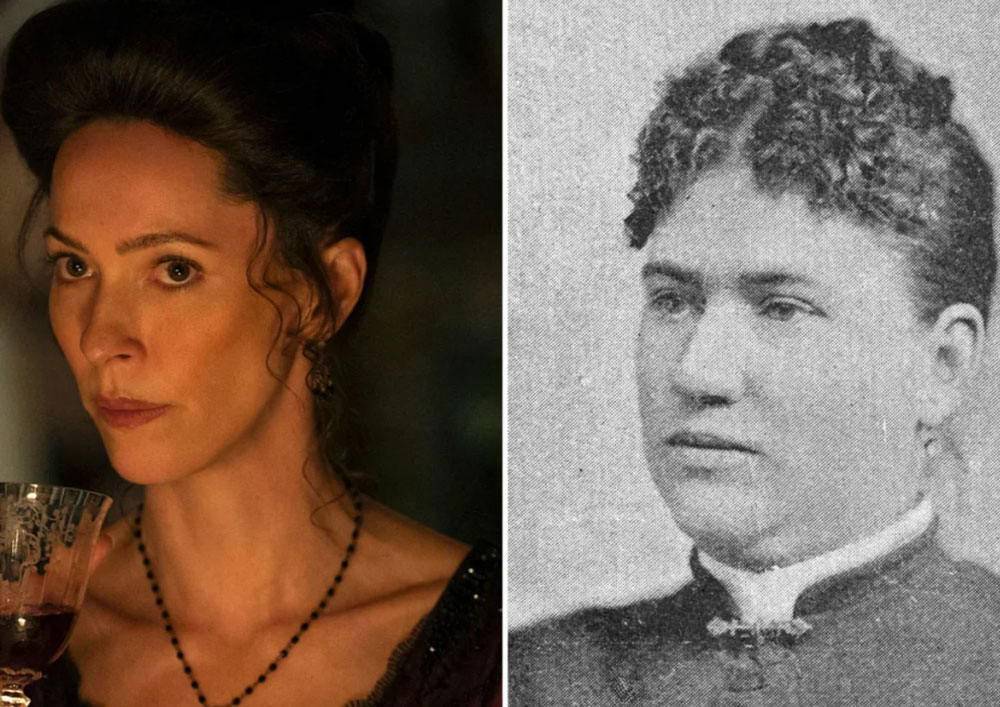
In the summer of 1892, a wealthy Massachusetts household became the scene of a brutal double murder. Andrew Borden and his wife, Abby, were found dead inside their home in Fall River, their deaths drawing immediate attention from investigators and newspapers. Suspicion soon turned toward Andrew’s younger daughter, Lizzie Borden, a 32-year-old woman who lived in the house and would become the central figure in one of America’s most enduring murder mysteries.
Lizzie was arrested on August 11, 1892, just days after the killings. Nearly a year later, in June 1893, she stood trial for the murders. The prosecution faced the difficult task of convincing a jury that Lizzie was responsible for the deaths despite a lack of the kind of forensic evidence that would be central to a murder investigation today.
The trial itself became a national sensation. Newspapers closely followed the proceedings, while the unusual circumstances surrounding the Borden family gave the public plenty to speculate about. Yet after hearing the evidence, the jury deliberated for only about 90 minutes before returning a verdict of not guilty.
Legally, the case was over. Culturally, it was only beginning.
Lizzie Borden walked out of the courtroom as a free woman, but the suspicion surrounding her never truly disappeared. More than a century later, her name remains inseparable from the murders.
And that raises a question more fascinating than the verdict itself: How does someone declared innocent by a jury become one of America’s most famous murder suspects?

A Wealthy Family With More Secrets Than It Seemed
Was the Borden household hiding a motive—or simply a lot of family resentment?
Andrew Borden Wasn’t Exactly Popular
Andrew Borden was one of Fall River’s wealthiest men, with a fortune equivalent to nearly $10 million today. A self-made businessman, he became the head of one of the city’s largest banks and accumulated substantial property. But wealth did not make him particularly popular. He was known for being extremely frugal, even with his own family, and his business dealings had earned him a number of enemies. After his death, rumors quickly circulated that the murders might have been connected to business disputes or acts of revenge.
That meant investigators initially had plenty of possible directions to explore. The question was not simply who might have wanted Andrew dead, but whether someone outside the family had a motive strong enough to kill both Andrew and Abby.
Did Lizzie Borden really kill her parents—or is there more to the story than the famous legend suggests? Watch the clip below for a closer look at the haunting crime scene and the evidence that has kept this mystery alive for more than a century.
The Family Was Already Under Strain
Inside the Borden household, however, there were tensions of a different kind. Despite Andrew’s considerable wealth, the family home lacked basic conveniences, including indoor plumbing. His relationship with Lizzie and her older sister Emma had also deteriorated, particularly after his remarriage to Abby Gray. The sisters reportedly resented their stepmother and disagreed with their father over money.
After the murders, Lizzie’s own behavior intensified suspicion. She gave contradictory answers during questioning and later burned a dress she said had been stained while doing housework, which investigators viewed as possible destruction of evidence. Police also learned that she had unsuccessfully attempted to purchase prussic acid shortly before the killings, although that evidence was ultimately not presented at trial.
None of these details, however, established guilt. They simply added more questions to a household already filled with tension.

The Case That Had Almost No Forensic Evidence
A Murder Investigation Before Modern Forensics
The Borden murders took place in 1892, long before investigators had the forensic tools that would be considered routine today. Fingerprint analysis was still in its infancy, DNA testing did not exist, and crime-scene investigation lacked many of the methods later used to connect suspects to physical evidence.
Investigators did find a hatchet in the basement of the Borden home. Its blade was clean, while the handle had been broken off. But the weapon did not provide the kind of direct physical link to Lizzie that modern investigators might look for.
That limitation mattered. The case contained plenty of suspicion and circumstantial details, but relatively little physical evidence capable of conclusively establishing who committed the murders.
Suspicion Wasn’t the Same as Proof
Police had reasons to be suspicious of Lizzie. Her earlier attempt to purchase prussic acid attracted attention, although that information was ultimately excluded from the trial. Her statements also contained inconsistencies, while the defense successfully challenged the use of some of her earlier testimony from the inquest. Lizzie herself did not take the stand during the trial.
For the prosecution, this created a difficult problem: suspicion could point toward a possible culprit, but it could not necessarily establish guilt beyond a reasonable doubt.
The jury ultimately found Lizzie not guilty after roughly 90 minutes of deliberation.
That verdict does not prove that historians know exactly what happened inside the Borden house. But it does establish something important: Lizzie was acquitted, and the historical record has never produced a definitive answer that overturns that verdict.
That uncertainty is precisely what keeps the case alive. Lizzie Borden’s story remains compelling not because history conclusively proved her guilty or innocent, but because more than a century later, the evidence still leaves room for the question.

The Nursery Rhyme Changed the Story
Few details have shaped the Lizzie Borden legend more than a nursery rhyme that reduced a complicated murder case to a handful of unforgettable lines:
“Lizzie Borden took an ax…”
The rhyme helped create the version of the story that many Americans grew up hearing: Lizzie supposedly struck her stepmother Abby 40 times and her father Andrew 41 times. But the historical record tells a different story. The coroner estimated that Abby had suffered approximately 18 or 19 blows, while Andrew had sustained around 10 or 11. Even the weapon described in the rhyme is not quite accurate. The prosecution presented a hatchet as the suspected murder weapon, rather than the conventional image of a large ax.
Those differences may seem small, but they reveal how dramatically a real crime can change once it enters popular culture. The rhyme did not need to preserve every detail of the investigation. It needed to be memorable.
That is how a complicated historical event can follow a familiar path:
Historical event → media story → folklore → cultural memory
Over time, facts can become simplified, details can become exaggerated and uncertainty can disappear beneath a story that is easier to repeat. The rhyme gave generations of Americans a simple way to remember Lizzie Borden, but it also helped turn a case filled with unanswered questions into something closer to a legend.
A murder case may begin with evidence, testimony and investigation. But what survives for generations is often the story people choose to tell about it.
Lizzie Borden Survived the Trial—but Not the Legend
Life After “Not Guilty”
Acquittal gave Lizzie Borden her freedom, but it did not give her back an ordinary life. She and her older sister Emma inherited their father’s estate, giving them the financial independence they had wanted. Lizzie eventually moved out of the murder house and purchased a large home in one of Fall River’s more fashionable neighborhoods. She also spent time traveling to Boston and New York, where she enjoyed attending the theater. Yet the whispers about her possible guilt continued to follow her.
In 1905, Lizzie and Emma became estranged over Lizzie’s relationship with actress Nance O’Neill, which Emma reportedly disapproved of. The sisters rarely spoke afterward. Both died in June 1927, only days apart, and were ultimately buried beside their murdered parents in the family plot at Oak Grove Cemetery.
The Mystery Became Bigger Than the Person
Lizzie’s death did not end the fascination with the Borden murders. Instead, the story continued to move through American popular culture, appearing in books, plays, films, television productions, ballet and opera. Even The Simpsons eventually referenced Lizzie Borden, showing just how deeply the case had entered the country’s cultural imagination.
The original Borden house also became a destination for people fascinated by the case, while new historical material occasionally offered researchers another glimpse into what happened. In 2012, researchers announced the discovery of handwritten journals belonging to Lizzie’s defense attorney, Andrew Jennings. The fragile journals contained newspaper clippings and notes from his pretrial investigation and were preserved for further study.
By then, the question had grown larger than Lizzie herself. It was no longer simply, “Did Lizzie Borden kill her parents?”
It had become a more enduring question: How does an unresolved crime become part of a country’s cultural memory?

More than a century later, the Lizzie Borden case remains fascinating not because history ever proved her guilty, but because it never completely settled the question. She was acquitted, yet newspapers, nursery rhymes and popular culture transformed her into an enduring American murder legend. Over time, the details of the original investigation became intertwined with folklore, making the story larger than the woman herself. Perhaps that is the case’s greatest legacy: an unresolved crime can survive for generations through the stories people continue to tell.