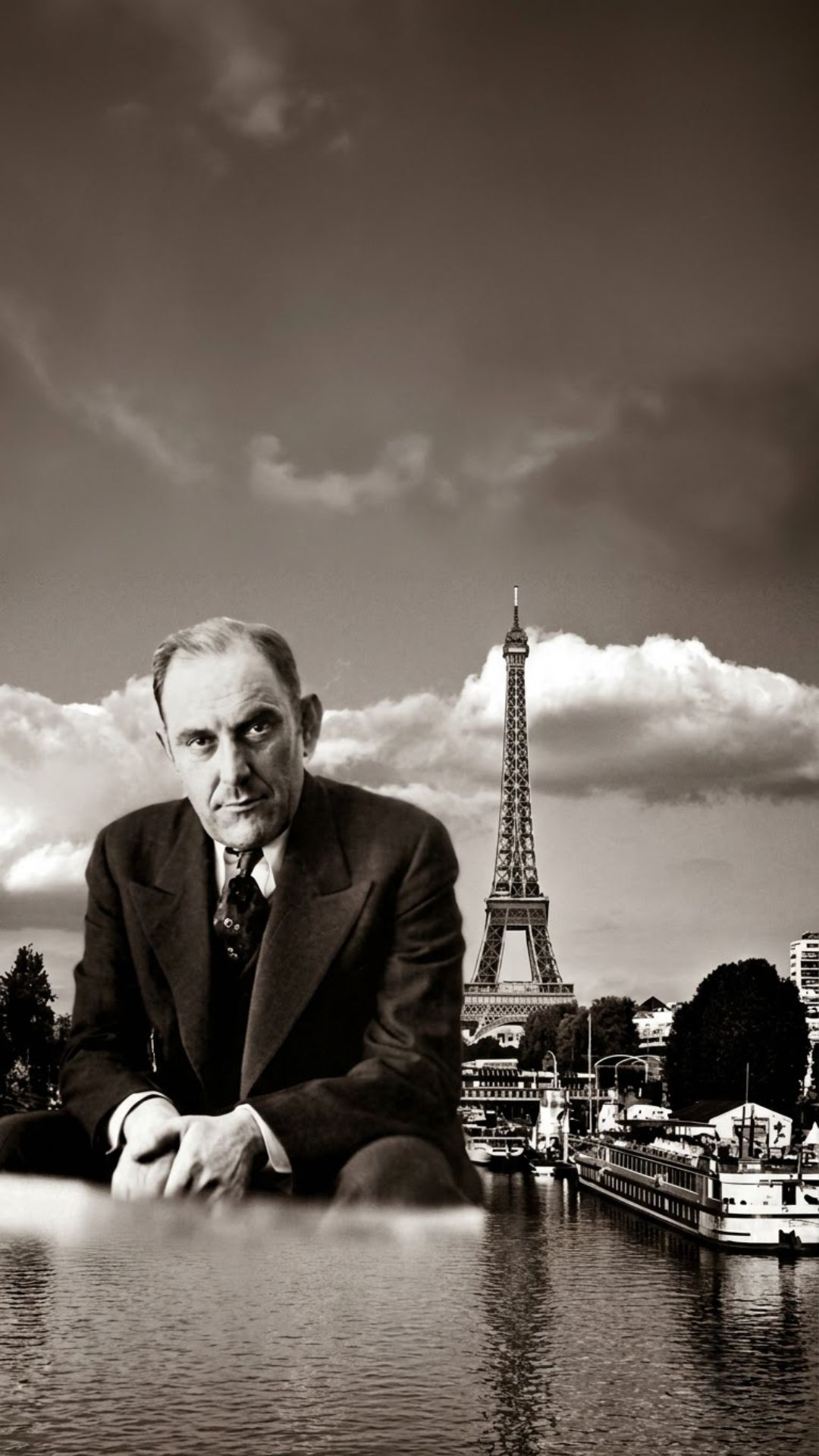
In 1925, a well-dressed man arrived in Paris and quietly told several scrap-metal dealers that the French government was preparing to sell the Eiffel Tower for demolition. He presented official-looking documents, arranged private meetings at a luxury hotel and even took potential buyers to inspect the famous landmark. One businessman eventually believed him enough to hand over 70,000 francs. The man disappeared. Months later, he returned to Paris and tried to sell the Eiffel Tower again. His name was Victor Lustig, and the scam would become one of the most famous confidence tricks in history.
He Realized The Eiffel Tower Was The Perfect Target
By 1925, the Eiffel Tower was famous around the world, but its future was not as secure as it might seem today. Built for the 1889 Exposition Universelle, the tower had originally been intended to stand for only a limited period. By the 1920s, the cost of maintaining the structure and ongoing arguments over its future created exactly the kind of uncertainty that a skilled con artist could exploit.
Lustig read about those concerns and recognized an opportunity. He did not need to convince people that the Eiffel Tower existed. He only needed to convince a small group of businessmen that the government had quietly decided to get rid of it.
That distinction was crucial. Instead of inventing something completely unbelievable, Lustig built his story around facts that were already circulating in Paris. The tower was expensive to maintain. Its future had been debated. And selling thousands of tons of metal to scrap dealers could sound like a legitimate government transaction if presented in the right way.
How did a master con artist pull off the impossible? Meet Victor Lustig, the man who famously sold the Eiffel Tower not once, but twice! From high-stakes scams to his daring prison escape, this video uncovers the wild life of history’s greatest fraudster. Don’t miss this gripping true crime story—watch now!
He Pretended To Be A French Government Official
Lustig’s next step was making the story look official. He arranged for stationery carrying an imitation French government seal and presented himself as a senior government official involved in discussions about the tower. He then invited prominent scrap-metal dealers to a private meeting at the Hôtel de Crillon, one of Paris’s most prestigious hotels.
The location mattered almost as much as the paperwork. A luxury hotel, a formal invitation and a supposedly confidential government decision created an atmosphere in which the men were encouraged to believe they had been given access to privileged information.
Lustig told the dealers that the Eiffel Tower was going to be demolished and that the metal would be sold to the highest bidder. He reportedly described roughly 7,000 tons of metal becoming available from the structure. He then arranged tours of the tower, allowing the potential buyers to see the supposed investment for themselves.
It was a carefully constructed performance. Lustig was not merely telling a lie. He was creating an entire environment in which the lie felt official.

One Scrap Dealer Believed The Tower Was Really For Sale
Among the businessmen was André Poisson, a relatively new figure in Paris’s scrap-metal trade. Lustig focused on him and gradually encouraged Poisson to believe that winning the contract would require more than simply submitting the highest bid.
Lustig hinted that he was poorly paid as a government official and suggested that an additional payment could secure the deal. Poisson interpreted the request as a bribe—an uncomfortable detail, but one that actually made the story seem more believable. If Lustig were simply a scammer, why would he need to worry about corrupt government officials? To Poisson, the request made the supposed official appear more authentic.
Eventually, Poisson handed over 70,000 francs: 20,000 in cash and another 50,000 tied to securing the contract. Lustig took the money and left France. Then came the strangest part. Poisson did not report him.
The businessman was apparently too embarrassed to admit that he had been deceived, giving Lustig a remarkable piece of information: the scam had worked, and the victim was unlikely to expose it.

Then Lustig Returned To Paris And Tried Again
A conventional criminal might have considered the operation successful and moved on. Lustig saw something else: an opportunity to repeat it.
He returned to Paris and attempted to approach another group of scrap dealers with essentially the same story. The second operation did not go as smoothly. Suspicious that the authorities might have been alerted, Lustig abandoned the attempt and returned to the United States.
The remarkable part was not simply that he tried twice. It was that the first victim’s silence made the second attempt seem possible.
Lustig’s wider career followed the same pattern. He relied heavily on presentation, confidence and his ability to understand what people wanted to believe. His false identities included the title of “Count,” and investigators later documented numerous aliases and passports connected to him.
The Eiffel Tower scam therefore was not an isolated stroke of luck. It was an unusually spectacular example of a method he used repeatedly.

The “Count” Had More Tricks Than The Eiffel Tower Scam
Lustig eventually became involved in an even larger operation involving counterfeit U.S. currency. He worked with professional forger William Watts to produce high-quality counterfeit notes, while continuing to use other schemes to obtain money from wealthy targets. In 1935, Secret Service agents finally caught him with evidence connected to the counterfeiting operation, including counterfeit bills and printing plates.
He had also developed a device known as the “Rumanian money box,” a small machine he claimed could reproduce banknotes. Victims were persuaded to pay large sums for the device because they believed it could generate genuine money.
These schemes reveal why the Eiffel Tower story has survived for so long. The tower was an extraordinary target, but the real skill was the same in every operation: Lustig sold people a story they wanted to believe.
His polished appearance, formal manner and carefully constructed identities were part of that story. He understood that people did not necessarily need absolute proof. They often needed only enough evidence to make the opportunity feel plausible.

How The Smoothest Con Man Finally Lost
Lustig spent years escaping arrests and moving between identities, but his career eventually caught up with him. In 1935, federal agents arrested him after a long investigation into his counterfeiting activities. He was ultimately sentenced to 20 years in Alcatraz.
By then, the Eiffel Tower scam had already become part of his legend. He had managed to convince a businessman that one of the world’s most recognizable landmarks was quietly being sold for scrap, collect a substantial payment and escape before anyone publicly challenged the story. Then, astonishingly, he had attempted the same deception again.
The tower itself was never his to sell. The paperwork was fake, the government position was invented and the auction did not exist. Yet for a brief period, the entire story felt real enough to someone who wanted to believe he had discovered an extraordinary business opportunity.
That is what makes Victor Lustig’s most famous scam so enduring. He did not fool people by making the Eiffel Tower disappear. He fooled them by making an impossible transaction look like a perfectly normal piece of government business.
Victor Lustig’s legend rests on more than the fact that he once “sold” the Eiffel Tower. What made the story remarkable was the elaborate world he built around the deception: official-looking documents, prestigious hotels, private meetings and a carefully chosen target. When the first victim remained silent, Lustig even attempted the same scheme again. His career eventually ended with his arrest for counterfeiting, but the Eiffel Tower scam survived as his defining story—a remarkable example of how confidence, presentation and a believable story can make an impossible deal appear real.
The story of Victor Lustig and his notorious Eiffel Tower scheme has been documented in detail by historians and crime writers. The original sources below provide a closer look at how the deception was organized, how Lustig chose his targets and how one of history’s most unusual cons eventually came to light. Source: https://allthatsinteresting.com/victor-lustig