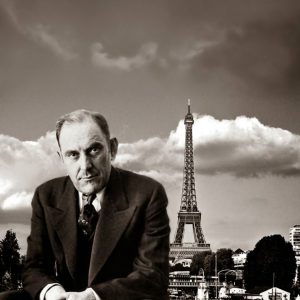
James “Whitey” Bulger was supposed to be the FBI’s secret weapon against Boston’s criminal underworld. Instead, the notorious gangster turned the relationship to his own advantage, using information from corrupt agents to eliminate rivals, protect his criminal empire and stay ahead of investigators. For years, the FBI believed it was controlling one of Boston’s most dangerous criminals. In reality, Bulger had learned how to manipulate the people who were supposed to be watching him—and eventually received a warning from the FBI itself that authorities were coming for him.
The FBI Turned a Boston Gangster Into an Informant
James “Whitey” Bulger grew up in South Boston, an Irish-American neighborhood that would eventually become the center of his criminal empire. He earned his nickname because of his light blond hair and later became deeply involved in organized crime.
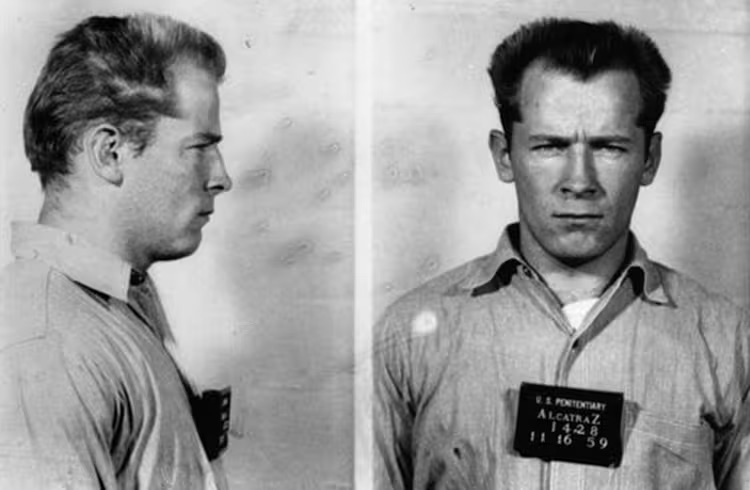
His criminal career had already taken him to federal prison. Bulger served time at Alcatraz after being convicted for a series of bank robberies in the 1950s. After returning to Boston, he became involved with the Winter Hill Gang, where he built a reputation through illegal gambling, loansharking and other criminal activities.
One of the people who knew Bulger personally was John Connolly.
Connolly had grown up in the same South Boston housing project as Bulger. Their relationship went back to Connolly’s childhood, long before he became an FBI agent.
In 1968, Connolly joined the FBI.
Years later, he returned to Bulger with an unusual proposition.
In 1975, Connolly met Bulger secretly inside his car near a Boston beach. He wanted Bulger to provide information that could help the FBI attack Boston’s Italian Mafia. Connolly essentially presented the arrangement as a way for Bulger to fight his own enemies using the FBI.
Bulger agreed—but with one important condition.
He did not want to be considered an informant.
Instead, he wanted to be regarded as a “strategist.”
The distinction mattered enormously to Bulger. In the criminal underworld, being labeled a “rat” could be deadly.
But becoming an FBI source offered him something far more valuable than a title.
It gave him access to the federal government while he continued operating inside the criminal world.

Bulger Used the FBI to Eliminate His Rivals
The arrangement quickly became useful to Bulger.
He and his criminal associate Stephen “The Rifleman” Flemmi began supplying the FBI with information about rival criminals, particularly members of the Angiulo crime family.
The FBI used that information to target the Angiulos.
When the rival organization was weakened, a power vacuum opened in Boston’s underworld.
Bulger moved into it.
He expanded his influence over racketeering and drug operations and eventually became one of the most powerful organized-crime figures in New England.
That was the first great irony of the arrangement.
The FBI believed it was using Bulger to fight organized crime.
Bulger was using the FBI to destroy his competition.
Instead of simply being a source who occasionally provided information, Bulger had discovered that his relationship with federal investigators could become a strategic weapon.
Every time authorities targeted one of his rivals, Bulger potentially benefited.
And the arrangement became even more valuable as he gained influence over the agents handling him.
The FBI was supposed to control the relationship.
Increasingly, Bulger was the one controlling it.
Watch the video to learn more about Whitey Bulger’s rise, his secret relationship with the FBI, and how he managed to stay ahead of investigators for nearly 16 years.
The FBI Agents Started Protecting Him
Bulger’s relationship with the FBI did not stop at exchanging information.
He began giving agents money and gifts.
According to the Boston Globe, Bulger and Flemmi paid Connolly approximately $235,000 over two decades. Bulger also gave Connolly’s supervisor, John Morris, airline tickets and expensive wine. Corrupt agents and police officers reportedly received cash as well.
The consequences were enormous.
As agents became compromised, Bulger received protection from law enforcement.
He was excluded from indictments involving members of the Winter Hill Gang despite his known involvement in serious criminal activity. That gave him greater freedom to continue operating his organization.
The relationship also benefited Connolly.
Information from Bulger helped Connolly establish a reputation as a highly successful FBI agent. But as his relationship with Bulger deepened, he increasingly ignored the gangster’s crimes.
The situation had effectively reversed itself.
Bulger was supposed to be the informant.
But Connolly increasingly behaved like Bulger’s source inside law enforcement.
The FBI agent could tell the gangster what investigators knew, who might be cooperating with authorities and what law enforcement was planning to do next.
That information was potentially worth far more to Bulger than any ordinary protection arrangement.
It allowed him to anticipate threats before they reached him.
And eventually, those warnings would help him escape altogether.

An FBI Tip Helped Bulger Escape
The corruption surrounding Bulger became particularly disturbing when information about potential witnesses reached him.
According to HISTORY’s account, Connolly informed Bulger about people expected to testify against him. Bulger then acted against suspected informants. In one case described by the source, suspected informers were lured to a house in South Boston, restrained and murdered.
By the early 1990s, law enforcement was closing in.
Bulger’s relationship with Connolly, however, gave him one final advantage.
In 1994, Connolly warned him that state and federal authorities were preparing to arrest him.
Bulger disappeared before a federal racketeering indictment was issued in January 1995.
He went from powerful Boston crime boss to one of America’s most wanted fugitives.
And the irony was extraordinary.
The man who had originally been recruited by the FBI had received an advance warning from an FBI agent that the FBI was coming for him.
Bulger vanished.
Connolly eventually went to prison and was sentenced to 40 years.
Bulger, meanwhile, remained on the run.
For years, reports of sightings appeared in different parts of the world. The question “Where’s Whitey?” became familiar in Boston.
He had successfully disappeared from the city where he had spent decades building his criminal empire.
But disappearing was easier than staying hidden forever.
The Fugitive Was Finally Caught—and Died in Prison
Bulger remained a fugitive for nearly 16 years.
Then, in 2011, investigators finally found him in Santa Monica, California.
He had been living quietly in a modest apartment with his longtime girlfriend, Catherine Greig, using false identities. The FBI had offered a $2 million reward for information leading to his capture, at the time the largest reward the agency had offered for a domestic fugitive.
A renewed FBI publicity campaign focused attention on Greig, and a resulting tip helped investigators locate the couple.
When agents entered the apartment, they found weapons, false identification documents and more than $800,000 in cash.
After his arrest, Bulger was returned to Boston to face the charges that had been waiting for him for years.
In 2013, a federal jury found him guilty on 31 of 32 counts, including participation in 11 murders, as well as racketeering and other criminal activities. He was sentenced to two life terms plus five years in prison.
But Bulger maintained one important denial.
He acknowledged his involvement in organized crime, gambling, loansharking and drug dealing.
He denied being an FBI informant.
Even after his conviction, he insisted that he had been the person directing the relationship rather than the person being controlled by federal agents. HISTORY notes that Bulger described the arrangement as a business decision and continued to reject the idea that he had been a traditional informant.
His final chapter came in prison.
On October 30, 2018, Bulger was found beaten to death in his cell at a federal prison in West Virginia, less than 12 hours after being transferred there. He was 89 years old. Authorities believed his attackers included a Mafia hitman serving a life sentence.
The apparent motive was particularly ironic.
Bulger had spent decades cultivating a reputation as someone who despised informers.
Yet in the eyes of some people in the criminal underworld, his cooperation with the FBI was precisely what made him a “rat.”
His death therefore brought a brutal end to one of the strangest relationships in American organized-crime history.
A gangster had been recruited to help the FBI.
The gangster manipulated the agents.
The agents protected the gangster.
And eventually, one of those agents warned him that his own government was coming to arrest him.

Whitey Bulger’s story became extraordinary because the line between gangster and FBI informant gradually disappeared. He provided information about rival criminals, helping the FBI weaken the Angiulo crime family, while corrupt agents protected him and supplied information that benefited his own organization. Eventually, an FBI agent warned Bulger that authorities were preparing to arrest him, allowing him to disappear for nearly 16 years. He was finally captured in 2011, convicted of participating in 11 murders and sentenced to two life terms. In 2018, he died violently in prison—the final irony in a career built around avoiding the label of “rat.”