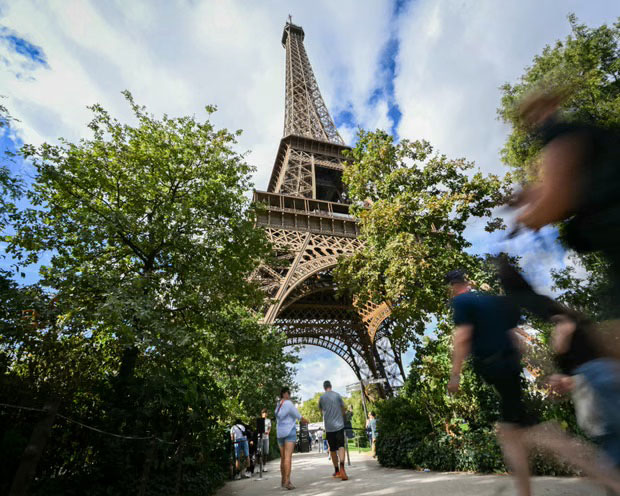
For one of the world’s most recognizable landmarks, the Eiffel Tower closed after something happened inside that had nothing to do with weather, safety or a technical problem. Female employees were reportedly told to step aside during a private visit by a Hindu religious delegation, after management agreed to limit their interactions with the group. The decision triggered an employee strike, forced the tower to shut for a day and prompted Paris authorities to launch investigations. The Eiffel Tower reopened—but the controversy over who made the decision, and why, had only begun.
What Happened Inside The Eiffel Tower?
The incident took place during a Saturday visit by a delegation linked to the Bochasanwasi Akshar Purushottam Swaminarayan Sanstha, commonly known as BAPS, a worldwide Hindu religious and civic organization. The delegation numbered about 100 people and was in Paris as part of celebrations surrounding the inauguration of a Hindu temple in France.
According to statements from Eiffel Tower employees, female workers were instructed not to remain in certain areas while the delegation was present. Some were reportedly told to leave their posts and wait elsewhere, while men took over some positions. Staff also said female employees were instructed not to enter or pass through specific areas during the visit.
For the workers, the issue was not simply where they had been stationed that morning. They argued that they had effectively been made invisible because they were women, and they said the instructions conflicted with the principle of equal treatment that they believed the Eiffel Tower should represent.
The controversy might have remained an internal workplace dispute. Instead, it quickly became a public confrontation between employees, management and city authorities.
The Eiffel Tower closed its doors following a controversial incident regarding staff treatment. Watch to learn the full story behind the strike and the push for equality at Paris’s most iconic monument.
Why Were The Women Moved?
The Eiffel Tower’s operating company, Société d’Exploitation de la Tour Eiffel, or SETE, acknowledged that the visiting group had requested that interactions with women be limited. SETE also acknowledged that accepting those conditions had been a mistake.
The company said such arrangements were incompatible with its own values, including equality between women and men and the neutrality that should guide the operation of the monument.
BAPS gave a different account of the episode. The organization said the visit had been coordinated with Eiffel Tower management because of the size of the delegation and to minimize disruption to other visitors and staff. It also stated that, to its knowledge, nobody had been denied access to the monument and apologized for any pain or inconvenience the incident had caused.
That distinction matters. The public dispute was not over whether women were barred from entering the Eiffel Tower as visitors. The controversy concerned the treatment of female employees during the delegation’s visit and the decision by management to accommodate a request that limited their interactions with the group.
That is also why Paris authorities have ordered investigations rather than treating the matter as an already settled accusation.
Employees Shut Down The Eiffel Tower
By Monday, anger among employees had turned into industrial action.
Workers walked out, forcing the Eiffel Tower to close to visitors for the day. For one of the world’s busiest landmarks, the symbolism was difficult to miss: the tower was closed because its own employees were protesting what they considered discriminatory treatment inside the building.
The union representing workers, CGT, described the instructions as unacceptable. Diane Davoine, a union representative, said the anger had grown after employees learned that women had been removed from their normal positions during the visit.
The Eiffel Tower is not a small private attraction. Around 600 people work for the monument and its visitor operations, according to SETE, and the company says women make up about 40% of its employees. The company also describes gender equality and diversity as part of its workplace policy.
That made the reported instructions particularly difficult for employees to reconcile with the organization’s stated principles.

Paris City Hall Stepped In
The dispute quickly moved beyond the Eiffel Tower itself.
Paris Mayor Emmanuel Grégoire said the treatment of women was unacceptable and promised an investigation. Paris City Hall later announced two separate inquiries: one conducted internally by SETE with the involvement of an independent outside provider, and another conducted directly by the city as the monument’s majority shareholder and supervising authority.
The city said the purpose was not merely to determine what happened during the visit, but also to establish how the decision was made and whether any personnel were actually sidelined because of their sex.
The city gave the inquiries a seven-day deadline for their conclusions.
Grégoire also met with union representatives at the tower and said that equality between women and men was not a principle that could be negotiated or adjusted depending on the circumstances.
For the management of one of France’s most recognizable public landmarks, the controversy had suddenly become a question about institutional responsibility.
The Religious Group Also Apologized
BAPS did not accept the characterization that anyone had been prevented from visiting the Eiffel Tower, but the organization nevertheless apologized after the controversy emerged.
Its statement said the delegation had worked with Eiffel Tower management to arrange the visit at the beginning of normal operating hours because of its size. BAPS said the intention was to avoid inconveniencing other visitors and staff, and it emphasized its stated commitment to mutual respect and service.
That leaves an important factual distinction in the story.
The current evidence does not establish that BAPS itself ordered Eiffel Tower employees to hide. What is established is that SETE acknowledged receiving a request to limit interactions with women and acknowledged that it should not have accepted those conditions. Employees then protested the resulting instructions, and the city ordered investigations into how the arrangement came about.
That difference is important because the controversy is about both the visiting group’s request and the decision by the Eiffel Tower’s own management to accommodate it.
Why The Eiffel Tower Became The Perfect Symbol
The argument has significance beyond one Saturday visit because of where it happened.
The Eiffel Tower is not merely another tourist attraction. It is one of the most recognizable symbols of France, and its employees themselves invoked that symbolism when explaining why the episode had upset them.
Their message was essentially that a landmark representing France should also reflect the principles France says it stands for.
The controversy therefore produced an unusual collision between two ideas: accommodating visitors and maintaining workplace equality.
Private institutions can establish rules for their guests. Public landmarks also have obligations to their employees and to principles such as nondiscrimination. The difficult question is what happens when those expectations appear to conflict.
That is precisely the question the investigations are now supposed to answer.
The Tower Reopened, But The Question Remains
The Eiffel Tower reopened Tuesday after employees and management met to address the dispute. Visitors returned, and the immediate disruption ended.
But the underlying issue did not disappear with the reopening.
The city still wants to know how the conditions were negotiated, who approved them and whether female employees were in fact treated differently because of their sex. SETE has acknowledged that the conditions should never have been accepted, while BAPS has apologized but disputed the implication that anyone was denied access.
Until the investigations are completed, some details remain disputed.
What is already clear is the extraordinary sequence of events: a private religious delegation arrives at one of France’s most famous landmarks, women working there are reportedly moved out of the way, employees respond with a strike, the tower closes, and Paris launches two investigations into how it happened.
The Eiffel Tower is open again. But the controversy has raised a question that goes far beyond one visit: when does accommodating a guest cross the line into changing the rights or treatment of the people who work there?
The Eiffel Tower controversy began during a Saturday visit by a large BAPS Hindu delegation in Paris. Employees said female colleagues were instructed to leave some workstations, remain in separate areas or avoid parts of the tower while the group was present. SETE acknowledged that the delegation had requested limited interactions with women and said those conditions should not have been accepted. BAPS apologized for the situation while saying that, to its knowledge, no one had been denied access to the tower and that the visit had been coordinated to minimize disruption. Employees then went on strike, closing the Eiffel Tower for a day. The monument reopened Tuesday, but Paris City Hall has launched two investigations to determine exactly how the decision was made and whether female staff were improperly sidelined.
P.S. This story is based on current reporting about the Eiffel Tower staff dispute, the BAPS delegation’s response and the investigations ordered by Paris authorities. Sources: The Guardian; Associated Press; City of Paris – https://www.theguardian.com/world/2026/sep/08/eiffel-tower-management-under-fire-after-decision-to-hide-female-staff