The Buick Skylark was never simply a car; it was a reflection of what Americans wanted from their cars at different moments in history. A model that once celebrated V8 power and sporty performance eventually evolved into a smaller, front-wheel-drive vehicle built around fuel economy, comfort and practicality. Its changing design tells a larger story about American consumer culture, showing how economic pressures can reshape even the meaning of the “perfect” car. In 1980, Buick was no longer selling horsepower alone—it was selling a new version of the American dream.
The Car Buick Thought Might Be “Perfect” for America
What could make an ordinary-looking car feel perfect to American buyers in 1980?
Imagine opening a car magazine in 1980 and seeing a brand-new Buick Skylark. It is not enormous, does not look particularly aggressive and makes no attempt to resemble the muscle cars that had once defined American automotive culture. Yet Buick presented it with a remarkably confident promise: “The perfect car for you.”
At first glance, that might sound like ordinary advertising. But the Skylark was arriving at a very different moment in American car history.
The redesigned model had been introduced the previous year, bringing a very different formula to Buick’s lineup. Instead of emphasizing sheer size and horsepower, the Skylark offered front-wheel drive, clean and classy styling, impressive fuel mileage and plenty of room—features that spoke directly to buyers whose priorities had changed.
Only a decade or two earlier, American car culture had celebrated big engines, dramatic styling and the freedom associated with powerful automobiles. By 1980, however, fuel costs and changing economic realities had made efficiency and practicality much harder to ignore.
The Skylark reflected that transition. It still wanted to feel like a Buick, with the comfort and polished appearance buyers expected from the brand, but it was packaged in a smaller and more economical form.
That makes the 1980 Skylark interesting for a reason that goes beyond its specifications. The car was essentially answering a changing question: What should an American car give you when bigger, faster and more powerful are no longer enough?
The answer was a vehicle designed to offer a little bit of everything—efficiency, comfort, space and style.

From V8 Dreams to Fuel-Economy Reality
When Bigger Was Better
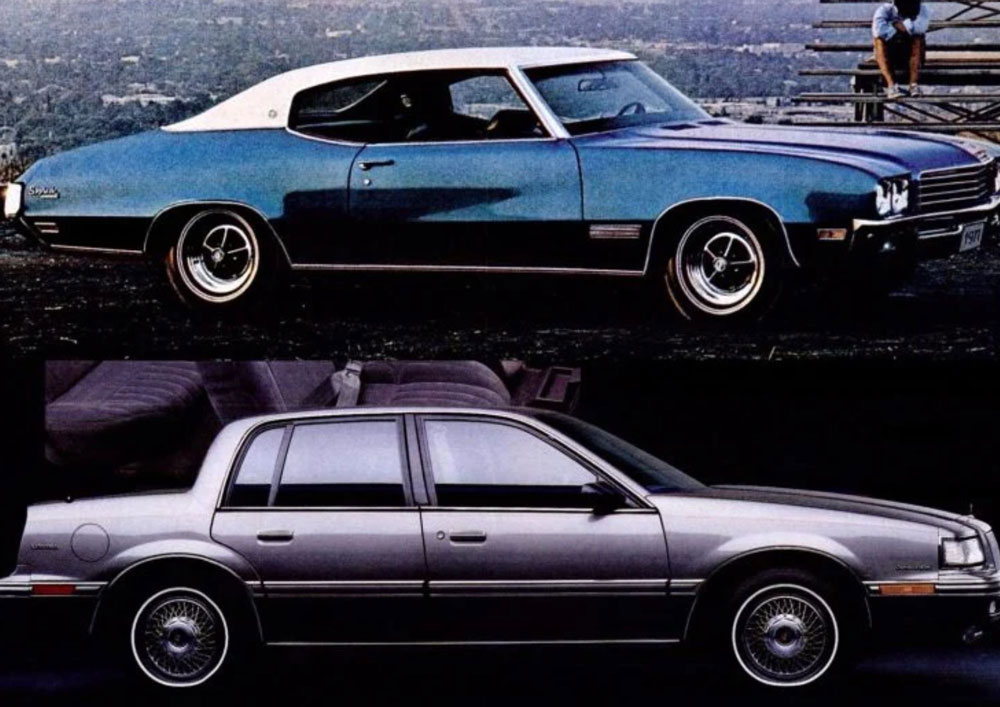
When the Skylark returned in 1961 as part of Buick’s Special line, it represented a very different idea of what an American car could be. With sporty styling, bucket seats and an aluminum V8, it offered the kind of performance that fit perfectly into the automotive culture of the 1960s. By 1964, the Skylark had become its own model, and a year later Buick introduced the Gran Sport, pushing the car further toward performance.
At the time, horsepower was more than a specification. It was part of the appeal. American buyers associated powerful engines, distinctive styling and larger cars with freedom and status. The Skylark could be stylish, relatively compact and still deliver the excitement of a V8.
So how did a car built around V8 power eventually become an economy-minded vehicle?
Curious how the Buick Skylark changed across nearly five decades? This video takes you through the evolution of the Skylark from 1953 to 1998, showing how its design, size and character transformed as American car culture changed. It’s a great visual companion to the story of how one Buick model evolved with the times.
Then America Ran Into an Energy Problem
The answer begins with a dramatic change in the environment around American car buying. During the 1960s, cars had generally become larger and more powerful. But by the 1970s, rising fuel prices and energy concerns began changing what buyers wanted from their vehicles.
Automakers responded by downsizing many of their models. Buick downsized the Skylark in 1975, while fuel economy and practicality became increasingly important considerations for consumers.
The transformation was bigger than one model. American car culture itself was shifting.
Horsepower → Efficiency
Bigger → Smaller
Status → Practicality
The Skylark’s evolution captured that transition remarkably well. The car that once appealed to Americans dreaming about V8 performance would eventually have to appeal to buyers thinking about fuel bills, interior space and everyday practicality.
That shift is essential to understanding why the 1980 Skylark looked—and drove—so differently from the car that came before it.

The 1980 Skylark Was a Very Different Buick
Front-Wheel Drive Changed the Formula
By 1980, the Buick Skylark had undergone a transformation that went far beyond simply making an older car smaller. The redesigned model switched from rear-wheel drive to front-wheel drive, with the engine mounted transversely. For Buick, this represented a major change in how a compact American family car could be designed.
The Skylark became part of GM’s X-body family, sharing its basic architecture with models such as the Chevrolet Citation, Pontiac Phoenix and Oldsmobile Omega. The layout helped manufacturers create smaller cars while making more efficient use of interior space—an increasingly valuable proposition at a time when American buyers were paying closer attention to fuel economy.
This was not the Skylark of the V8 era with a few inches taken off its dimensions. It was a fundamentally different approach to the American family car.
Luxury Without the Luxury-Size Car
Yet Buick did not want efficiency to mean giving up the feeling of driving an upscale automobile. The Skylark retained a comfortable interior, clean styling and enough room to make it practical for everyday family use.
That combination was important. Buyers could get the familiar Buick image without necessarily stepping into the enormous cars that had once defined the brand.
By the early 1980s, Buick’s advertising leaned into this contrast. The Skylark was positioned within the economy-car category, but its appearance and equipment were intended to make it feel more refined than the label suggested. Later advertising even emphasized the idea that the car could deliver the appearance and comfort people associated with a more expensive vehicle while maintaining the fuel economy expected from an economy car.
In other words, Buick was trying to solve a distinctly 1980 problem:
How do you give Americans the feeling of luxury without making them pay the price—in size, fuel or money?
The answer was a smaller, front-wheel-drive Buick that tried to combine efficiency, practicality and status in one package.

Why “Perfect for You” Was Really a Sales Pitch About Changing Times
Buick Was Selling a Lifestyle
By 1980, Buick was no longer selling the Skylark primarily through the language of horsepower and performance. Instead, the advertising emphasized things that reflected the concerns of a changing America: fuel mileage, interior room, classy styling, practicality and comfort.
That shift reveals something bigger than a change in advertising strategy. The product changed because the definition of the American good life was changing.
A desirable car no longer had to be the biggest, fastest or most powerful vehicle on the road. It needed to go farther between fill-ups, carry a family comfortably and still give its owner the feeling that they were driving something respectable.
The Skylark was therefore selling more than transportation. It was selling a version of the American lifestyle that could survive an era of higher fuel costs and greater concern about efficiency.
The “Economy Car” Americans Didn’t Want to Look Like
The interesting part was that Buick did not want buyers to feel as though they had simply settled for an economy car. By 1983, its advertising could emphasize the Skylark’s economy-car credentials while simultaneously suggesting that its styling and appearance did not immediately give away that category.
That was a clever piece of positioning.
People may want affordability without wanting to feel cheap.
The Skylark occupied a space between several competing desires:
Economy + Comfort + Status
You could spend less on fuel without completely giving up the appearance of driving a Buick. You could choose a smaller car without making the purchase feel like a downgrade.
In that sense, “the perfect car for you” was more than a catchy advertising line. It reflected an important moment in American consumer culture—one in which people were learning that being practical did not necessarily mean giving up the things that made a car feel desirable.

The Skylark Was Never Just One Kind of Car
The Buick Skylark’s history is almost a timeline of changing American priorities. In the 1960s, it emerged as a sporty compact with a V8 and eventually gained a stronger performance identity. By the 1970s, however, changing economic conditions pushed Buick toward downsizing. In the 1980s, the Skylark adopted front-wheel drive and placed greater emphasis on fuel economy and practicality. By the 1990s, its styling had become more aerodynamic and modern, before the Skylark finally disappeared from Buick’s lineup in 1997.
The interesting question is not whether one version was better than another. It is that the car kept changing because America kept changing.
The qualities that once made a car desirable—power, size and performance—gradually shared the stage with efficiency, comfort, practicality and everyday affordability.
Power → Style → Efficiency → Comfort → Practicality
The Skylark therefore offers a small window into a much larger story about American consumer culture. Cars do not exist separately from the society that buys them. They reflect what people can afford, what they value and what they expect from everyday life.
That may be why the Skylark is worth remembering today. It was never simply one kind of car, and it was never permanently tied to one definition of the American dream.
The Buick Skylark wasn’t the perfect car for every generation. It was something more interesting: a car that kept changing to fit the America of its time.

The Buick Skylark’s story is ultimately a story about change. What once represented V8 power and sporty style eventually became a smaller, more efficient car designed for a different kind of American buyer. Its evolution shows that the idea of the “perfect car” is never fixed—it changes with the economy, technology and priorities of the people who drive it. The Skylark may have disappeared from Buick’s lineup in 1997, but its history remains a fascinating snapshot of how America redefined what it wanted from a car.