In Zimbabwe, shopping once meant deciding what your family could afford. During the country’s 2018 hyperinflation crisis, it became a race against time. Prices could change between the supermarket shelf and the checkout, forcing shoppers to photograph price tags, compare stores by phone and calculate purchases before paying. One man earning about $24 could once cover his family’s basic needs; now the same amount could barely buy several kilograms of beef. He ended up buying chicken skin instead. This was what hyperinflation looked like in everyday life.
When The Price Changed Before You Paid
Isaiah Macheku went shopping knowing that the prices around him might not stay fixed for long. What he saw on a supermarket shelf could be different by the time he reached the checkout, making it difficult to decide what he could safely buy.
For shoppers, money was no longer enough. Calculators, mobile phones and notebooks became essential tools for comparing prices and working out what could fit within a shrinking budget.
At one grocery wholesaler, AP reporters found more people taking photographs of price stickers than actually choosing products. One shopper sent pictures to her husband while he did the same from another supermarket, and together they compared prices before deciding where to buy.
At some stores, the final price was not even known until checkout. Cashiers could stop a customer in the middle of a transaction to change the price, while retailers said they had little choice because replacing their inventory was becoming increasingly expensive.
The ordinary act of buying groceries had become a financial calculation with no stable answer.
Ever wondered how a country ends up with a 100 trillion dollar banknote? Dive into the fascinating and chaotic world of hyperinflation in Zimbabwe. Using a game of Monopoly to explain economic collapse, this video breaks down how money can lose all value. Watch now to learn why!
A Salary That Could No Longer Keep Up
For families, the consequences were much more personal than changing price tags.
Before the political upheaval that removed longtime President Robert Mugabe in late 2017, Macheku said his salary of about $24 was enough to cover his family’s basic needs. During the crisis, that same amount could barely buy 4 kilograms, or about 8.8 pounds, of beef.
So he did something that would once have seemed unthinkable. He bought chicken skin for his family’s evening meal because he could no longer afford the chicken itself.
His experience was part of a broader pattern. As prices rose and incomes failed to keep pace, families had to reduce what they bought, change what they ate and find increasingly creative ways to stretch their money.
Some vendors began repackaging cooking oil into tiny sachets large enough for a single meal. The Consumer Council of Zimbabwe said consumers were increasingly using these packets, known locally as “tsaona,” a Shona word meaning “accident.”
The name was painfully appropriate for a country where an ordinary shopping trip had become an economic emergency.

Zimbabwe Had Seen This Before
The crisis of 2018 was especially difficult because Zimbabweans already knew what monetary collapse could look like.
A decade earlier, the country had experienced one of the most severe episodes of hyperinflation in modern history. In 2009, the Zimbabwean currency collapsed under the pressure of extreme inflation, and the government adopted a multicurrency system dominated by the U.S. dollar.
That system brought a period of greater monetary stability. But by 2018, Zimbabwe was once again facing rapid currency depreciation and rising prices.
The government had introduced new and sometimes confusing changes to the country’s monetary system, including restrictions on the use of foreign currencies. Confidence weakened as the local currency lost value, while businesses struggled with shortages of foreign exchange.
For ordinary people, monetary policy was not an abstract issue discussed only by economists. It determined whether a paycheck could still buy dinner.
Why Prices Were Rising So Fast
Several forces were pushing Zimbabwe’s economy in the same direction.
The International Monetary Fund said inflation had reached almost 300 percent in August 2018. The local currency was rapidly losing value, while policy uncertainty and distortions in the foreign-exchange market added further pressure.
The country was also dealing with severe drought and heavy foreign debt, which limited access to outside financing. At the same time, much of Zimbabwe’s domestic industry had weakened, leaving businesses dependent on imported goods.
That created another problem. When the local currency fell, imported products became more expensive. Retailers then faced higher replacement costs, forcing them to raise prices simply to remain in business.
Economist John Robertson warned at the time that the underlying problems would not disappear quickly. Businesses began closing or reducing the range of products they carried because holding inventory itself had become a financial risk.
The result was a vicious cycle: a weaker currency made goods more expensive, higher prices made incomes worth less, and shrinking purchasing power made everyday life increasingly difficult.

The Strange Economics Of Hyperinflation
Inflation is often discussed as a percentage, but percentages do not capture what it feels like when prices are changing constantly.
In a stable economy, a shopper can usually plan a grocery trip with reasonable confidence. A paycheck comes in, prices are familiar and a budget can be built around them.
Hyperinflation destroys that sense of certainty.
A person may know exactly how much money is in his pocket and still have no idea what that money will buy. A store may know what its inventory cost yesterday but have difficulty determining what it will cost to replace tomorrow.
That is why retailers in Zimbabwe were constantly adjusting prices. They were not simply trying to charge more. They were trying to protect themselves from selling an item today for less than it would cost to replace it.
For consumers, however, the distinction offered little comfort. Whether prices were rising because of a retailer’s costs or a collapsing currency, the result was the same: the purchasing power of their money kept disappearing.
When Families Learned To Buy Less
As the crisis deepened, people developed new ways to cope.
Some compared prices across multiple stores before making even small purchases. Others used their phones and notebooks to keep track of changing costs. Some businesses reduced their product ranges to limit the risk of holding stock. Families made harder choices.
The idea of eating meat, buying enough cooking oil or planning several meals ahead could no longer be taken for granted. For people living on very small incomes, even minor price changes could determine whether a purchase was possible at all.
This is what made Zimbabwe’s hyperinflation so different from the ordinary inflation people experience when groceries become somewhat more expensive. The problem was not merely that prices were higher. It was that the entire system of everyday planning was breaking down.
People could no longer rely on money to hold its value long enough to make normal decisions.
The Real Meaning Of A Collapsing Currency
Zimbabwe’s 2018 crisis offers a powerful illustration of what happens when confidence in money begins to disappear.
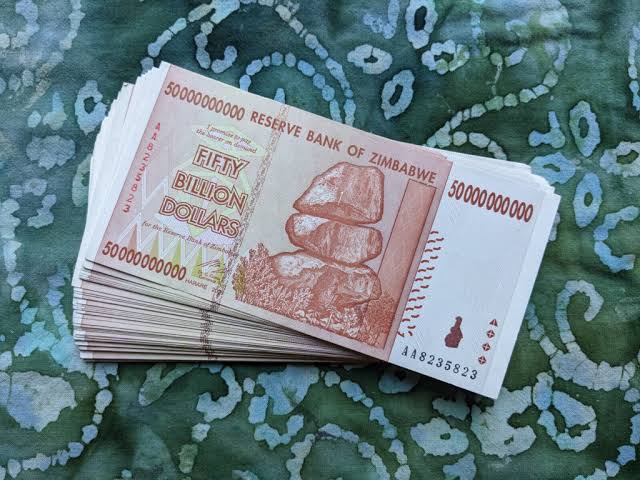
The most revealing images were not necessarily banknotes with enormous numbers printed on them. They were shoppers photographing supermarket shelves, cashiers changing prices during transactions and families buying whatever food their remaining money could stretch to.
That is what hyperinflation ultimately does. It turns money from a dependable measure of value into something people feel they have to spend before it loses more of its purchasing power.
For Macheku, the crisis meant that a salary that once supported his family could no longer buy the same basics. For businesses, it meant that a price tag could become outdated almost immediately. For families across the country, it meant learning to calculate, compare and compromise just to get through an ordinary day.
A currency crisis may begin in government policy, banking systems and foreign-exchange markets. But its final destination is much simpler. It reaches the grocery shelf.
Zimbabwe’s hyperinflation crisis showed how quickly a monetary problem can become a problem of everyday survival. Prices could change between the supermarket shelf and the checkout, forcing shoppers to compare stores, photograph price tags and recalculate their purchases. Families cut back on food, while some businesses changed prices repeatedly just to cover the rising cost of replacing inventory. The country had already experienced a currency collapse in 2009, but by 2018 the same sense of uncertainty had returned. Hyperinflation was no longer an economic statistic on a page. It was the feeling of knowing exactly how much money you had—and still not knowing what it would buy.
P.S. This story is based on Associated Press reporting from Zimbabwe during the country’s 2018 hyperinflation crisis, focusing on how rapidly changing prices affected shoppers, families and businesses. Source: https://apnews.com/general-news-international-international-1ce81eed4b064a529163513931b30178