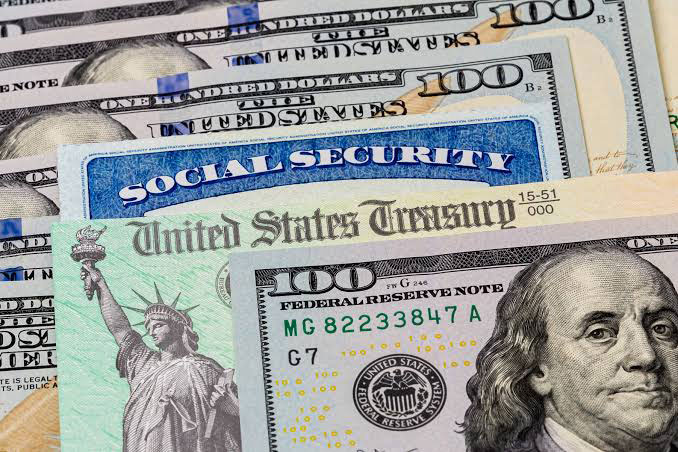
A higher Social Security payroll tax is one of the ideas being discussed to address the program’s long-term funding shortfall, but the change could also reduce workers’ take-home pay. A USA TODAY analysis published September 19, 2026, cited estimates showing that a median full-time worker earning $61,583 could face roughly $2,617 to $3,024 in additional annual tax burden under two hypothetical higher payroll-tax rates. Those numbers describe possible policy scenarios—not a tax increase that has already become law.
Why Social Security Needs More Money
Social Security does not currently have enough dedicated revenue to cover all of its projected costs indefinitely. The 2026 Trustees Report says the program’s cost is expected to exceed its income throughout the 75-year projection period under the report’s intermediate assumptions.
The timing is particularly important for retirement planning. The Social Security Old-Age and Survivors Insurance, or OASI, trust fund is projected to have enough reserves to pay all scheduled benefits until the fourth quarter of 2032. After that, continuing income would be enough to pay about 78% of scheduled OASI benefits under current-law assumptions if no legislative changes are made.
Looking at the two Social Security trust funds together produces a somewhat later date. The Trustees project the combined OASDI reserves would be depleted in 2034, with 83% of scheduled benefits payable at that point.
That distinction matters because headlines about a future “22% cut” can make the situation sound like an immediate reduction for today’s beneficiaries. The official projection is instead about what could happen to scheduled benefits after trust-fund reserves are depleted if Congress does not change the law.
Are you worried about taxes on your Social Security benefits? Many retirees are caught off guard! In this video, we break down the 2026 tax rules, explain the “combined income” calculation, and share smart strategies to help you keep more of your hard-earned money. Watch now to secure your retirement!
The Current Payroll Tax Takes 6.2% From Workers
Under current 2026 law, the Social Security payroll tax is 12.4% in total: 6.2% paid by the employee and 6.2% paid by the employer. The tax applies only up to the Social Security wage base, which is $184,500 for 2026.
For an employee earning $60,000, the worker’s direct Social Security withholding is therefore $3,720 for the year, assuming all of the earnings are subject to the tax. Someone earning $100,000 would pay $6,200, while a worker earning $184,500 or more would reach the 2026 employee maximum of $11,439.
The employer contributes an equal amount on the employee’s covered wages. Self-employed workers generally face both portions directly, which is why the effect of a payroll-tax increase can look different depending on how someone earns their income.
The important point is that the current 12.4% rate is not a proposed number. It is the rate in effect today.

How A Higher Rate Could Change A Paycheck
The figures in the latest USA TODAY report come from looking at what might happen under higher combined payroll-tax rates. The article cites Social Security Trustees’ estimates that a rate of about 16.65% would be needed to close the long-term funding gap under one set of assumptions, while the Congressional Budget Office previously used a 17.31% rate in its analysis.
Those numbers would represent a substantial increase from today’s 12.4% combined rate. But workers would not necessarily see the entire increase deducted directly from their paychecks because the current system divides the payroll tax between employees and employers.
For example, if a hypothetical increase were divided evenly, an increase in the combined rate would generally translate into roughly half of the additional rate appearing directly on an employee’s paycheck, with the employer responsible for the other half. Self-employed workers could face the full combined rate directly.
The exact effect would depend on the final policy, the worker’s earnings and how Congress structured the change.
Why The $3,000 Figure Is A Scenario, Not A New Tax Bill
The widely quoted $3,000 figure needs some context. USA TODAY reported that a Cato Institute analysis estimated an additional annual burden of approximately $2,617 to $3,024 for a median full-time worker earning $61,583, depending on which hypothetical payroll-tax rate was used.
That does not mean every worker would suddenly lose $3,000 from their paycheck. A worker earning less than the median would generally have a smaller dollar impact, while the treatment of employer contributions and the structure of any eventual reform would affect the broader economic burden.
Economists cited by USA TODAY also point out that payroll taxes can affect compensation beyond the amount shown as a direct withholding. Employers facing higher labor costs could respond through changes in wages, hiring or other forms of compensation, although the magnitude and timing of those effects would depend on economic conditions and the specific policy.
That is why the $3,000 number is best understood as an illustration of a policy scenario rather than a prediction of what every American worker would pay.
Raising The Tax Is Not The Only Proposal
Increasing the payroll-tax rate is only one of the options being discussed for addressing Social Security’s financing gap. Another approach would change the wage base so that more earnings are subject to Social Security taxes.
Social Security’s Office of the Chief Actuary publishes estimates for several proposals, including plans that would eliminate or expand the current taxable maximum. Some versions would continue applying the existing 12.4% rate to earnings above today’s wage base, while others would combine a higher taxable maximum with different benefit-credit rules.
Other proposals discussed publicly include changes to the retirement age or the way annual benefits are adjusted for inflation. Those approaches would affect beneficiaries rather than primarily increasing payroll taxes on workers, and they therefore involve different trade-offs.
The important point is that Social Security’s financing problem does not have only one proposed response. The 2026 Trustees Report describes a long-term actuarial imbalance, while lawmakers and analysts have discussed several ways of changing both revenues and benefits.

What A Social Security Tax Change Could Mean For Workers
For workers, the debate ultimately comes down to something very concrete: how much comes out of each paycheck and what happens to future benefits.
Under current law, the employee Social Security tax remains 6.2% on covered earnings up to $184,500 in 2026. No higher rate has been enacted simply because analysts or policymakers have discussed one.
But the long-term financing projections explain why tax changes are receiving attention. The OASI trust fund is projected to run out of reserves in late 2032, and the Trustees project that incoming revenue alone would then cover only 78% of scheduled OASI benefits under current law.
Whether the eventual solution involves higher payroll taxes, changes to taxable earnings, benefit adjustments or some combination of policies remains a matter for Congress and future legislation. For now, the clearest fact for workers is simpler: the $3,000 figure is a possible consequence of one set of proposed tax scenarios, not a new Social Security charge already appearing on American paychecks.
Social Security’s funding debate is beginning to reach workers in a very personal way because one proposed response could affect the amount of money they keep from each paycheck. The current 6.2% employee payroll tax has not changed, but higher combined rates have been modeled as one way to address the program’s projected funding gap. The widely cited $3,000 figure represents a hypothetical additional annual burden for a median worker under certain scenarios. Whatever Congress ultimately decides, the numbers show that Social Security’s long-term financing question is also a question about today’s wages and tomorrow’s retirement benefits.
The original USA TODAY report examines how a possible increase in the Social Security payroll-tax rate could affect workers’ earnings and explains the funding problem behind the debate. It also compares the potential tax impact with other approaches that have been discussed for addressing Social Security’s long-term financing gap. Source: https://www.usatoday.com/story/money/personal-finance/retirement/social-security/2026/09/19/social-security-payroll-tax-rate-increase-impact/91823757007/