A long road trip can mean different things to different people: an empty highway, a full tank of fuel, a favorite playlist and the freedom to keep driving until the scenery changes. But when your dog is riding along, the journey requires more planning. A bored, anxious or restless dog can quickly turn a relaxing drive into a difficult experience. The right preparation can help make your four-legged companion a better passenger—and turn the road trip into an adventure for both of you.
Your Dog Is Not Just Another Passenger
For many men, a road trip with a dog is part of the appeal of owning one. There is something naturally simple about loading a bag into the car, opening the door and watching your dog jump into the back seat.
No complicated schedule.
No airport.
No luggage carousel.
Just a car, a road and a companion that is usually ready to go anywhere.
But dogs do not experience a long drive the same way humans do. A person may enjoy sitting for several hours listening to music and watching the highway disappear behind the windshield. A dog may become confused, restless or uncomfortable after spending too much time in the same space.
That is why the best road trips with dogs begin before the engine starts.
If your dog rarely rides in a car, do not assume it will suddenly enjoy a six-hour journey. Start with short drives and gradually allow the dog to become familiar with the sounds, movement and confined environment of the vehicle. Short trips can also help you identify problems such as anxiety or carsickness before you are hundreds of miles from home.
A road trip should not be your dog’s first real experience inside a moving car.

A Restless Dog Can Turn the Drive Into a Safety Problem
The biggest mistake some drivers make is allowing their dog to move freely around the vehicle.
It may look harmless when the dog climbs between seats or puts its head near the driver. In reality, an unexpected movement can become a serious distraction. A dog jumping toward the front of the car at the wrong moment is not simply an inconvenience—it can interfere with the driver’s attention and control.
The safer approach is to create a designated space for the dog. Depending on the animal and vehicle, this might involve a secure travel crate, a dog seat or another restraint system designed for use in a vehicle.
The goal is not to make the dog feel imprisoned. It is to create a predictable environment where the animal understands where it is supposed to stay.
This also gives the driver something valuable during a long journey: fewer surprises.
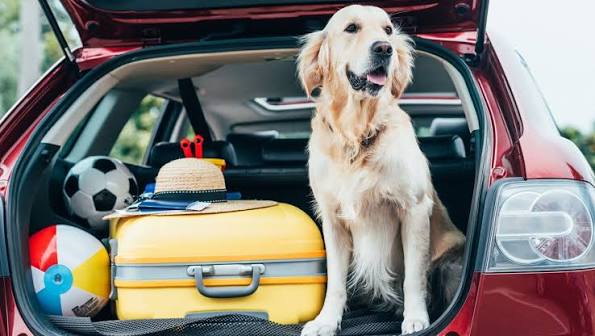
A good road trip setup is similar to organizing any other piece of travel equipment. You want everything to have a place. Water, bags, food, toys and your dog’s resting area should be prepared before the car starts moving.
Once the road trip begins, the vehicle should feel less like a chaotic moving room and more like a small mobile base.
Watch the video to see how to make your next road trip with your dog safer, calmer and far more enjoyable. From keeping your dog entertained to planning the right stops, these simple tips can make all the difference on a long drive.
The Right Toy Can Buy You a Few Quiet Miles
One of the simplest ways to keep a dog occupied is to bring something familiar from home.
Dogs often respond better to objects they already know. A favorite toy, blanket or chew item can provide comfort in an unfamiliar environment and give the animal something to focus on.
Food-based puzzle toys can also be useful during appropriate parts of the journey. A toy that releases treats gradually may keep a dog occupied longer than an ordinary object.
The key is to understand your own dog.
Some dogs are happy sleeping for most of the trip. Others become restless after an hour. A high-energy working breed and an older dog may have completely different travel needs.
This is where road trips with dogs become less about following a universal checklist and more about understanding the passenger sitting beside you.
If you know your dog becomes anxious when separated from familiar objects, bring those objects.
If it needs activity, plan more stops.
If it sleeps comfortably after exercise, use that to your advantage.
The road trip becomes easier when you stop treating the dog as an unpredictable problem and start treating its needs as another part of the travel plan.
Plan the Journey Around More Than Fuel Stops
A driver may be able to cover a long distance with only a few stops for fuel, food and coffee.
Your dog probably should not.
Regular breaks are important during a long journey, giving the animal an opportunity to drink water, relieve itself and move around. A practical approach is to stop at intervals rather than waiting until the dog becomes visibly uncomfortable or restless.
For an energetic dog, these breaks can make a dramatic difference.
A few minutes outside can allow the animal to stretch, walk and release energy before returning to the vehicle. A dog that has spent too long confined to a car may become increasingly excited, making the next stage of the journey more difficult for everyone.
This is one reason why road trips with dogs require a slightly different mindset.
You are not trying to travel from Point A to Point B as quickly as possible.
You are building the journey itself.
A good stop can become part of the trip: a quiet roadside area, a park, a lake or simply a place where the dog can walk for a few minutes before getting back into the car.
For many people, these unexpected stops are exactly what makes road travel more memorable than flying.

Don’t Try to Entertain Your Dog While Driving
A common mistake is trying to solve boredom while the vehicle is moving.
The dog becomes restless, so the driver turns around, reaches toward the back seat or begins playing with it.
That creates a new problem.
The driver’s attention should remain on the road. If your dog needs interaction, exercise or a more substantial break, stop the vehicle somewhere safe.
This rule may sound obvious, but long drives create fatigue. A restless dog can become another source of pressure, especially when the driver has already spent several hours behind the wheel.
The solution is not to divide your attention between the road and your dog.
The solution is to plan enough stops that your dog does not need constant entertainment while the vehicle is moving.
Think of the driving phase and the rest phase as two separate parts of the trip.
When the car is moving, everyone settles into position.
When the car stops, that is the time to walk, play, drink water and interact.
Creating this routine can help both the driver and the dog understand what to expect.

The Best Road Trips Are Built Around the Journey
There is a particular appeal to the image of a man, a car and a dog heading toward an unknown destination.
It is not really about escaping society or becoming some kind of wilderness survival hero.
The appeal is simpler than that.
You control the route.
You decide where to stop.
The road can change direction whenever you want.
And beside you—or in the back seat—is a companion that does not care whether the destination is a luxury hotel, a cabin, a beach or a small town you found on the map ten minutes earlier.
But freedom on the road works best when it is supported by preparation.
Bring enough water.
Keep food accessible.
Know where your dog can safely stay during the drive.
Plan breaks before the animal becomes uncomfortable.
Bring familiar objects.
And do not expect a dog that has never spent much time in a car to suddenly become the perfect road-trip companion.
The best travel partners, including dogs, usually need time to learn the routine.
A long road trip with your dog can be one of the simplest and most rewarding ways to travel. There is no airport security, no complicated boarding process and no need to leave your four-legged companion behind. But a successful journey requires more than opening the car door and hoping your dog enjoys the ride. Prepare the vehicle, secure your dog, bring familiar toys and schedule regular stops. With the right routine, your dog can become more than a passenger—it can become the best companion you bring on the road.