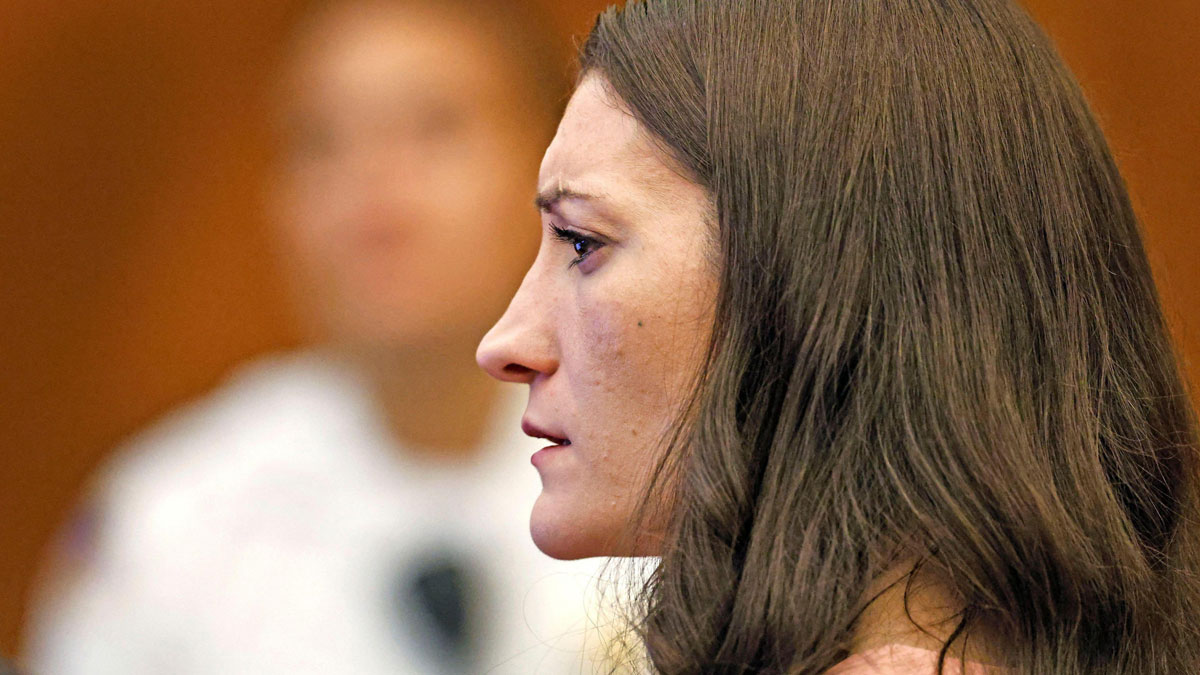
After more than four weeks of testimony, the murder trial of Massachusetts mother Lindsay Clancy ended Friday without a verdict. Jurors spent seven days trying to decide whether Clancy was criminally responsible for killing her three young children in 2023, but ultimately said they could not reach a unanimous decision. Her defense argued that severe postpartum psychosis had left her detached from reality, while prosecutors said she knew what she was doing. A mistrial was declared, leaving one of the most closely watched cases in Massachusetts without an answer.
What Was the Lindsay Clancy Case About?
Lindsay Clancy, 36, a former labor and delivery nurse, was charged with murdering her three children at the family’s home in 2023. The victims were her daughter, Cora, her son, Dawson, and her youngest child, Callan, who was eight months old. Clancy did not dispute that she strangled the children, but her defense argued that she was experiencing a severe psychiatric condition and should not be held criminally responsible.
That made the trial less about whether the killings occurred and more about what was happening in Clancy’s mind when they did. Her lawyers relied on postpartum psychosis and other mental-health evidence, while prosecutors argued that her actions showed awareness and responsibility.
For more than four weeks, jurors heard from roughly 80 witnesses and reviewed around 300 exhibits. Expert testimony was sharply divided, leaving the panel with two fundamentally different interpretations of Clancy’s mental state.

Seven Days, Still No Verdict
When the case finally reached the jury, the expectation was that a verdict would bring an end to a trial that had received intense national attention. Instead, the deliberations quickly became difficult.
By the fourth day, jurors had already informed Judge William Sullivan that they were struggling to reach a unanimous decision. He instructed them to continue discussing the case, and the panel returned to deliberate for several more days.
Then, on Thursday, the situation became even more complicated. The jury foreperson told the judge that one juror was refusing to follow the court’s instructions concerning reasonable doubt. The defense asked that juror to be removed, arguing that the alleged refusal was undermining the deliberations, but Sullivan declined.
The jurors returned Friday for a seventh day. They still could not agree.
Breaking news in the Lindsay Clancy case. A judge has officially declared a mistrial after jurors failed to reach a unanimous verdict. Watch the full update to understand the court’s decision, the legal proceedings that followed, and what comes next in this high-profile case. Click to watch now!
The Courtroom’s Final Twist
The jury ultimately sent the judge a note saying it could not reach a unanimous decision. Sullivan announced that he would declare a mistrial, prompting an audible gasp inside the courtroom after weeks of anticipation surrounding the verdict.
Then came an unexpected final attempt to stop the trial from ending that way. Defense attorney Kevin Reddington asked for time to seek an emergency appeal before the mistrial was formally declared, arguing that the dispute involving the juror needed to be addressed by a higher court.
A Massachusetts Supreme Judicial Court justice heard the emergency request, but the appeal was rejected. The mistrial therefore went forward, ending the first trial without either a conviction or an acquittal.
Why the Jury Was Divided
The jury’s disagreement grew out of an unusually difficult legal question: could Clancy understand the nature and wrongfulness of what she was doing during the alleged psychotic episode?
The defense portrayed her as suffering from postpartum psychosis, a rare and severe psychiatric condition that can involve hallucinations, delusions and a break with reality. Prosecutors offered a sharply different interpretation, arguing that Clancy understood her actions and that the evidence showed she was capable of distinguishing right from wrong.
The expert testimony reflected that divide. Some psychiatric evidence supported the defense’s explanation, while another expert concluded that Clancy understood the difference between right and wrong when the killings occurred. With the medical evidence pointing in different directions, the jury was left to decide a question that had no simple answer.
The deadlock does not mean the jury found Clancy innocent, nor does it mean it found her guilty. It means the required unanimous verdict never came.
What Happens After the Mistrial?
A mistrial does not end the criminal case. Clancy remains charged with murder and is being held in a psychiatric hospital while prosecutors consider what to do next. The state could seek a second trial, explore a plea agreement or pursue another legal resolution.
The next major court date is scheduled for September 29, 2026. At that hearing, the defense is expected to seek a ruling that would end the case, although AP reports that such an outcome would be unlikely. The hearing could also provide more information about whether prosecutors intend to try the case again.
A retrial would mean starting the process again with a new jury. The same central question would return: whether Clancy’s mental state made her legally responsible for the deaths of her children.

The Case That Divided the Public
The Clancy case has attracted extraordinary attention because it goes beyond one criminal prosecution. It has also become a national discussion about postpartum mental illness, psychiatric treatment and the limits of criminal responsibility.
Her former husband, Patrick Clancy, testified about her deterioration before the killings and has publicly said that he forgives her and believes she was seriously ill rather than simply malicious. At the same time, prosecutors have argued for accountability for the deaths of the three children.
The result is a case in which the public debate can easily become more absolute than the law itself. A jury is not asked to decide whether postpartum psychosis exists or whether Clancy suffered from mental illness. It must decide whether the evidence satisfies the specific legal standard for criminal responsibility.
That distinction is why the mistrial matters. After weeks of testimony, the first jury could not resolve that question.
This case is a tragic wake-up call regarding mental health treatment and psychiatric medication. A board-certified psychiatrist breaks down the medical evidence behind the Lindsay Clancy trial, examining whether a dangerous “cocktail” of drugs fueled this tragedy. Watch now to understand the clinical reality behind this heartbreaking headline.
Seven Days of Deliberation Changed Nothing
The Lindsay Clancy murder trial began with the expectation that a jury would finally answer one of the most difficult questions surrounding the 2023 killings. Instead, seven days of deliberation produced no verdict, an emergency appeal and ultimately a mistrial.
The next phase may be almost as closely watched as the trial itself. Prosecutors must decide whether to begin again, while the defense will look for ways to end the criminal case without another trial. Meanwhile, the families involved are left facing the possibility of reliving the evidence all over again.
For now, the most striking fact about the case is also the simplest: after weeks in court and seven days behind the jury-room door, the legal system still has no final answer.
The Lindsay Clancy murder trial ended in Massachusetts on September 4, 2026, without a verdict after seven days of jury deliberations. Clancy, who admitted killing her three children in 2023, argued that severe postpartum psychosis made her not criminally responsible; prosecutors argued that she understood her actions. When jurors could not reach a unanimous decision, the judge declared a mistrial. An emergency defense appeal was rejected, and a September 29 hearing will determine the next stage of the case. The trial is over for now, but the central legal question remains unanswered.
P.S. This article is based on the Associated Press’s latest coverage of the Lindsay Clancy murder trial, including the seven-day jury deadlock, the dispute over a juror’s instructions on reasonable doubt, the rejected emergency appeal and the September 29 hearing on what happens next. Source: https://apnews.com/article/lindsay-clancy-postpartum-massachusetts-trial-a939db73e864393eb9c727daa788e7a2