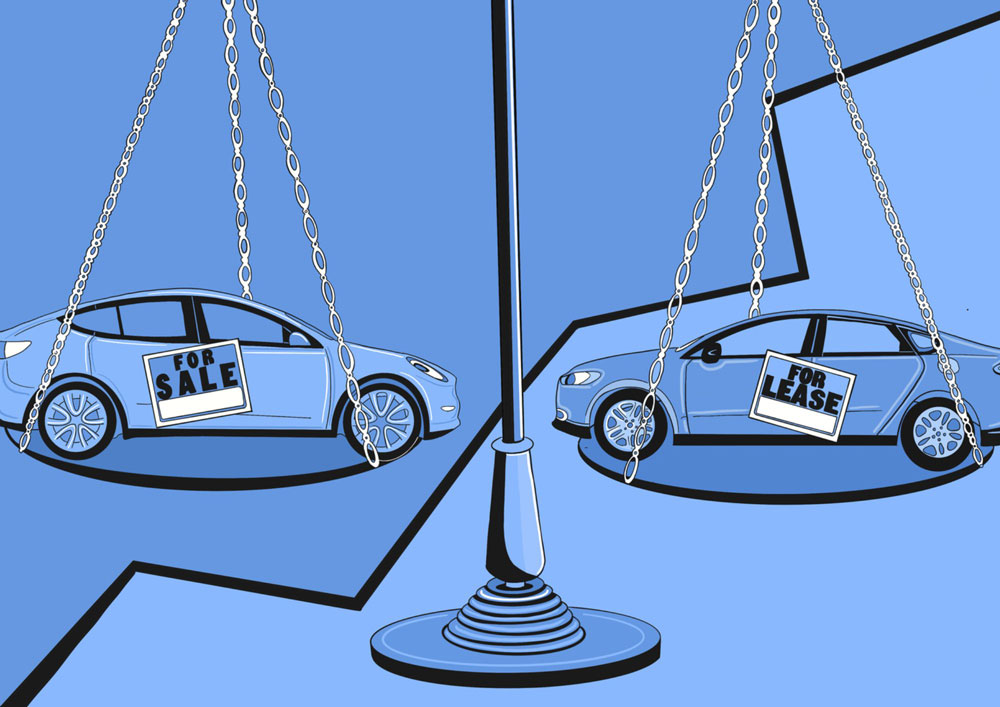
Leasing can make a new car feel more affordable because the monthly payment is often lower than financing the same vehicle. But a smaller monthly bill does not necessarily mean you are spending less overall. The real difference comes down to how long you keep the car, how much you drive, the fees attached to the lease and whether you want to own the vehicle when the payments are over.
Leasing Looks Cheaper Because the Monthly Payment Is Lower
The biggest advantage of leasing is often the lower monthly payment. Instead of paying for the full value of a vehicle, a lease payment primarily reflects the vehicle’s expected depreciation during the lease period, along with financing and other charges.
Kiplinger gives the Honda CR-V as an example. A three-year lease could cost around $500 per month, while financing the same vehicle over 60 months could result in a payment of more than $700 per month. For someone focused on keeping monthly expenses low, the difference can be significant.
That lower payment can make leasing particularly attractive to drivers who want a newer vehicle without committing to a larger monthly loan payment.
But there is an important catch. At the end of the lease, you generally return the vehicle. You have paid for the right to use it, but you do not automatically own it.
When buying a car, the situation is different. Your monthly payments gradually pay down the loan until the vehicle belongs to you. That means comparing a $500 lease payment with a $700 loan payment without considering what happens at the end can give you a misleading picture of the true cost.

Buying Can Cost More Each Month but Build Ownership
Buying a car can feel more expensive at first because the monthly payment may be higher. However, every payment moves you closer to owning the vehicle outright.
Once the loan is completely paid off, you can continue driving the car without making another monthly loan payment. If the vehicle remains reliable, you could potentially drive it for several more years while paying only for insurance, maintenance, fuel and other ownership costs.
Leasing works differently. When the lease ends, you typically have three choices: return the vehicle, buy it according to the lease’s purchase option or enter another lease.
For people who continually lease new vehicles, this means the monthly payments can continue indefinitely. Every few years, you move from one lease agreement to another.
That can make leasing attractive for someone who always wants a newer car, but less attractive for someone whose main goal is to minimize transportation costs over a long period.
A driver who buys a vehicle and keeps it for 10 years could eventually spend several years without a car payment. A driver who leases continuously may continue making payments throughout that same period.
This is why ownership can become an important financial advantage over time.
Thinking about leasing your next car? Watch the video for a closer look at the real costs of leasing, the potential hidden fees and what you should consider before choosing between leasing and buying.
Leasing Comes With Mileage Limits and Extra Fees
The monthly payment is not the only cost to consider when leasing.
One of the biggest restrictions is mileage. Lease contracts commonly allow around 10,000 to 15,000 miles per year. If you exceed that limit, the leasing company can charge a fee for every additional mile.
For someone who drives only occasionally, this may not be a problem. But for someone with a long commute or frequent road trips, the charges can become significant.
The condition of the vehicle also matters. When you return a leased car, the leasing company can assess it for excessive wear and tear. Damage beyond what is considered normal use may result in additional charges.
There can also be a disposition fee when the lease ends. These additional costs are easy to overlook when a dealership advertises a low monthly payment.
That is why the advertised payment should never be the only number you consider.
Before signing a lease, it is worth looking at the mileage allowance, amount due at signing, taxes, fees, expected end-of-lease charges and the total amount you will pay throughout the contract.
A lease with a slightly higher monthly payment but generous mileage and fewer fees could ultimately be a better deal than one with an extremely low advertised payment.

Who Should Lease and Who Should Buy?
Leasing can make sense for drivers who enjoy having a newer vehicle every few years. If you prefer the latest technology, regularly want to change vehicles and do not drive many miles, the convenience of leasing may be worth the trade-offs.
Leasing can also be worth considering for some electric vehicles and plug-in hybrids. Kiplinger notes that leased EVs and PHEVs can receive different treatment under the federal clean-vehicle tax credit because leased vehicles are treated as commercial vehicles for purposes of the credit. That can make certain lease deals more attractive than purchasing the same vehicle outright.
Buying tends to make more sense for people who want to keep a vehicle for many years. Once the loan is paid off, there is no need to immediately replace the vehicle simply because the financing agreement has ended.
For drivers who prioritize saving money, buying used can be another option. A used vehicle can cost considerably less than a comparable new model, while avoiding some of the steepest depreciation that occurs during the first years of ownership.
In other words, there are really three different strategies: lease a new vehicle regularly, buy a new vehicle and keep it for years, or buy a reliable used vehicle and hold onto it for as long as it makes sense.
The best choice depends on your priorities rather than simply the size of the monthly payment.
The Cheapest Monthly Payment Isn’t Always the Cheapest Car
The smartest way to compare leasing and buying is to look at the total cost rather than the monthly payment.
For a lease, consider the amount due upfront, monthly payments, mileage charges, wear-and-tear costs, disposition fees and any other charges. You should also consider what happens after the lease ends if you plan to lease another vehicle.
For a purchase, consider the down payment, loan interest, monthly payments, maintenance, insurance, depreciation and how long you expect to keep the car.
Interest rates also matter. Someone financing a vehicle should compare offers from multiple lenders rather than automatically accepting the financing provided by a dealership. A lower interest rate can reduce the total amount paid over the life of the loan.
Ultimately, the right question is not simply, “Which option has the lower monthly payment?”
It is, “How much will this car cost me from the day I get it until the day I stop using it?”
That calculation can produce a very different answer.

Leasing can make a car feel more affordable because the monthly payment is often lower, but that does not necessarily mean you are getting the better deal. Mileage limits, additional fees and the lack of ownership can make leasing more expensive over time. Buying may require higher payments upfront, but eventually you own the vehicle and can continue driving it without a loan payment. For drivers focused on long-term savings, buying and keeping a reliable car for many years may be the smarter financial choice.