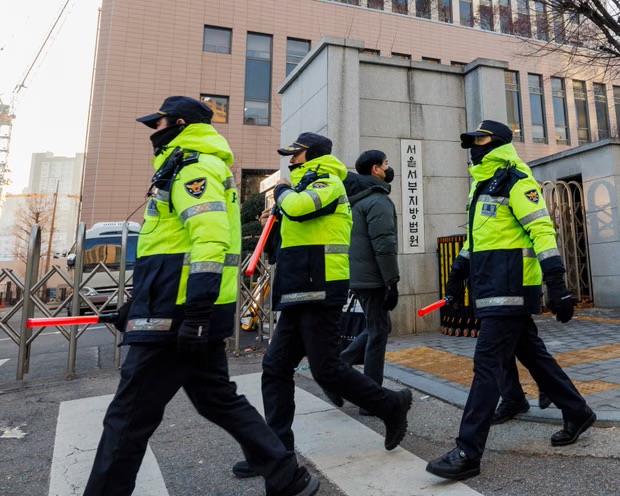
What began as one missing-person case in Jeju has now triggered a nationwide review of about 310,000 cases. A police officer is accused of falsifying records and prematurely closing cases involving people who were later found dead, exposing a much larger question about how South Korea investigates missing adults. The scandal has forced authorities to look beyond one officer and examine whether the system itself leaves too many people without a serious search.
The Case That Started the Scandal
The case that brought the issue into national focus involved Jang Mi-ran, 37, who disappeared in mid-May from Jeju. Her partner reported her missing, but according to investigators, the officer handling the case closed the file only about two and a half hours later, claiming he had contacted Jang and that she did not want her location disclosed.
That explanation raised an obvious question: where was the record of the call? Police say they could find no evidence that the conversation had taken place, and the officer is accused of falsifying the electronic record used to close the case. He has denied wrongdoing and maintains that he contacted the missing people before closing their files.
Then, 104 days after Jang was last seen, her body was discovered on Monday at a palm farm roughly 400 meters from the place where she had been staying. Police have not yet established her cause of death, so the circumstances surrounding her final days remain under investigation.

Then Another Missing Person Was Found Dead
The same officer is also accused of closing the case of a man in his 60s on the very day his family reported him missing in early July. His body was found on Saturday, adding another case to the allegations surrounding the officer’s handling of missing-person reports.
Two other people reported missing in Jeju were also later found dead, although the Guardian distinguishes those cases from the two files directly connected to the officer under investigation. The accumulation of deaths pushed the scandal beyond an isolated administrative failure and raised questions about how missing-person cases are prioritized in the first place.
The officer has now been arrested and faces charges including dereliction of duty and falsifying official electronic records. The investigation is still ongoing, which means the full extent of what happened in each case has not yet been established.
Her missing-person case was closed in just hours. 104 days later, police found her body only 400 meters from where she had been staying. Watch the video to learn how the discovery in Jeju exposed a much bigger scandal—and why around 310,000 missing-person cases are now being re-examined.
The Bigger Problem Is How Adults Are Classified
The scandal exposed a little-known feature of South Korea’s missing-person system. Under current law, children, autistic people, and people with dementia or mental disabilities receive formal missing-person status, allowing police to use additional investigative tools such as requesting phone-location data, issuing emergency alerts and matching family DNA.
Many other missing adults are treated differently and can effectively be classified as people who have simply left voluntarily. That limits some of the investigative powers automatically available to police and creates a difficult balance between searching for someone who may be in danger and respecting an adult’s right to disappear by choice.
That distinction becomes especially troubling when a person really is in danger but authorities have insufficient information to know it. Last year, more than 70,000 adults were reported missing, and 99.7% of cases were closed without a full-scale search; among those cases, 931 people were later found dead. Those figures do not establish that police mishandled all of the deaths, but they illustrate the scale of the system under scrutiny.

Now 310,000 Closed Cases Are Being Rechecked
The response has moved well beyond Jeju. South Korean police announced that approximately 310,000 missing-person cases closed over the past three years will be re-examined, with cases suspected of improper handling potentially reopened. The review is expected to be completed by November.
President Lee Jae Myung ordered an investigation and called for reforms within the police force, while Interior Minister Yun Hojung publicly apologized and said the incident had exposed a structural flaw in the way missing-person cases are handled.
But reform is not straightforward. Critics of broader police powers argue that adults have a legitimate right to disappear from unwanted relationships or creditors and warn that location-tracking tools could be misused by abusive partners or others trying to find them. More than 10 bills have been introduced over the past decade to expand search powers for missing adults, but none has become law.
The Questions That Remain
Jang Mi-ran’s case still contains major unanswered questions. Police have found her body, but her cause of death has not been established, and investigators are still determining exactly what happened after she disappeared.
The allegations against the officer are also not yet a final judicial finding. He has denied wrongdoing, and the investigation must establish whether records were deliberately falsified and whether the alleged failures directly affected the outcomes of the missing-person cases.
What is already clear is that a single case has exposed a much larger vulnerability. When a missing adult can be treated as someone who has simply chosen to leave, the most important hours of a disappearance can pass before authorities realize that something is seriously wrong.

The discovery of Jang Mi-ran’s body 104 days after she disappeared, just 400 meters from where she had been staying, has triggered a national reckoning in South Korea. A Jeju police officer is accused of closing her case within hours and recording a phone contact that police say they cannot verify; he denies wrongdoing and is now facing charges including dereliction of duty and falsifying records. Police will re-examine around 310,000 missing-person cases from the past three years, while the country debates how far authorities should go when adults disappear. The scandal may have begun with one officer, but the questions it raised reach far beyond one case.