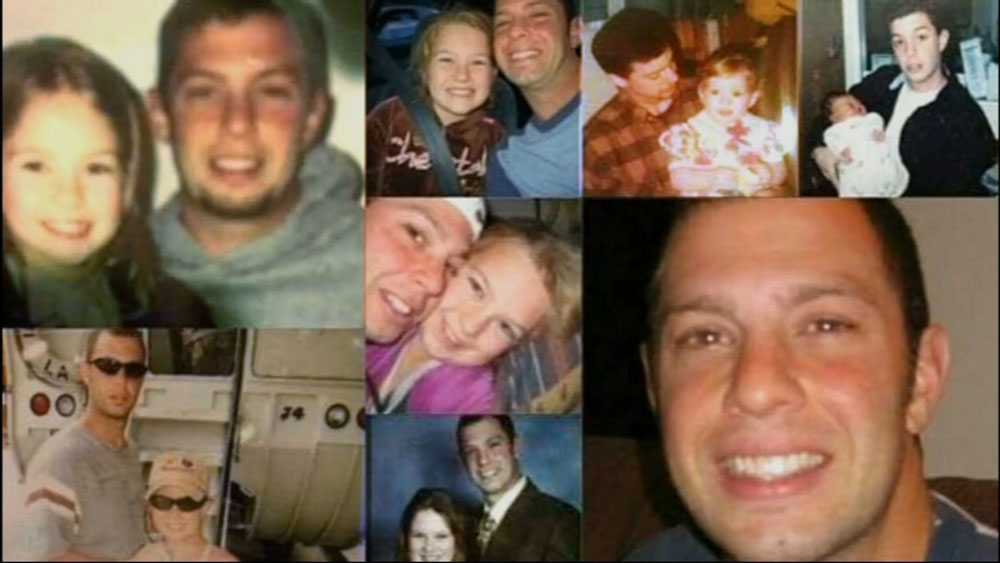
On September 17, 2007, 36-year-old Stephen Spina left his apartment, apparently for a short trip before returning home. By the time his girlfriend arrived around 12:15 p.m., he was lying dead inside, the victim of multiple stab wounds. There was no surveillance footage to show who came to his door, and the clues surrounding his personal life created several possible suspects—but no definitive answer.
A Well-Known Father Was Found Dead at Home
Stephen Spina was a postal worker, a devoted father and a familiar face in Mamaroneck. He was active in local baseball and softball as an umpire and had a wide circle of friends, including members of the local police department.
That morning, Stephen had spent time with his girlfriend, Tamara, before she left for work at about 8 a.m. He was reportedly not feeling well, but the two loosely planned to meet for lunch later that day. When Tamara repeatedly called his apartment and got no answer, she became concerned and drove over.
Around 12:15 p.m., she entered the building with the superintendent, who opened Stephen’s apartment door. They found him dead in a pool of blood. Police arrived, secured the apartment and quickly determined that this was a homicide.
He left his apartment at 9:30 that morning. By 12:15, he was dead—and investigators believe he may have opened the door to his killer himself. Watch the video to follow the clues, the possible motives and the three-hour gap that has kept Stephen Spina’s murder unsolved for years.
The Three Hours Investigators Could Never Fully Explain
A neighbor told investigators that Stephen had left his apartment at about 9:30 a.m., walking toward the parking area where he kept his car. The witness did not see him return, but investigators knew he had to have come back sometime before Tamara arrived.
That created a crucial window of roughly three hours. Investigators could place Stephen outside the building at 9:30, and they could place him dead inside the apartment by 12:15, but they lacked the technology that might have helped reconstruct his movements during those missing hours. There were no surveillance cameras covering the building or parking areas, and the available phone data from 2007 was far more limited than what investigators can obtain today.
Retired detective Dave Castarella, who had known Stephen personally, later said the unanswered question that stayed with him was simple: why did Stephen leave the apartment that morning? He believed the answer could point toward the person responsible for his death.

Police Believed He Opened the Door to Someone He Knew
The medical evidence gave investigators another important clue. Stephen had suffered multiple stab wounds to his chest and back, and he also had defensive wounds on his arm and thigh, suggesting that he had tried to protect himself.
Police believed he was likely ambushed immediately after opening his apartment door. Lieutenant P. J. Trujillo later said investigators believed the attacker was probably male based on the violence of the attack and the fact that Stephen appeared to have been overpowered.
The locked apartment did not necessarily mean an intruder had broken in. The building’s common entrance was supposed to be secured, but its locking mechanism was unreliable, and Tamara herself had been able to enter without a key or code. The attacker could therefore have entered the building without overcoming a major barrier.
Then Investigators Found Several Possible Motives
Stephen’s private life gave investigators more than one possible direction. Before his murder, he had confronted a man who believed Stephen was involved with his girlfriend. That created one obvious potential motive, although no one was ultimately charged.
Another woman, identified in the investigation as “Trudy,” had reportedly come to Stephen’s apartment claiming that she was pregnant with his child. Tamara was said to have walked in during that conversation, adding another complicated relationship to the case.
Then there was vandalism. Stephen’s car had been damaged at his apartment complex, and he told Castarella about it. Police later learned that Tamara’s car had also been vandalized and that notes had been left on it. Stephen had kept that information to himself, so investigators were left wondering whether the vandalism was connected to one of the relationship disputes—or to something else entirely.

One Theory Suggested Two People Were Involved
With several possible motives but no clear suspect, investigators considered whether Stephen’s murder might have involved more than one person. Castarella later offered his own theory that a woman may have been involved and that a man could have assisted her, but he explicitly acknowledged that there was no evidence proving that theory.
Several people connected to the case were interviewed, including Tamara, the man involved in the earlier confrontation and the woman who claimed Stephen was the father of her unborn child. According to the report, all had initially cooperated to some degree but declined to take polygraph examinations when asked.
None of these circumstances established guilt. They simply left detectives with several directions to investigate, while the strongest physical clue remained the same: Stephen appeared to have opened the door to someone he knew and was attacked almost immediately afterward.
Sixteen Years Later, the Case Was Still Open
By January 2024, 16 years after Stephen’s death, Mamaroneck police still had not made an arrest. The case had returned to public attention through the APB Cold Case podcast, and police said a $30,000 reward was available for information leading to a solution.
That long passage of time has made the missing three hours even more important. Modern investigators might have access to far more digital and surveillance evidence than detectives did in 2007, but those tools cannot recreate a camera that never existed or a phone record that was never preserved.
What remains is a narrow but haunting sequence: Stephen left his apartment at 9:30, returned sometime later, opened his door to someone, and was attacked inside. Whoever came through that door knew enough about Stephen—or knew how to approach him—to get close before the violence began.
Stephen Spina’s murder remains an unsolved Mamaroneck cold case that began with a simple morning errand and ended in a locked apartment. Investigators believe he was likely attacked immediately after opening the door to someone he knew, while several conflicts in his personal life provided possible motives. Yet the key three-hour window between 9:30 a.m. and 12:15 p.m. was never fully reconstructed, and no suspect was arrested. A $30,000 reward remains available for information that can finally answer the question that has haunted the case for years: who came to Stephen’s door that morning?