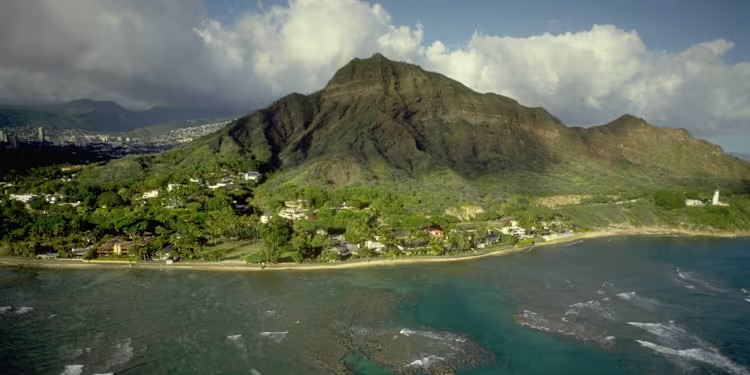
Hawaii did not begin as part of the United States. Long before the 50th star appeared on the American flag, the islands were home to an independent kingdom with its own monarchy, government and international relationships. Yet Hawaii occupied one of the most strategically important positions in the Pacific Ocean, while American economic interests were steadily expanding across the islands. Over time, money became political power, political conflict turned into the overthrow of a queen, and global wars transformed Hawaii into a critical military asset. More than six decades after annexation, the former kingdom finally became America’s 50th state—but the debate over how that transformation happened has never completely disappeared.
Before It Was American, Hawaii Was an Independent Kingdom
Before becoming a U.S. state, Hawaii was a sovereign kingdom. King Kamehameha I unified the major Hawaiian islands in 1810, creating a political entity that would later establish formal institutions and develop diplomatic relationships with major powers. During the 19th century, Hawaiian leaders worked to modernize the kingdom while protecting its independence in a Pacific increasingly influenced by the United States and European powers.
That history is important because Hawaii was not simply an unclaimed group of islands eventually incorporated into the United States. It had a government, a monarchy and internationally recognized sovereignty. The problem was that Hawaii’s location made it extremely difficult for powerful countries to ignore. Positioned in the middle of the Pacific, the kingdom occupied territory that would become increasingly valuable as trade, naval power and international competition expanded.

Geography Made Hawaii Impossible to Ignore
Hawaii’s strategic importance came largely from geography. The islands sit between North America and Asia, making them a potentially valuable location for commercial shipping and military operations. As the United States expanded its interests beyond the mainland, Hawaii became increasingly attractive as a place where ships could obtain supplies and where naval forces could maintain a presence in the Pacific.
This strategic value would become even more important as the United States developed into a major Pacific power. Hawaii was no longer simply a distant kingdom known for agriculture and trade. Its ports and location gave it value to military planners who understood that control of the Pacific could shape future economic and political power. Geography had placed Hawaii in the middle of a much larger competition long before the islands officially became part of the United States.
Watch the video to explore the remarkable story of Hawaii’s transformation from an independent kingdom into America’s 50th state. Discover how power, war and Pacific strategy shaped the future of the islands.
Sugar Money Changed the Balance of Power
Military strategy was only one part of the story. The more immediate source of foreign influence came from sugar. During the 19th century, American business interests became deeply involved in Hawaii’s plantation economy, and wealthy landowners gained increasing economic influence. Trade agreements strengthened Hawaii’s relationship with the United States, while sugar exports created enormous fortunes for plantation owners.
Over time, economic power began to influence politics. Wealthy business interests wanted greater control over the political system and became increasingly uncomfortable with a monarchy capable of challenging their position. Hawaii therefore faced a problem that has appeared repeatedly throughout history: when foreign-linked economic interests become powerful enough, the line between business influence and political power can become increasingly difficult to see.
The future of the kingdom was no longer being decided only by its monarch. It was also being shaped by people whose wealth and commercial interests connected Hawaii more closely to the United States.
The Constitution Signed at Gunpoint
The struggle for power reached a major turning point in 1887. King David Kalākaua was forced to accept the document later known as the Bayonet Constitution. The constitution sharply reduced the authority of the monarchy and increased the political influence of wealthy interests, particularly those connected to the islands’ business and plantation economy.
The name itself reveals the nature of the crisis. Kalākaua signed under armed pressure, while voting requirements were changed in ways that strengthened wealthy property owners and reduced political participation among many Native Hawaiians. The monarchy survived, but its authority had been seriously weakened.
This moment changed Hawaii’s political balance. Economic interests had demonstrated that they could use organized pressure and force to reshape the country’s governing system. The kingdom was still independent, but the struggle over who actually controlled its future had become far more dangerous.

The Queen Tried to Take Back Control
When King Kalākaua died in 1891, his sister Liliʻuokalani became queen. She inherited a monarchy weakened by the Bayonet Constitution and faced powerful groups determined to preserve the political influence they had gained. Liliʻuokalani sought to restore greater authority to the monarchy, bringing her into direct conflict with business and political interests that feared losing power.
The confrontation quickly became a struggle over Hawaii’s future. The queen represented an attempt to reassert Hawaiian political authority, while her opponents saw greater royal power as a threat to their economic and political interests. What began as a constitutional dispute soon became a crisis involving organized political groups, armed pressure and the growing influence of the United States.
The question was no longer whether the monarchy could be reformed. It was whether the monarchy would survive.
The 1893 Overthrow Changed Hawaii Forever
In January 1893, Queen Liliʻuokalani was overthrown. A group of businessmen and political leaders opposed to the monarchy moved against her government, while U.S. forces were present during the crisis. American involvement in the overthrow would later become one of the most controversial aspects of Hawaii’s history.
The monarchy was replaced by a provisional government and eventually by the Republic of Hawaii. For the first time since the kingdom’s creation, Hawaii no longer had its monarchy. Yet annexation by the United States did not happen immediately. The question of whether America should formally absorb Hawaii remained controversial.
President Grover Cleveland opposed annexation and commissioned an investigation into the overthrow. The resulting report criticized the actions of U.S. representatives and military personnel. Hawaii’s future remained uncertain, but the political landscape had already been transformed beyond recognition.

A War Made Hawaii Too Important to Ignore
The Spanish-American War of 1898 changed the strategic calculation. American forces operating in the Pacific needed access to reliable logistical support, and Hawaii’s location suddenly became even more important. What had previously been a controversial question about annexation now became part of a broader military strategy.
The United States annexed Hawaii in July 1898 through the Newlands Resolution. Two years later, the islands became an organized U.S. territory. Hawaii’s transformation was driven by a combination of political developments, economic interests and military necessity, but the final decision was heavily influenced by America’s growing role as a Pacific power.
The logic was straightforward. The United States was expanding beyond the mainland, and Hawaii occupied a position that could support that expansion. Once global conflict demonstrated the islands’ military value, earlier objections to annexation lost much of their political force.
Pearl Harbor Turned Hawaii Into a Strategic Fortress
Annexation did not make Hawaii a state. For decades, it remained a U.S. territory. But its strategic importance continued to grow as American military infrastructure expanded across the Pacific. Then, on December 7, 1941, Japan attacked Pearl Harbor.
The attack placed Hawaii at the center of one of the largest conflicts in modern history. The Pacific became a vast theater of war, and Hawaii became essential to American military operations. Its location allowed the United States to organize logistics, naval movements and air operations across enormous distances.
After Pearl Harbor, Hawaii was no longer simply a strategically useful territory. It had become one of the most important military positions in the Pacific. World War II transformed the islands’ relationship with the United States and strengthened the argument that Hawaii occupied a central place in American national strategy.
Why Hawaii Still Had to Wait Decades for Statehood
Despite its strategic importance, Hawaii did not immediately become a state. It had been annexed in 1898, yet statehood would not arrive until 1959. During those decades, statehood proposals repeatedly faced political resistance in Congress.
One reason involved race. Hawaii had a diverse population that included Native Hawaiians, people of Japanese descent, Chinese residents and other communities. In an era when racial discrimination strongly influenced American politics, some lawmakers opposed statehood because of the islands’ demographic composition.
Hawaii therefore occupied an unusual position. It was important enough to become an American territory and increasingly essential to national military strategy, yet its residents did not possess the same political rights as citizens living in states. The islands were American territory, but not yet fully part of the Union.
The Cold War Changed the Final Calculation
After World War II, Hawaii’s strategic importance did not decline. The Cold War turned the Pacific into a major arena of global competition, and the United States expanded its military commitments across Asia. Hawaii became an important part of the network connecting North America to American military positions throughout the Pacific.
At the same time, domestic political conditions were changing. Statehood supporters became more influential, while the strategic and political arguments against Hawaii’s admission weakened. By the late 1950s, the question was no longer whether Hawaii mattered to the United States. Its military and geopolitical importance had become impossible to deny.
The Cold War did not create Hawaiian statehood by itself, but it reinforced a reality that had been developing for decades: Hawaii was no longer a distant territory at the edge of American politics. It had become central to America’s position in the Pacific.
Hawaii Finally Became the 50th State
In 1959, Congress passed legislation allowing Hawaii to enter the Union. Hawaiian voters then approved statehood in a referendum, and President Dwight D. Eisenhower signed the official proclamation making Hawaii the 50th state on August 21, 1959.
The transformation was extraordinary. Less than a century earlier, Hawaii had been an independent kingdom. Its monarchy had been weakened, its queen had been overthrown and the islands had been annexed by the United States. Two world wars then demonstrated Hawaii’s enormous military value, while Cold War geopolitics reinforced its importance.
The 50th star was therefore not simply the result of an administrative decision. It represented the final stage of a political transformation that had taken more than half a century.

But the Story Did Not End With the 50th Star
Statehood did not end the debate over Hawaii’s sovereignty. For many Native Hawaiians, the overthrow of the monarchy and subsequent annexation remain central historical issues. The transformation from an independent kingdom into a U.S. state continues to raise questions about political legitimacy, self-determination and the loss of sovereignty.
In 1993, one hundred years after the overthrow of Queen Liliʻuokalani, the U.S. government issued an official apology acknowledging the role of the United States in the events that led to the overthrow of the Hawaiian Kingdom. The resolution recognized that Native Hawaiians had never directly relinquished their claims to sovereignty over their national lands.
That history explains why Hawaii’s past cannot be reduced to the story of a new star appearing on the American flag. The statehood narrative is also the story of a kingdom that disappeared under enormous economic, political and military pressure.
Hawaii’s transformation from an independent kingdom into America’s 50th state was shaped by forces much larger than the islands themselves. Geography made Hawaii strategically valuable, sugar created powerful economic interests and political conflict weakened the monarchy. The overthrow of Queen Liliʻuokalani changed the kingdom forever, while global wars turned Hawaii into an indispensable military position in the Pacific. By 1959, the islands had become too deeply connected to American power to remain a political territory on the margins. Yet the history of how that transformation happened remains contested, making Hawaii’s story far more than a tale about statehood. It is ultimately a story about how money, military strategy and geopolitics can reshape the destiny of an entire nation.