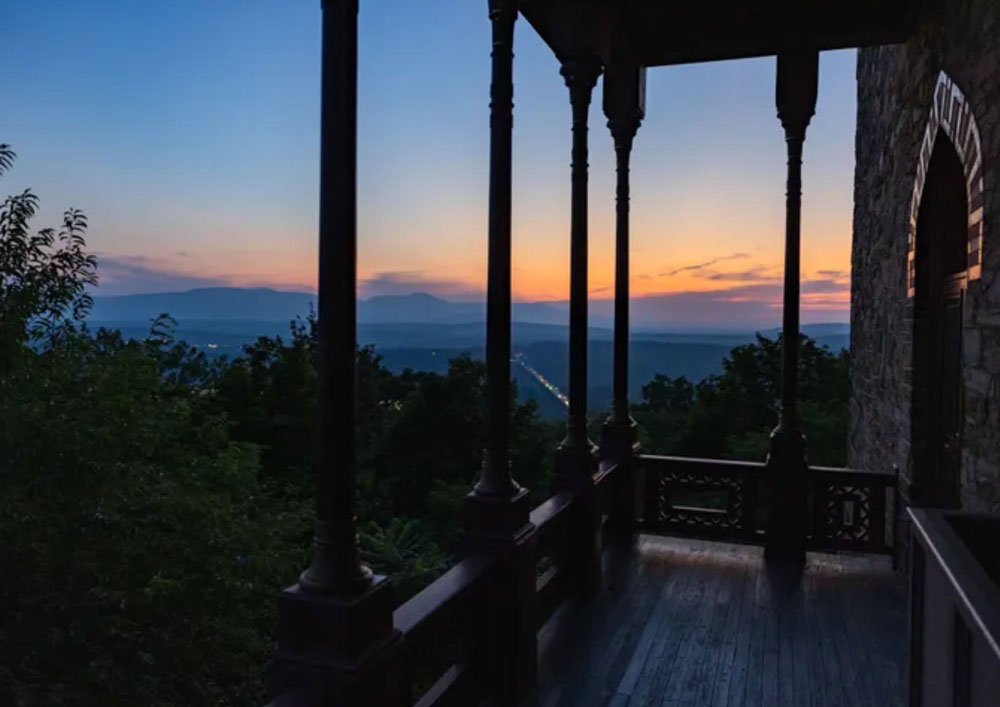
In 1822, long before GPS, smartphones or interstate highways, Gideon Miner Davison published a travel guide that showed Americans how to explore their own country. His The Fashionable Tour mapped out a journey from New York through the Hudson Valley, Saratoga Springs, Buffalo and ultimately Niagara Falls, complete with routes, costs, accommodations and attractions. Two centuries later, much of that journey remains possible, revealing how one man’s itinerary helped shape an American tradition that still feels familiar today: the road trip.
The Man Who Planned America’s First Great Road Trip
In 1822, long before GPS, Google Maps or travel influencers, an American named Gideon Miner Davison published a guide that looked surprisingly familiar to the modern traveler. Called The Fashionable Tour, it laid out a practical journey through some of the most interesting destinations in the young United States.
Davison didn’t simply tell readers which places were worth visiting. He helped them figure out how to actually get there. His guide included routes, transportation options, prices, accommodations, attractions and historical stories, turning travel into something that could be planned rather than improvised.
That was important because America was entering a new era of mobility. Steamships were making river travel faster, while expanding transportation networks were gradually connecting cities and communities that had once been difficult to reach. For people with enough money and time, traveling for pleasure was becoming increasingly realistic.
Davison understood that change early.
His itinerary connected New York with destinations including the Hudson Valley, Saratoga Springs, Buffalo and Niagara Falls. In doing so, he created something remarkably close to the modern road-trip formula: choose a route, decide where to stop, know what you will see and have an idea of what the journey will cost.
The technology was primitive compared with today’s standards. There were no highways, smartphones or online hotel reservations. Yet the basic idea feels strangely familiar.
A traveler still wants to know where to go, what is worth seeing and what waits around the next bend.
That is what makes Davison’s guide so fascinating two centuries later.
What if America’s first travel influencer planned a road trip you could still take today?
Davison wasn’t just telling Americans where to go. He was showing them how to travel.

The Route That Took Travelers Through America’s Past
Davison’s journey began in New York, a city that looked almost unrecognizable compared with the Manhattan of today. In the 1820s, the island had no skyscrapers and much of its northern section remained undeveloped. Yet even then, places such as City Hall, Trinity Churchyard and Battery were important parts of the young city.
From Manhattan, travelers could board a steamship and head north along the Hudson River. The river was more than a scenic route—it was one of the country’s most important transportation corridors.
One of the most significant stops was West Point, whose strategic position overlooking the Hudson had made it crucial during the Revolutionary War. George Washington reportedly described the Hudson as “the key to the continent.” The area also carried the darker story of Benedict Arnold, the American general whose attempted betrayal of West Point became one of the Revolution’s most famous episodes.
The journey then moved toward the Catskill Mountains, where reaching the famous Catskill Mountain House required a demanding stagecoach ride. Travelers were rewarded with sweeping views that helped turn the mountains into one of America’s early tourist destinations.
Saratoga Springs offered a very different experience. Its mineral springs attracted visitors seeking health and relaxation, while hotels, balls, concerts and theater transformed the town into a fashionable resort.
Something important was happening along this route. Americans were no longer traveling only because they had to. Increasingly, they were traveling because they wanted to.
The journey itself was becoming part of the experience.
And Davison understood that.
But the most important part of Davison’s route wasn’t the scenery. It was what was being built along the way.

The Engineering Marvel That Made America Smaller
The Erie Canal
When Gideon Davison was writing about American travel in the 1820s, one of the biggest changes in the country was still taking shape. The Erie Canal, completed in 1825, stretched roughly 363 miles from the Hudson River to Lake Erie, using 83 locks to overcome differences in elevation along the route.
By modern standards, the canal may not look like extraordinary technology. In the early 19th century, however, building such a massive artificial waterway was an enormous engineering challenge. Workers had to cut through forests, excavate earth and rock, and construct a system capable of moving boats across changing elevations.
The result was one of the most consequential infrastructure projects in early American history.
Walk across the Rainbow Bridge from Canada into the United States and experience Niagara Falls from both sides. The views are spectacular, and crossing the border on foot makes the trip even more memorable.
Buffalo and the New American Economy
The canal transformed Buffalo. What had been a relatively small settlement became a major transportation hub connecting the Atlantic coast with the Great Lakes and the expanding interior of the United States.
Travel that had once been slow, expensive and physically demanding became dramatically easier. The canal reduced the time and cost required to move people and goods between New York and Buffalo, opening new opportunities for merchants, farmers, manufacturers and investors.
But the real impact went far beyond tourism.
Goods could move farther. Markets became more accessible. Settlements could grow around transportation routes. Businesses could reach customers they previously could not serve economically.
In other words, the canal changed the practical geography of America. Distance still existed, but it became less powerful.
That is why the Erie Canal belongs in the story of America’s first great road trip. Davison was documenting a country that was not simply becoming easier to explore—it was becoming easier to build, trade and do business in.
The same infrastructure that carried travelers toward Niagara Falls was helping reshape the economic future of an entire nation.
The Erie Canal didn’t just make travel easier. It changed where Americans could live, work and do business.

Two Hundred Years Later, the Journey Still Exists
Niagara Falls Was the Grand Finale
For travelers following Davison’s itinerary, Niagara Falls was the ultimate destination. By the 1820s, the falls had already become one of America’s most famous natural attractions, drawing visitors who wanted to witness a landscape that seemed almost impossible to describe.
Travelers could continue from Buffalo toward Niagara by stagecoach, following the final stretch of a journey that had taken them through cities, battlefields, mountains and resort towns. For many, the experience was as much about reaching the falls as it was about seeing them for the first time.
Before photography became widespread, images of Niagara had already circulated through engravings and paintings, giving people an idea of what awaited them. But standing beside the falls was something entirely different.
The sound, scale and sheer force of the water could not be captured on a printed page.
Cataract House became one of the famous accommodations associated with visitors to Niagara, helping turn the destination into an important part of America’s emerging tourism industry.
The Route Has Changed. The Adventure Hasn’t.
Two centuries later, much of Davison’s journey is still recognizable.
Manhattan remains the starting point. The Hudson Valley still stretches north toward West Point and the Catskills. Saratoga Springs remains a destination. The Erie Canal still exists. Buffalo still stands at the eastern edge of the Great Lakes. And Niagara Falls continues to draw visitors from around the world.
The infrastructure has changed enormously. Some hotels disappeared. Roads replaced older travel routes. Steamships gave way to cars, trains and airplanes. A journey that once required days of difficult travel can now be completed with relative ease.
But the basic idea has survived.
Choose a route. Find the interesting stops. See the country. Make the journey part of the experience.
That is the enduring appeal of the American road trip. Two hundred years ago, Gideon Davison showed Americans how to explore their own country. Today, much of his route is still waiting to be explored.

Two centuries ago, Gideon Miner Davison gave Americans something remarkably modern: a way to explore their own country with a plan. His route connected New York, the Hudson Valley, Saratoga Springs, Buffalo and Niagara Falls, turning travel into an experience rather than simply a way to reach a destination. The roads, hotels and transportation have changed, but the spirit remains. The American road trip was born long before the highway—and the best journeys still begin with curiosity about what lies ahead.