In the early years of the Space Race, two Italian brothers turned an abandoned bunker near Turin into a homemade listening station and began searching the skies for signals from spacecraft. Then came a recording that would become one of the Cold War’s most disturbing mysteries: a woman’s voice surrounded by static, apparently speaking about heat, danger and flames before the transmission faded away. Supporters believed they had heard a dying Soviet cosmonaut erased from history. Skeptics saw something very different—a misinterpreted radio transmission or perhaps an elaborate hoax. Decades later, the voice remains one of space history’s most unsettling mysteries.
Two Brothers Started Listening To Space From An Abandoned Bunker
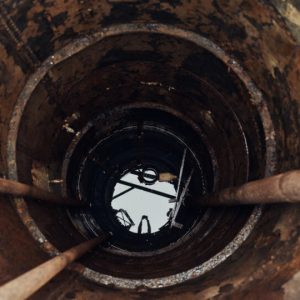
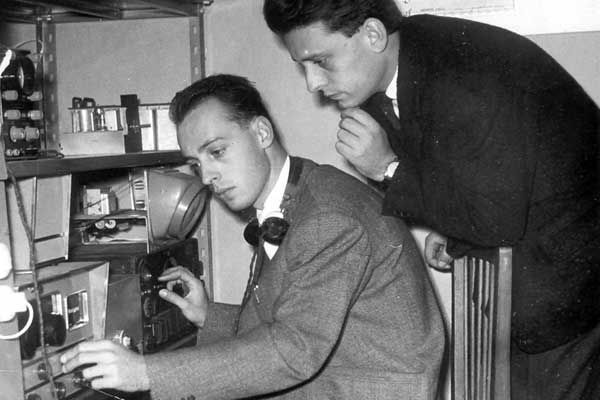
Achille and Giovanni Judica-Cordiglia were amateur radio enthusiasts from Italy who became fascinated by the rapidly developing world of space exploration. In the late 1950s, they established a listening station known as Torre Bert in a disused bunker near Turin.
Using improvised antennas and radio equipment, the brothers monitored signals they believed were connected to Soviet and American spacecraft. Their work attracted considerable public attention during a period when the Space Race had become one of the defining competitions of the Cold War.
At the time, space exploration was also surrounded by extraordinary secrecy. The United States and the Soviet Union understood that every successful launch could become a propaganda victory, while every disaster could become an embarrassment.
For two young men listening from an old bunker, the skies were full of signals—and perhaps, they believed, secrets that governments did not want the public to hear.

Then They Claimed To Hear Something Nobody Was Supposed To Hear
Over the years, the brothers claimed to have intercepted several strange transmissions allegedly connected to secret Soviet space missions. Some were interpreted as distress calls. Others reportedly contained breathing, heartbeats or desperate requests for help.
These recordings eventually became associated with the “Lost Cosmonauts” theory—the idea that the Soviet Union may have sent people into space on secret missions that ended in disaster and were subsequently erased from official history.
The most chilling recordings were said to suggest that some people may have died far from Earth without the public ever learning their names.
That possibility was particularly powerful during the Cold War. Soviet secrecy was real, and later revelations confirmed that the Soviet government had concealed some major disasters and deaths connected to its military and space programs. This made the idea of hidden space missions seem possible, even if the specific evidence for the alleged “lost cosmonauts” remained unproven.
Watch the video below and listen to the haunting recording that helped create one of the Space Race’s most enduring mysteries. Was it really the final transmission of a lost Soviet cosmonaut—or something else entirely?
A Woman’s Voice Emerged From The Static
The most famous part of the story involved a recording attributed to a female voice.
According to the interpretation that made the tape famous, the woman appeared to be in extreme distress. Through static and interference, listeners believed they could hear references to heat, danger and flames. In the popular version of the story, she seemed to be describing a spacecraft in serious trouble during re-entry.
Then the transmission faded.
The dramatic interpretation was horrifying: a woman alone inside a failing Soviet spacecraft, unable to return safely to Earth, while her final words were accidentally captured by two radio enthusiasts in Italy.
The story has been retold for decades, although even the date and interpretation of the famous recording have been inconsistently presented in different accounts. The version promoted by the article describes a 1963 incident, while other analyses connect the better-known “Cosmonaut Ludmila” recording to May 1961. That inconsistency itself is one reason the story remains so difficult to treat as established history.

Was She A Secret Cosmonaut Erased From History?
If the recording really captured a Soviet woman dying during a secret mission, the implications would have been extraordinary.
Valentina Tereshkova is officially recognized as the first woman in space, having flown aboard Vostok 6 in June 1963. The “lost cosmonaut” story suggested something far darker: perhaps another woman had gone before her, only to disappear completely from public history after a fatal mission.
But this theory has always faced one enormous problem.
No confirmed name has ever been attached to the alleged woman. No mission records have established that such a flight occurred. No convincing evidence has emerged from Soviet archives, engineers, family members or other independent sources confirming the existence of the mission described by the story.
That does not make the mystery emotionally less powerful. A voice is more difficult to dismiss than a rumor written on paper. When listeners hear someone who appears to be frightened and calling into the void, imagination begins filling the gaps that history has left behind.
But imagination is not evidence.
The Soviet Archives Revealed Secrets — But Not This Mission
The Soviet Union genuinely kept secrets about its space program.
Some accidents and deaths were concealed from the public for years. For example, cosmonaut trainee Valentin Bondarenko died in a training accident in 1961, but his death was not publicly acknowledged by Soviet authorities until decades later. The existence of real cover-ups helped make stories about “lost cosmonauts” seem plausible.
However, the eventual opening of Soviet archives created a serious problem for the lost-cosmonaut theory.
As historians gained access to more documents, personal accounts and records, evidence emerged confirming some previously hidden tragedies. Yet no comparable evidence appeared for the secret human space missions allegedly captured in the Judica-Cordiglia recordings.
No engineers came forward with evidence that they had worked on the supposed missions. No families identified a missing relative as the mysterious cosmonaut. No mission documentation surfaced.
According to one detailed review of the theory, the central problem is simple: the strongest evidence for these alleged missions still comes from a small collection of difficult-to-interpret recordings made by two brothers far away in Italy, rather than from the Soviet space program itself.
Was The Recording Fake — Or Was It Simply Misunderstood?
The most interesting possibility may not be that the recording was definitely real or definitely fake.
It may simply have been misunderstood.
A recent linguistic analysis of the so-called “Cosmonaut Ludmila” recording concluded that the famous dramatic interpretation may have seriously misrepresented what was actually being said. According to the analysis, the recording contains no clear references to a spacecraft or spaceflight and may instead consist of ordinary, disconnected remarks that were interpreted through the assumption that the brothers were listening to a Soviet mission.
This is an important distinction.
The Judica-Cordiglia brothers may not necessarily have invented every mysterious signal they recorded. Radio communications can be difficult to identify, particularly when recordings are noisy, distorted and in a language the listener does not understand well.
If someone is already searching for voices from space, they may be more likely to interpret an ambiguous transmission as evidence of a spacecraft.
Skeptics have also pointed to unusual language, apparent departures from Soviet communication procedures and the lack of independent confirmation. Some researchers have suggested deliberate fabrication, while others believe honest misinterpretation may be the more likely explanation.
In other words, the mystery may not require a dying astronaut, a government conspiracy or an elaborate hoax.
Sometimes, a distorted voice can become a legend simply because people desperately want to know what it means.

Why The Lost Cosmonaut Mystery Still Refuses To Die
The story has survived because it contains nearly every ingredient needed for a perfect modern legend.
There is the Cold War, when governments genuinely concealed information. There is the Space Race, when human beings were pushing into an environment where death could come suddenly and publicly. There is an abandoned bunker, two young brothers with radio equipment and a transmission filled with static.
And then there is the voice.
That may be the most powerful part of all.
A written document can feel distant. A historical rumor can feel abstract. But a recording creates the unsettling impression that the past is still alive somewhere. When people listen to the alleged lost cosmonaut, they do not feel as though they are reading an old conspiracy theory. They feel as though they are hearing someone who might still need help.
That emotional effect helps explain why the mystery continues to return in documentaries, videos and articles decades after the original recordings became public.
The evidence may be weak, the interpretation disputed and the identity of the speaker completely unknown.
But the voice remains.
The woman in the famous recording may never have been a cosmonaut at all. She may have been part of an ordinary radio transmission that was misunderstood, or the recording may have been altered or staged. What is clear is that no reliable archival evidence has confirmed the secret Soviet mission described by the legend. Yet the mystery continues because the Cold War created an atmosphere in which the unbelievable often felt possible. Somewhere inside the static, there is still a voice—and as long as nobody can definitively explain who was speaking, one of the strangest legends of the Space Race will continue to echo through history.