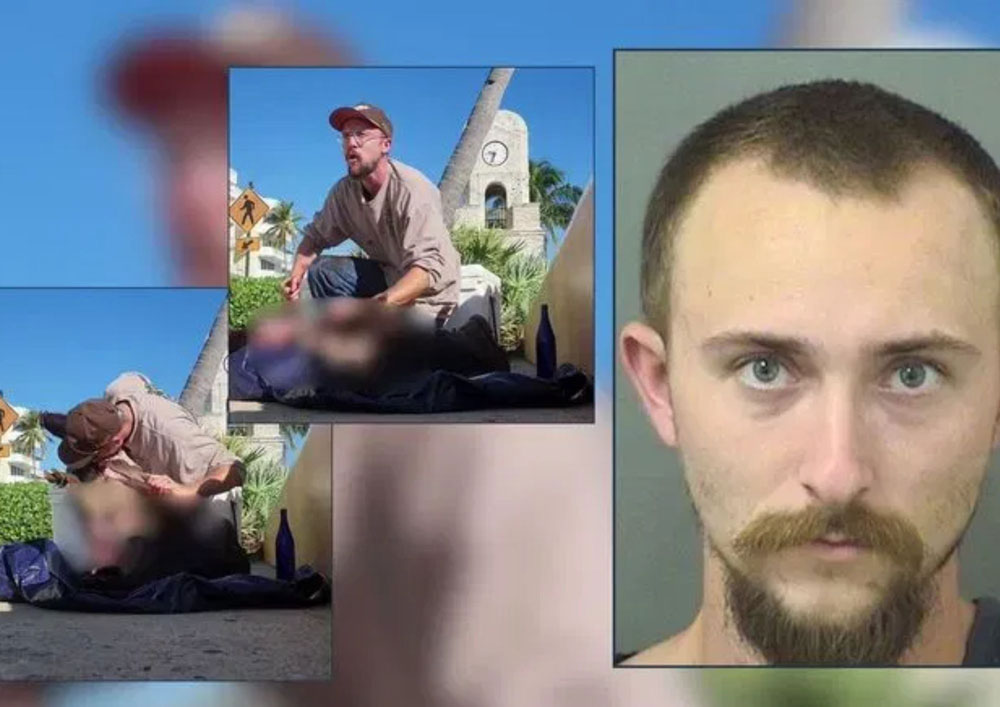
In the early hours of May 29, 2014, a 24-year-old Florida man found himself in an unusual situation: he was lost on a dark rural road and believed wild hogs were chasing him. So he did what many people would do when they have no idea where they are—he called 911. The problem was that Andrew James Joffe was already wanted on an active warrant, and deputies soon discovered that the backpack he was carrying contained a GPS device he admitted stealing from a vehicle, along with other electronics and jewelry. A call for help had unexpectedly put him directly in front of police.
He Called 911 Because He Was Lost in the Dark
Joffe called 911 at around 1:50 a.m. while walking along Deen Still Road in Polk County, Florida. He told dispatchers that he did not know his exact location and was being chased by wild hogs. Deputies eventually located him near Sweet Hill Road, several miles west of U.S. Highway 27.
The location was remote enough that Joffe’s explanation about being unable to find his way was not entirely implausible. Polk County Sheriff Grady Judd even acknowledged the obvious problem with navigating rural roads in the middle of the night, joking that it could get “pretty dark” out on Deen Still Road.
But once deputies found Joffe, the situation quickly became much more complicated than a simple lost-person call.
The first problem was that Joffe had an active warrant for driving with a suspended or revoked driver’s license. That meant the man who had called police asking for help was already someone law enforcement had reason to take into custody.
And then officers looked inside his backpack.

Police Found More Than Just a Lost Man
While inventorying Joffe’s backpack, deputies discovered several pieces of electronic equipment, cellphones, earrings and a GPS device. The GPS immediately raised another question: where had it come from?
According to police, Joffe admitted that he had taken the GPS from a vehicle. Investigators connected the device to a burglary in Davenport, Florida, adding another layer to an already unusual encounter. Joffe subsequently faced additional charges related to burglary of a conveyance and petit theft, on top of the driver’s-license-related warrant.
The irony was difficult to miss. Joffe was carrying a device specifically designed to help people determine where they were, yet he was wandering around in the middle of the night without knowing his own location.
There is no evidence that he was trying to use the stolen GPS when he called 911, so it would be misleading to suggest that he simply ignored a working navigation device. What is known is that the GPS was among the property found in his backpack and that he admitted stealing it from a vehicle.
The device that might normally have helped someone find their way had instead become part of the evidence against him.
Watch the video to see the strange story of a man who stole a GPS, got lost in the dark and ended up calling 911 for help. It’s a bizarre chain of events that took an already unusual night to an entirely different level.
The Stolen GPS Made the Situation Even More Ironic
The strangest detail of the story is not simply that Joffe possessed a stolen GPS. It is that the GPS was reportedly found with a programmed “home address” that helped investigators connect it to the burglary victim. Contemporary reports said the address on the device matched the home associated with the stolen property.
That made the investigation remarkably straightforward.
Joffe had already drawn attention to himself by calling 911. Police then discovered an active warrant. During the inventory of his belongings, they found the GPS and other property. His admission about taking the GPS provided another piece of evidence linking him to the theft.
A situation that began with a request for help had therefore turned into an arrest involving several separate issues.
The whole episode also illustrates how unpredictable encounters with police can be. Joffe apparently called because he believed he was in trouble from the environment around him. Instead, the officers who came to help discovered that he was already facing legal trouble of another kind.

The Police Were Surprised He Called Them Himself
Polk County Sheriff Grady Judd summed up the unusual nature of the incident when he commented that authorities had encountered people with warrants who voluntarily contacted police to turn themselves in, but it was unusual for someone with an active warrant who had allegedly burglarized a vehicle to get lost and call law enforcement for help.
The comment captures the central irony of the case.
Joffe did not apparently call 911 because he wanted to surrender. He was seeking help because he believed he was lost and being pursued by wild hogs. Yet the decision to make that call gave deputies his approximate location and brought them directly to him.
There was also a certain absurdity to the setting. Deen Still Road was dark and rural, and Joffe was apparently unfamiliar with where he was. Sheriff Judd’s remark about the darkness added a touch of humor to what otherwise became a serious arrest.
The story therefore became memorable not because of an elaborate police investigation, but because of the extraordinary chain of events that unfolded after one late-night phone call.
One 911 Call Turned Into Several Charges
By the time Joffe was taken to jail in Bartow, the original problem of being lost had become the least important part of his night.
He had an active warrant related to driving with a suspended or revoked license. Police had also found a GPS device that he admitted taking from a vehicle, along with other electronic equipment, cellphones and earrings. Additional burglary-conveyance and petit-theft charges were added to his case.
The sequence is what makes the incident so unusual. Had Joffe managed to find his way home without calling anyone, the encounter with law enforcement might never have happened that night. Instead, his own call brought deputies to his location.
It is important not to describe the 911 call itself as a confession. Joffe called for assistance because he said he was lost and believed wild hogs were chasing him. The evidence concerning the stolen property emerged only after deputies located him and conducted an inventory of his backpack.
Still, the outcome was remarkably ironic: a man carrying a stolen navigation device called the police because he could not find his way, and the police ended up finding him instead.

He may have called 911 because he was lost, but the decision ultimately led police straight to him and the stolen GPS in his backpack. What began as a request for help quickly turned into an arrest, making the incident an almost unbelievable example of how one bad decision can create an even bigger problem. The GPS was supposed to help someone find their way, but in this case, it was the man carrying it who needed to be found.