New York’s skyline is more than a collection of famous buildings. It is a timeline of the city’s money, technology, ambition, and changing priorities. The Chrysler Building reflected the confidence of the 1920s, the World Trade Center embodied postwar efficiency, and today’s supertalls increasingly turn height, views, and scarce Manhattan land into financial assets. The buildings changed because New York changed—and each generation left its own version of the city in the sky.
Why New York Had to Build Upward
Manhattan has always faced the same basic problem: limited land and enormous demand. As businesses, residents, and investment poured into the island, engineers developed ways to build higher and create more usable space without expanding the city’s physical boundaries. Elevators and steel-frame construction transformed vertical space into an economic opportunity.
That is why skyscrapers were never purely architectural projects. They were commercial investments designed to make expensive land more productive. A taller building could create more offices, more apartments, or more valuable views, turning height into a financial calculation as much as an engineering achievement.
The skyline therefore became a reflection of New York’s economy. When capital was abundant and confidence was high, towers rose; when the economy weakened, construction slowed. The city’s buildings became physical records of each era’s ambitions.
Ever wonder why New York’s skyline is constantly evolving? Discover the fascinating history and future of the city’s iconic skyscrapers. From Art Deco masterpieces to modern glass towers, explore how Manhattan’s architecture shapes the world. Watch the full story now!
The Chrysler Building and the Age of Corporate Ambition
The 1920s produced some of the most recognizable skyscrapers in New York because architecture had become part of corporate competition. The Chrysler Building was a spectacular example, combining Art Deco ornament, polished metal, dramatic setbacks, and a hidden stainless-steel spire that helped it briefly become the world’s tallest building in 1930.

Its triumph lasted only about eleven months before the Empire State Building took the title. The timing was almost symbolic: New York had just completed monuments to wealth and optimism when the stock-market crash and Great Depression transformed the economy. The skyline suddenly represented a world that was disappearing.
The Chrysler Building nevertheless survived, and its meaning changed over time. What began as a statement of corporate ambition eventually became one of the defining architectural symbols of New York.

The World Trade Center Replaced Ornament With Efficiency
By the 1960s and 1970s, skyscrapers looked very different. The World Trade Center’s Twin Towers abandoned much of the decorative language of Art Deco in favor of simple geometry, enormous scale, and engineering efficiency. Their design reflected a new era in which skyscrapers were increasingly viewed as machines for modern corporate work.
The engineering was just as important as the appearance. Sky lobbies reduced the number of elevator shafts required throughout the towers, while the structural system allowed large open office floors. Height was becoming less about decorative spectacle and more about maximizing usable commercial space.
That difference reveals how much the purpose of skyscrapers had changed. The Chrysler Building wanted people to look at it; the World Trade Center was designed primarily to make a modern business complex work at enormous scale. Yet both eventually became cultural symbols far beyond their original commercial purpose.

The 1980s Turned Towers Into Statements of Wealth
The economic mood changed again in the 1980s. Wall Street expanded, real-estate values increased, and visible wealth became an increasingly powerful part of New York’s culture. Buildings responded by becoming more theatrical, luxurious, and closely associated with the people and brands behind them.
Trump Tower, completed in 1983, was an obvious expression of that period. Its bronze-colored glass, marble, brass, mirrors, and enormous atrium were designed to communicate luxury rather than simply provide office space. The skyscraper had become not only a commercial asset but also a form of personal and corporate branding.
This period also revealed one of New York’s permanent conflicts: development versus preservation. An older building may carry cultural value, but a new tower can produce far greater financial returns. The skyline has therefore always been shaped by a tension between what the city remembers and what investors believe the city will become.

After 9/11, Height Had a Different Meaning
The destruction of the World Trade Center in 2001 created a profound break in New York’s skyscraper story. For a time, the city faced a difficult question: could highly visible towers still represent progress, or had the meaning of the skyscraper permanently changed?
One World Trade Center eventually answered that question. Rising to 1,776 feet, the tower was designed not simply as office space but as a symbol of rebuilding, national identity, and remembrance. Its height itself carried meaning, while the surrounding memorial grounds connected the new structure directly to the history of the original complex.
The post-9/11 skyline therefore introduced something earlier skyscrapers had not needed to carry so heavily: memory. A New York tower could now be both a commercial building and a statement about what the city had survived.

Billionaires’ Row Changed What “Tall” Was For
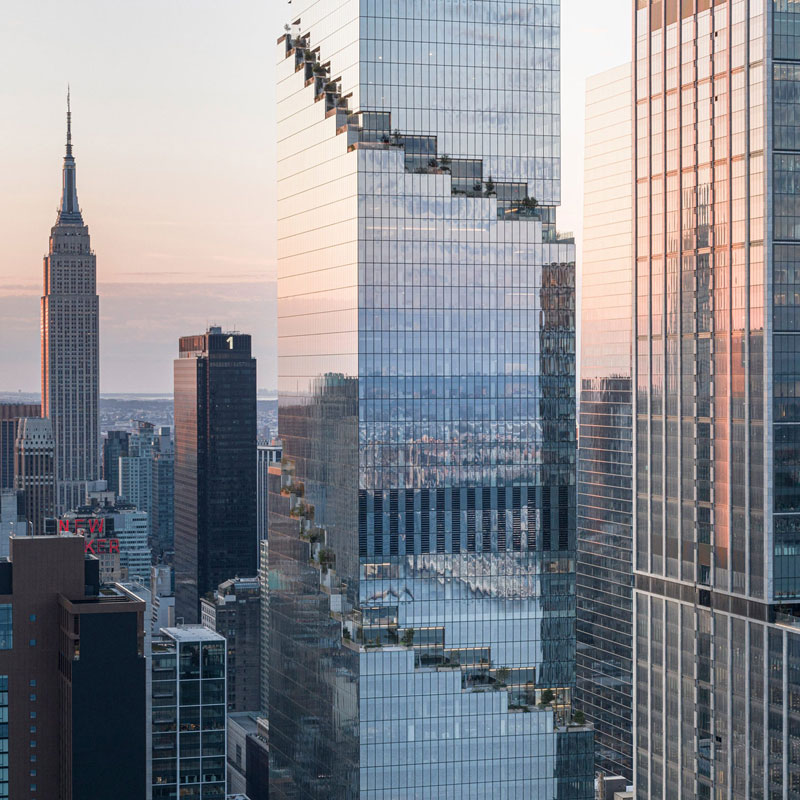
Today’s supertalls represent another major shift. Instead of primarily maximizing office space, many of Manhattan’s newest towers use extreme height to create luxury residences with exceptional views of Central Park and the surrounding city. The cluster around 57th Street became known as Billionaires’ Row, where height, privacy, and scarcity became part of the product being sold.

Buildings such as 111 West 57th Street and Central Park Tower demonstrate just how far the economics of vertical construction have changed. These towers are exceptionally tall and, in some cases, remarkably thin, because developers are not simply selling floor space—they are selling views, exclusivity, and access to one of the world’s most expensive urban locations.
This is a major departure from the Chrysler Building. The 1930s skyscraper was largely a corporate office machine wrapped in Art Deco glamour. Today’s supertalls can function as luxury residences, investment assets, and symbols of concentrated wealth all at once.

From Corporate Power to Global Wealth
The easiest way to understand New York’s skyscraper evolution is to compare what each generation wanted its towers to say. The Chrysler Building represented corporate ambition and the optimism of the 1920s. The World Trade Center represented scale, efficiency, and modern office capitalism. The towers of the 1980s reflected luxury, branding, and real-estate power. One World Trade Center added resilience and memory. Today’s supertalls increasingly represent exclusivity, global wealth, and the financial value of Manhattan’s limited space.

The buildings also became taller, thinner, and more specialized as technology and economics evolved. Earlier towers often relied on broad floor plates and setbacks, while today’s residential supertalls can rise hundreds of meters from remarkably narrow footprints. What looks like a purely architectural evolution is actually the result of changing land values, engineering possibilities, financing, zoning, and demand.
That is why New York’s skyline never feels finished. Every new tower answers the economic questions of its own era, and eventually becomes part of the history that the next generation builds upon.


New York Will Keep Rewriting Its Skyline
New York’s skyscrapers are really a history of changing priorities written in steel and glass. The Chrysler Building captured the confidence of a booming industrial America, the World Trade Center reflected a new age of corporate efficiency, and today’s supertalls reveal a city where scarce land and enormous concentrations of wealth can justify extraordinary height. The towers may look different, but each one represents a bet on what Manhattan will be worth next.
That is what makes the skyline so fascinating. A skyscraper begins as a financial calculation, becomes an engineering challenge, and can eventually become a symbol of the city itself. As New York changes, its towers change with it—and the next skyline is already being imagined.
This article was developed from The B1M’s historical analysis of New York’s skyscraper evolution, supplemented by architectural and building data from the Council on Tall Buildings and Urban Habitat. Source: https://www.theb1m.com/video/relentless-evolution-new-york-skyscraper