In December 1900, three lighthouse keepers disappeared from a remote Scottish island without leaving an obvious explanation behind. When a relief vessel finally reached Eilean Mòr on December 26, the lighthouse was still standing, the lamps had been prepared, the machinery was clean and the kitchen was tidy. But James Ducat, Thomas Marshall and Donald McArthur were nowhere to be found. Their disappearance had apparently occurred days earlier, during a period of severe weather. More than a century later, the Flannan Isles mystery remains one of Scotland’s most enduring unexplained stories.
The Lighthouse Stood Alone On A Remote Scottish Island
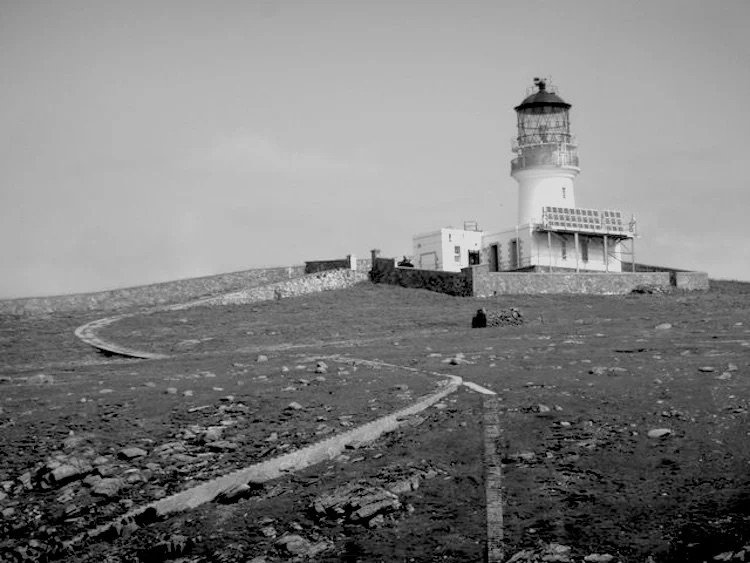
The Flannan Isles lie off the west coast of Scotland, and Eilean Mòr is the largest island in the group. Its lighthouse had only been operating for a little over a year when the three keepers disappeared in December 1900. The station was designed by engineer David Alan Stevenson and was built to provide an important navigational light in a difficult stretch of water.
Life there was unusually isolated. There was no radio connection between the lighthouse and the mainland, so information about the light had to be relayed indirectly. A designated observer on the Isle of Lewis watched for signals from the lighthouse and reported any interruption in the light’s operation.
The three men on duty were James Ducat, the principal keeper; Thomas Marshall, the second assistant; and Donald McArthur, who was temporarily filling in for another keeper who was away on sick leave. Their routine was built around maintaining the lamp, machinery and station in a place where weather could change quickly.
Unravel the chilling mystery of the Flannan Isles lighthouse keepers! Three men vanished without a trace in 1900, leaving behind only eerie, unanswered questions. Watch this captivating investigation to explore the strange theories behind one of history’s greatest maritime puzzles!
Then The Three Keepers Suddenly Disappeared
The first sign that something was wrong came on the night of December 15.
A passing steamer noticed that the Flannan Isles light was not visible around midnight. The information was eventually reported after the vessel reached port, but it was not immediately communicated to the Northern Lighthouse Board. The disappearance itself was not discovered until the routine relief visit later in the month.
On December 26, the lighthouse tender Hesperus arrived at Eilean Mòr. There was no response from the station, even after the crew sounded the ship’s horn and fired a rocket as a signal. Relieving keeper Joseph Moore was sent ashore to investigate. He found the lighthouse deserted.
There was no message explaining where the men had gone, and no obvious indication that they had simply left for an ordinary task. The situation was so unusual that a formal investigation began almost immediately.

The Lighthouse Looked Almost Completely Normal
This is what makes the story so compelling.
Joseph Moore reported that the lamps had been trimmed and were ready, the lens and machinery had been cleaned and the kitchen was tidy. Outdoor equipment had also been checked and was largely in its expected place. The station did not look like a workplace that had been suddenly abandoned in the middle of ordinary activity.
The records provide another important clue. The keepers’ final log entries dated to December 13, while additional information for December 14 and the morning of December 15 had been written on a slate ready to be transferred into the logbook. That suggested that the normal morning work had been completed on the 15th. That timing narrowed the window considerably.
The three men were apparently still carrying out their normal duties that morning. Whatever happened took place later that day.
The Western Landing Showed Signs Of A Violent Storm
The investigation became more interesting when officials examined the western side of the island.
There, some of the infrastructure had clearly been affected by heavy weather. Railings had been pulled from their foundations, sections had been damaged and equipment associated with a landing area had been displaced. A storage box containing ropes and equipment had disappeared, while ropes were found scattered among the rocks below.
The official records therefore provided something more valuable than speculation: physical evidence that the sea had reached far beyond its normal range.
The clothing details added another clue. Two of the keepers were known to have been wearing outdoor gear associated with going down to the landing area, while another man’s usual outer coat was missing. Joseph Moore’s report suggested that this was the kind of clothing the men used when leaving the station for work near the shore.
The evidence pointed investigators toward one particular possibility: the keepers had gone outside to deal with the effects of the storm.

Investigators Believed A Giant Wave Was The Key
The official investigation concluded that the three men had most likely left the lighthouse during the afternoon of December 15, probably to inspect or secure equipment around one of the landing places. Investigators then proposed that an unexpected large wave, described in the records as a “large roller,” may have swept them away from the area.
That explanation fits several pieces of evidence at once.
It accounts for the damaged railings and displaced equipment on the western landing. It explains why outdoor clothing was missing. And it fits the timing suggested by the lighthouse records, which indicate that the station’s routine work had continued normally during the morning. But the explanation was never witnessed.
No one was on Eilean Mòr to see exactly what happened during that afternoon, and the surviving records cannot reconstruct the final sequence of events with certainty. The official conclusion is therefore best understood as the most plausible explanation investigators could develop from the evidence available to them.

More Than A Century Later, The Mystery Still Remains
The Flannan Isles mystery became famous because of a simple contradiction: a functioning lighthouse was suddenly missing all three of the people responsible for it.
The location was remote. Communication was limited. The weather had been severe. And the physical evidence suggested that something unusual had happened around the western landing, but there was no eyewitness account to complete the story.
Over the decades, the mystery inspired books, poems, newspaper stories and films, while increasingly imaginative explanations were added to the original event. Modern archival research, however, has brought the focus back to the surviving records and the physical clues documented at the lighthouse.
The official explanation remains the large-wave theory. National Records of Scotland, in material published in 2026, still describes severe weather as the likely cause of the disappearance while acknowledging that exactly what happened remains unresolved. That may be the most fascinating part of the story.
More than 125 years later, we know where the men were working, when the lighthouse was last functioning normally, what the station looked like when Joseph Moore arrived and what storm damage investigators found outside. What we still do not know is exactly what happened during those final hours on Eilean Mòr. And that unanswered gap is why the Flannan Isles lighthouse continues to fascinate people more than a century later.
The Flannan Isles mystery has endured because the surviving evidence tells us just enough to reconstruct the setting, but not enough to explain exactly what happened. The lighthouse was orderly, the morning work had been completed and signs of severe weather were found around the western landing. Investigators concluded that the three keepers likely went outside during the afternoon of December 15 and were swept away by a powerful wave. Yet without an eyewitness account, the final sequence remains uncertain, leaving one of Scotland’s most famous mysteries unresolved.
The original History Hit article revisits the disappearance of the three Flannan Isles lighthouse keepers and the many theories that later surrounded the case. Official records from the Northern Lighthouse Board and National Records of Scotland provide the clearest account of the lighthouse, the investigation and the evidence found on the island. Source: https://www.historyhit.com/the-flannan-isle-mystery-when-three-lighthouse-keepers-vanished-overnight/