Pulling into a public charging station looks familiar at first: park the car, connect a cable and wait. But the experience is fundamentally different from filling a gasoline tank, because the goal is no longer to spend a few minutes replacing fuel and leave. An EV driver has to think about charger type, charging speed, payment, battery level and how long the car will remain parked. The good news is that public charging is changing quickly, with newer fast chargers, larger sites and simpler payment systems making the experience increasingly convenient.
The First Step Is Finding The Right Charger
The first difference appears before the car is even plugged in. With a gasoline vehicle, almost any gas station can refuel the car. With an EV, the driver needs a charger that is compatible with the vehicle and appropriate for the trip.
Public charging generally falls into two broad categories: Level 2 charging and DC fast charging. Level 2 chargers are useful when a car will remain parked for a longer period, such as at a shopping center, hotel or workplace. DC fast chargers are designed for situations in which the driver needs to add a significant amount of range during a road trip. The U.S. Department of Energy recommends locating public chargers around places where people naturally spend time as well as along major highway corridors.
That means the modern EV driver often thinks about charging before arriving. Instead of asking only, “Where is the next gas station?” the question becomes, “Where can I stop, how fast can I charge there, and what will I do while the car is plugged in?”
That small change in planning is one of the defining differences between electric and gasoline travel.
Are you considering an electric vehicle? Think again! WSJ’s Joanna Stern spent two days testing 30 charging stations in Los Angeles and discovered a massive 40% failure rate. Watch as she explores why public charging is such a mess and what the future holds for EV drivers. Don’t miss out!
Plugging In Is Easy — But The Experience Depends On The Station
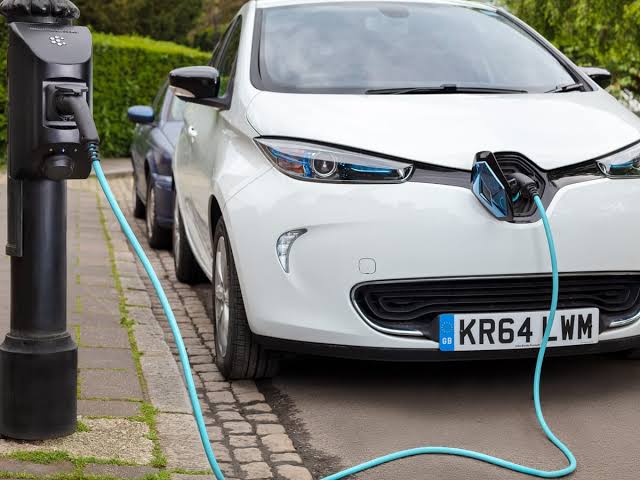
Once the car reaches the charger, the physical process is surprisingly straightforward. Park in the correct space, connect the charging cable and start the session through the station, vehicle or payment system. The more complicated part can be everything surrounding the plug.
Different charging networks may have their own apps, accounts, payment systems and pricing structures. Some stations allow drivers to pay directly, while others may encourage the use of a smartphone application. Connector compatibility can also matter, particularly as different charging standards and adapters are used across the growing EV market.
For drivers accustomed to gasoline stations, this can initially feel like an unnecessary layer of technology around something that should be simple.
But the industry is moving in that direction. J.D. Power’s 2026 study found that newer charging sites are increasingly offering more seamless payment options, while larger charging locations and higher-speed equipment are improving the overall experience.
The ideal future is therefore not simply a faster charger. It is a charger that works when you arrive, recognizes your vehicle or payment method quickly and allows you to begin charging without having to troubleshoot a complicated process.

Then You Have To Wait For The Battery
This is the part that most clearly separates charging an EV from filling a gasoline tank.
A gasoline vehicle can usually be refueled in a few minutes because liquid fuel transfers rapidly into a tank. An EV has to move electrical energy into a battery, and the speed depends on the charger, vehicle and battery conditions.
A DC fast charger can add substantial range much more quickly than a Level 2 charger, but even fast charging is not simply a matter of plugging in and receiving the maximum advertised power for the entire session.
The charging rate can change as the battery fills. In many cases, the vehicle can accept high power when the battery is relatively low and gradually reduce the charging rate as the battery approaches a higher state of charge. That means a driver does not necessarily need to wait until the battery reaches 100%.
For a road trip, the practical question is often not “How long until the battery is full?” but “How much range can I add before I need to leave?” That distinction can turn a charging stop into something closer to a scheduled break.
The Best Charging Stops Are Becoming Places To Spend Time
This is where public charging infrastructure is beginning to evolve.
A gas station is designed around one primary activity: refueling. A modern EV charging site can be designed around the fact that the vehicle may remain there for 15, 20 or 30 minutes—or longer.
That creates a different kind of commercial opportunity. Charging locations can be placed near restaurants, coffee shops, stores, hotels and other destinations where drivers already have reasons to stop.
The U.S. Department of Energy specifically notes that Level 2 chargers are suited to locations where vehicles remain parked for extended periods, including shopping centers, airports, hotels and workplaces.
The physical design of charging sites is changing as well. J.D. Power’s 2026 research points to larger charging locations and more destination-style sites with additional amenities as part of the improvement in public charging.
In other words, the best charging station may eventually be less like a traditional gas station and more like a small roadside plaza. The car charges while the driver eats, shops, checks email or simply takes a break.

Reliability Matters More Than Speed
A charger capable of delivering enormous amounts of electricity is not very useful if it does not work when a driver arrives.
That is why reliability has become one of the most important measures of public charging quality. J.D. Power reported in 2026 that the share of EV owners who arrived at a public charger but were unable to charge had fallen to 12%, the lowest level recorded in its study.
That represents a significant improvement from earlier years. In the fourth quarter of 2024, J.D. Power reported that 20% of EV drivers who visited public charging stations were unable to charge, with equipment outages, unavailable chargers, payment problems and damaged connectors among the reasons.
The improvement illustrates an important point about the charging industry: the technology does not have to become perfect overnight. It simply has to become predictable.
For a driver planning a long trip, knowing that a charging station will actually work can be more valuable than knowing that it has an extremely high theoretical charging rate.
Public Charging Is Slowly Becoming A Different Kind Of Road Trip Stop
The biggest change may be psychological.
Drivers have spent more than a century thinking about cars in terms of gasoline: watch the fuel gauge fall, stop at a station, fill the tank and continue. Electric cars replace that familiar routine with a different relationship between the vehicle, time and infrastructure.
For many EV owners, the most convenient charging still happens at home, where the vehicle can remain plugged in while the owner sleeps or works. Public charging becomes particularly important for longer journeys or for drivers who do not have convenient access to home charging.
Long-distance travel is also becoming easier as charging infrastructure improves. A 2026 Axios road trip covering 1,900 miles required 12 charging sessions averaging roughly 25–30 minutes, while still encountering issues involving apps, pricing and connector compatibility.
That experience captures the current state of public EV charging better than either extreme. The technology is no longer an experiment that requires constant improvisation, but it has not completely reproduced the simplicity of stopping for gasoline either.
The direction, however, is clear. Faster chargers, larger sites, improved reliability and easier payment are gradually turning charging from a technical obstacle into an ordinary part of driving.
Charging an electric car at a public station is different from filling a gasoline tank because the car, the charger and the driver’s time all become part of the same process. Instead of simply replacing fuel, drivers choose a charging location, connect the vehicle, wait for energy to enter the battery and often use that time for another activity. Public charging is still evolving, but newer fast chargers, larger sites, improved reliability and simpler payment systems are making the experience increasingly familiar. The future of refueling may look less like a gas station—and more like a place where the car simply waits while life continues.
The latest J.D. Power research shows that public EV charging reliability and satisfaction are improving, while U.S. Department of Energy guidance explains how Level 2 and DC fast charging fit different everyday and highway-use situations. Source: https://www.usatoday.com/story/cars/technology/electric-vehicles/2026/09/15/charging-an-electric-car-public-charging-station-experience/91772932007/