On March 26, 2026, a truck carrying 413,793 KitKat products disappeared somewhere between Italy and Poland. The shipment weighed more than 12 tons and contained a new Formula 1-themed range that had only recently reached the market. At first glance, it sounded almost too ridiculous to be a serious crime: who steals an entire truckload of chocolate? But the theft revealed something much more interesting about modern cargo crime. The thieves had not simply taken a truck full of candy. They had taken a highly recognizable commercial product that would be surprisingly difficult to sell openly. And before long, the stolen KitKats became the center of a story that was no longer just about chocolate.
The Truck Was Carrying An Extraordinary Amount Of Chocolate
The shipment was enormous by any ordinary measure. More than 413,000 KitKat units, weighing roughly 12 tons, had left a Nestlé factory in central Italy and were being transported toward distributors in Poland when the truck was stolen. No one was injured, but the vehicle and its cargo initially disappeared without a trace. Nestlé confirmed the theft and began working with local authorities and supply-chain partners to investigate what had happened.
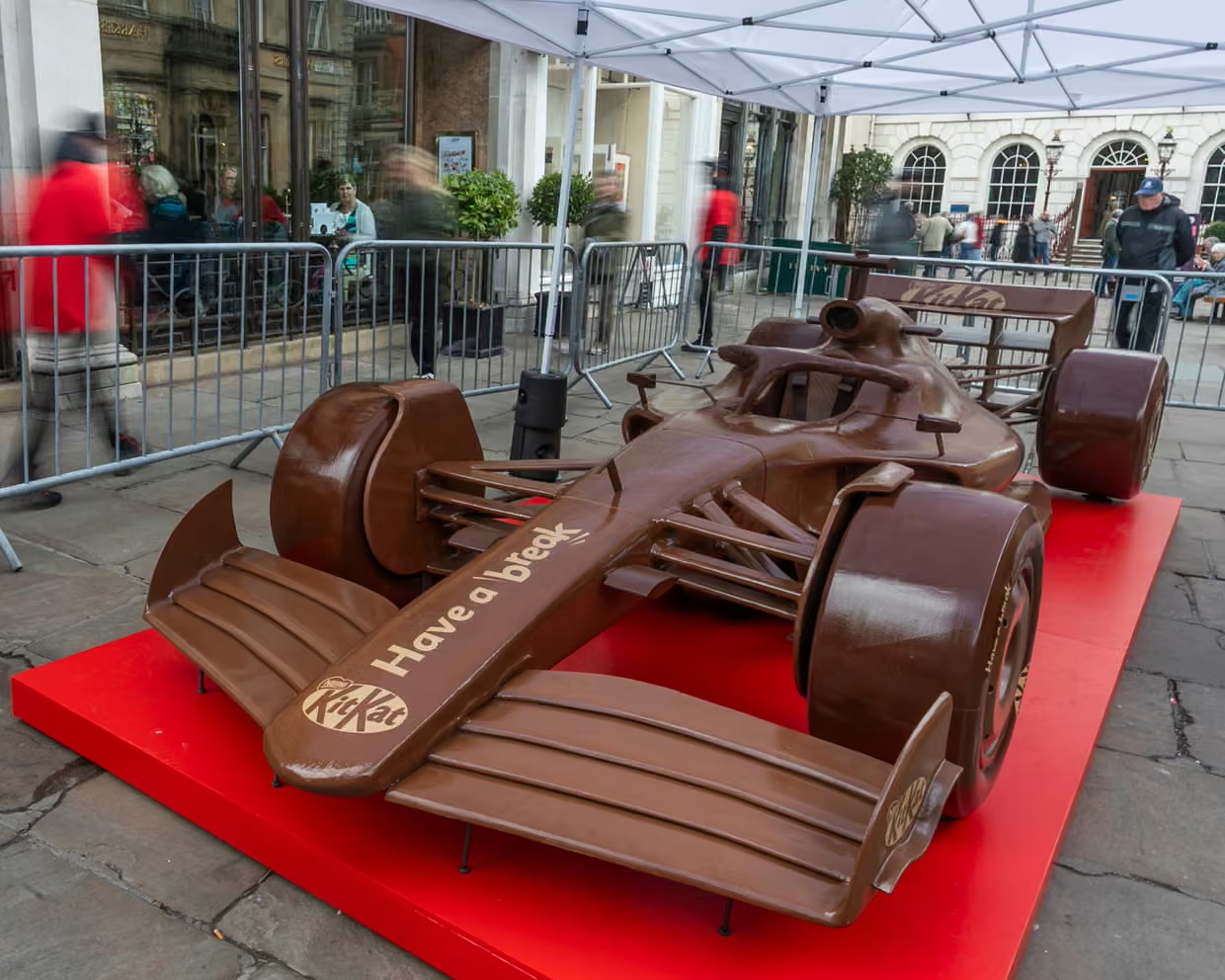
The timing made the story even stranger. The stolen products belonged to KitKat’s new Formula 1 range, part of the brand’s first full season as Formula 1’s official chocolate partner. Nestlé had introduced special products connected to the sport, including chocolate shaped like an F1 car and a marbled KitKat Chunky inspired by the appearance of racing at high speed. The company was investing heavily in the partnership, making the stolen shipment part of a much larger global marketing push rather than an ordinary load of candy.
That distinction matters because a truck full of generic chocolate is one thing. A truck full of newly launched, highly recognizable and traceable branded products is another. Anyone who eventually tried to move the stolen bars through legitimate retail channels would have to deal with a product that was easy for customers, retailers and investigators to identify.
Ever wonder how 12 tons of KitKat chocolate bars can simply vanish from a truck? Discover the bizarre story behind this massive European heist! Watch this video to learn how authorities are tracking the stolen candy and hear expert insights on the growing trend of sophisticated cargo theft.
Why Would Anyone Steal 12 Tons Of KitKat?
Cargo theft is not as glamorous as the heists shown in movies, but it can be highly organized and profitable. Criminal groups can target trucks, warehouses and distribution centers carrying products that already have an established market. Food and drink can be particularly attractive because the goods are familiar, portable and immediately understandable to buyers.
The KitKat theft therefore fits into a much larger pattern. Around the same period, other European cargo thefts involved products such as Guinness and premium cheese, demonstrating that criminals do not necessarily need to steal luxury goods to make a substantial profit. A truck carrying thousands of ordinary consumer products can itself become a valuable target when the goods are easy to move and there is demand for them.
But chocolate presents a special problem for thieves. It is recognizable, relatively low-value per individual unit and can deteriorate under the wrong conditions. Moving 12 tons of chocolate without attracting attention is considerably harder than stealing a few expensive objects that can be hidden in a vehicle or sold individually.
The thieves therefore faced an unusual problem: they had taken an enormous amount of merchandise, but the very visibility that made KitKat valuable also made the cargo difficult to disguise.
The Chocolate Was Not As Easy To Sell As It Looked
Nestlé warned that the stolen bars could potentially appear in unofficial markets. That is where the theft became more complicated. A legitimate distributor could account for where the products came from, while someone suddenly offering huge quantities of brand-new KitKats at suspicious prices would have a very different problem.
Nestlé also said the products could be traced through batch codes assigned to individual bars. That meant the stolen chocolate was not simply anonymous food that could be mixed into another shipment and forgotten. If the products surfaced through the wrong channels, investigators could potentially connect them to the stolen consignment.
There was another obstacle that criminals could not easily change: the product itself. The packaging was associated with a major international brand, while the new Formula 1 designs made the bars even more distinctive. A criminal can change the location of stolen goods, but changing hundreds of thousands of recognizable packages is a different challenge altogether.
The irony was almost perfect. The thieves had taken something that was designed to be noticed by consumers, then needed to find a way to make it disappear.
These Were Not Ordinary KitKats
The stolen products belonged to a particularly unusual moment in KitKat’s history. In January 2026, Nestlé announced that KitKat had become the official chocolate partner of Formula 1 for the full 2026 season. The partnership included activations at 12 races and a series of products designed specifically around the sport.
One of the most visually striking products was a molded chocolate Formula 1 car. Nestlé described it as the first KitKat product of its kind, combining a smooth milk-chocolate shell with crispy cereal and wafer pieces. A separate KitKat Chunky product used a marbled design inspired by the visual impression of speed.
That made the stolen shipment part of something bigger than a routine distribution operation. Formula 1 had become one of KitKat’s major global marketing platforms, while the brand itself had been around for generations. Nestlé says KitKat is sold in more than 80 countries, and the famous “Have a break, have a KitKat” slogan dates back to 1958.
In other words, the thieves had accidentally selected one of the world’s most recognizable snack brands at exactly the moment it was trying to create a new cultural connection with one of the world’s most recognizable sports.

Then KitKat Made The Theft Part Of The Story
This was the moment the story took an unexpected turn. Instead of allowing the theft to remain only a supply-chain problem, KitKat publicly acknowledged what had happened and leaned into the absurdity of the situation.
The brand joked that it had always encouraged people to “have a break,” but the thieves had apparently taken the message too literally and “made a break” with more than 12 tons of chocolate. At the same time, Nestlé used the incident to draw attention to the broader problem of cargo theft, rather than treating the story purely as a joke.
The company then turned the stolen shipment into a public-facing campaign known as The KitKat Heist. Consumers were invited to follow the story through a Stolen KitKat Tracker, transforming what could have been an embarrassing logistical problem into something people could watch, discuss and share.
That response changed the nature of the story. The thieves had wanted the chocolate to disappear. Instead, the theft made the chocolate more famous.
The Heist Became A Marketing Lesson
There is something unusually powerful about a real-world incident that contains its own ready-made story. The KitKat theft had almost everything a marketing team normally tries to manufacture: an enormous number, an absurd premise, a recognizable brand, a mystery, a deadline and a visual product that people already understood.
The company did not need to invent a fictional criminal or create an elaborate advertising plot. The event had already happened. All KitKat had to do was respond quickly enough to become part of the conversation.
That approach proved remarkably successful. In June 2026, Nestlé announced that The KitKat Heist had won a Grand Prix at Cannes Lions, along with four Gold Lions and four Silver Lions. The company described the campaign as an example of turning the theft of more than 413,000 bars into a global cultural moment through speed, transparency and humor.
The result created one of those rare situations in which a brand suffered a real-world loss but gained an extraordinary amount of attention from the way it handled the event.
The Real Story Was Bigger Than The Chocolate
It would be easy to remember the incident simply as the time someone stole a truckload of KitKats. But the more interesting story is what the theft reveals about the modern supply chain.
A consumer sees a chocolate bar on a supermarket shelf and thinks about the product itself. Behind that bar is a complicated network of factories, warehouses, transport companies, distributors, retailers and tracking systems. A single disruption somewhere in that chain can affect thousands of products long before a customer realizes anything has happened.
Cargo theft exploits exactly this complexity. Criminals do not necessarily need to manufacture anything or create a market from scratch. They can attempt to intercept products that have already been manufactured, packaged and prepared for sale. The value has already been created by everyone else.
That is why the KitKat incident was not merely a funny crime story. It was also a reminder that some of the most valuable targets in modern commerce can look completely ordinary.
The Thieves Took A Truck. KitKat Got A Story.
The final irony is difficult to miss. Whoever stole the truck wanted a shipment of chocolate that could presumably be converted into money. Instead, the theft became a global marketing story for the very brand they had targeted.
The products themselves remained the central mystery for a time because the truck and chocolate had not been located when the theft was first reported. Nestlé warned that some of the bars could enter unofficial markets, while batch codes offered investigators a way to identify stolen products if they surfaced.
But the larger legacy of the incident no longer depended entirely on recovering every bar. The story had already escaped the truck. It moved into newspapers, social media, advertising campaigns and eventually one of the world’s most prestigious creative-industry award programs.
That is what makes the KitKat heist so memorable. The thieves tried to make a break with the product. Instead, they gave the brand one of its most unusual breaks in decades.
Why This Strange Heist Is Worth Remembering
Most cargo theft stories disappear as soon as the stolen goods are recovered or the investigation ends. The KitKat case was different because the product, the crime and the response all fit together into a story almost too perfect to invent.
There were 413,793 units. There were more than 12 tons of chocolate. There was a Formula 1 connection, an international shipment and a missing truck. There was also a famous slogan that suddenly seemed to describe the crime itself.
But the lasting lesson is not that chocolate is an irresistible target for thieves. It is that a modern brand can sometimes turn an unexpected problem into an opportunity to tell a story people actually want to hear.
The criminals may have chosen the cargo because it had value. KitKat ultimately discovered that the incident had something else: attention.
A truck carrying 413,793 KitKats disappeared while traveling from Italy toward Poland, taking more than 12 tons of Formula 1-themed chocolate with it. The theft was unusual enough to become international news, but the real surprise came afterward. KitKat turned the missing shipment into a playful public campaign, using the crime itself to create a story around the brand. Months later, that campaign won major recognition at Cannes Lions. The chocolate may have been stolen, but the story became something the thieves could never take away.
This story is based on reporting from The Guardian and additional information from Nestlé about the Formula 1 partnership and the later “KitKat Heist” campaign. Together, these sources show how an unusual cargo theft evolved from a missing truckload of chocolate into a remarkable example of real-time brand storytelling. Source: https://www.theguardian.com/world/2026/mar/28/kitkat-stolen-italy-f1-bar