In 1962, a fire began beneath the small Pennsylvania town of Centralia. At first, almost nobody could have imagined what was happening below their feet. The flames found their way into abandoned coal mines beneath the community and began slowly consuming the coal underground. Over the following decades, the fire produced toxic gases, cracked roads, opened dangerous sinkholes and made parts of the ground extremely hot. Eventually, thousands of residents were forced to leave their homes. More than six decades later, Centralia is almost empty—but the fire beneath it is still burning.
Centralia Was A Town Built On Coal
Long before Centralia became known as a ghost town, it was a thriving mining community in Pennsylvania’s anthracite coal region. Coal shaped almost every part of life there, providing jobs for miners and supporting generations of families, businesses and local institutions. By the late nineteenth century, Centralia had grown to more than 2,700 residents, and the town remained closely connected to the mines for decades.
The relationship between the town and the coal beneath it was unusually intimate. Beneath the streets, houses and businesses was an extensive network of mine workings created during years of extraction. The underground tunnels had once represented prosperity, but after the mines were abandoned, they remained hidden beneath the community. Nobody knew that those forgotten passages would eventually help turn a small American town into one of the strangest ghost towns in the country.
By the middle of the twentieth century, the coal industry in the region had declined dramatically. Many mines had closed, and Centralia was no longer the bustling mining center it had once been. Even so, people continued to live there, raise families and maintain the community. The town had survived the decline of its main industry, but its greatest threat was already waiting underground.
Ever wondered about the town that’s been burning for 60 years? Explore the haunting history of Centralia, Pennsylvania. From its coal mining origins and secret societies to the underground fire that forced a total evacuation, this documentary reveals the chilling reality of America’s most famous ghost town. Watch now!
The Fire May Have Started At A Garbage Dump
The exact circumstances surrounding the beginning of the Centralia fire remain debated, but the most widely cited explanation connects it to the town’s landfill. The landfill had been created in an abandoned strip-mine pit, and in May 1962 officials arranged for the garbage to be burned as part of a cleanup before Memorial Day. The fire is believed to have reached exposed coal in the pit and then spread into the abandoned mine workings below.
At first, there was little reason to believe that this was the beginning of a disaster that would last for generations. A garbage fire could normally be extinguished and forgotten, but once the flames reached the coal seams underground, they gained access to a vast supply of fuel. The abandoned workings also provided pathways through which heat and gases could move, allowing the fire to travel beyond the original landfill.
Authorities attempted to contain the blaze. Crews excavated areas, dug trenches and tried to isolate sections of burning coal, but the underground network proved extremely difficult to control. The fire could survive beyond the areas that had been excavated and continue moving through the old mine system.
The irony was difficult to miss. Coal mining had created Centralia’s wealth and supported the community for generations, but the abandoned infrastructure left behind by that industry now gave the fire a way to survive. What had once helped build the town had become part of the reason the town could no longer remain.

The Fire Was Burning Beneath People’s Homes
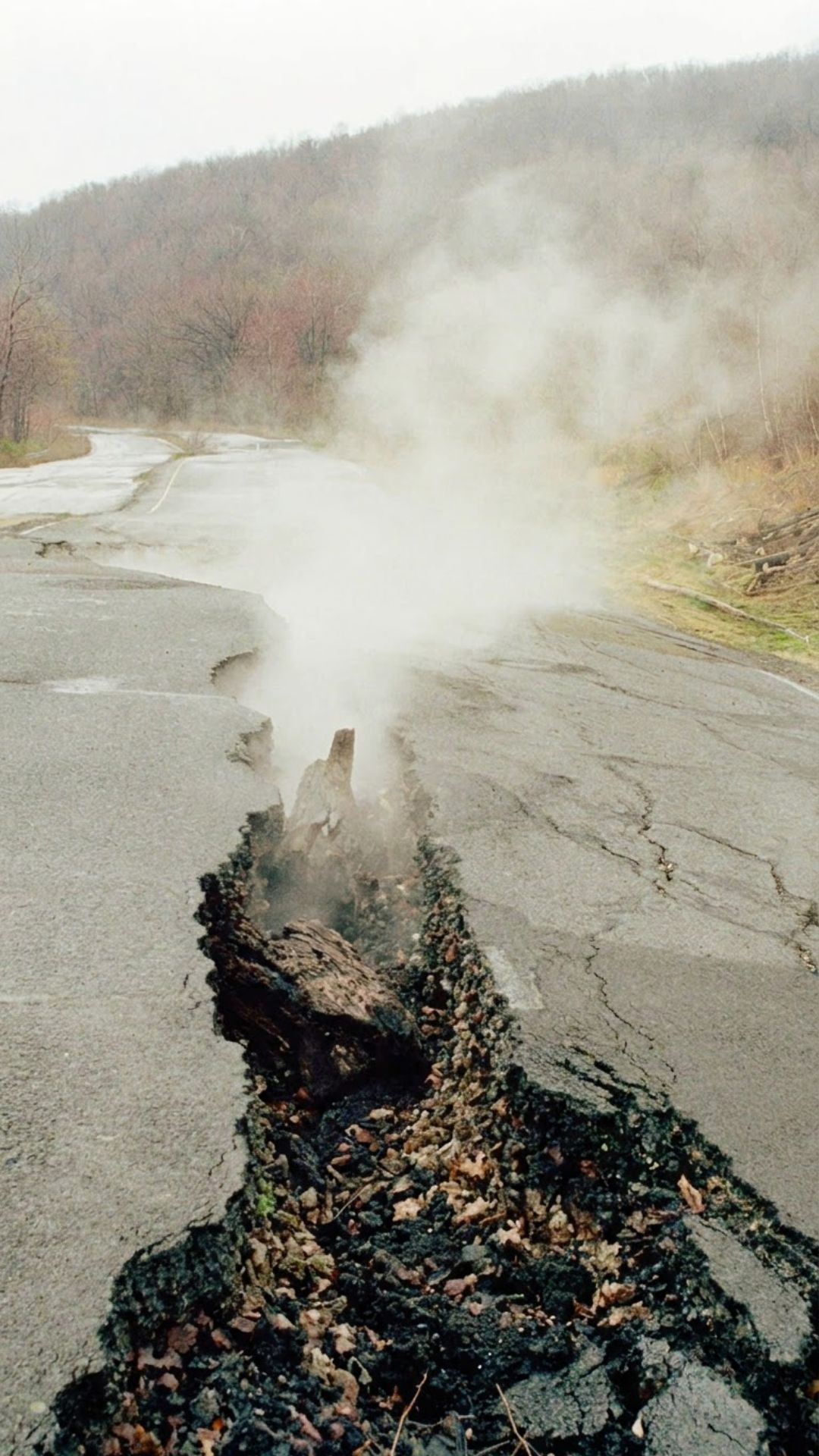
As the years passed, the residents of Centralia began to experience increasingly disturbing signs of what was happening underground. Smoke and gases emerged through cracks in the ground, carbon monoxide became a concern and parts of the surface became unstable. The fire was largely invisible, but its effects could suddenly appear in places where people lived and traveled every day.
In some areas, the ground became extraordinarily hot. Temperatures eventually reached more than 900 degrees Fahrenheit in places affected by the underground fire. Roads cracked, buildings were threatened and gases could accumulate in enclosed spaces such as basements. The danger was unlike an ordinary fire because there was no obvious wall of flames to fight. The enemy was beneath the town.
Then came one of the most frightening incidents in Centralia’s history. In 1981, a 12-year-old boy named Todd Domboski fell into a sudden sinkhole that opened in his grandmother’s backyard. The ground beneath him collapsed, exposing the dangerous void below, and he narrowly escaped. The incident demonstrated that the underground fire was not merely an environmental problem hidden far below the surface. The ground itself could suddenly give way beneath someone’s feet.
For Centralia’s residents, this changed the nature of the threat. A fire underground was one thing. A fire capable of making the earth collapse beneath a child was something else entirely.
Centralia Tried To Live With The Fire
Despite the danger, residents did not immediately abandon the town. Many had spent decades there and had deep family connections to Centralia. Leaving meant giving up homes, neighborhoods and a community that had existed for generations, and some residents were reluctant to accept that the fire could make their town uninhabitable.
Engineers continued looking for ways to control the underground blaze, but the problem was enormous. The fire was not concentrated in one easily accessible location. Instead, it could move through abandoned mine workings and coal seams, making it difficult to determine exactly where it was burning and how far it had spread.
Extinguishing a conventional fire is usually a matter of reaching the flames and removing heat, fuel or oxygen. Centralia’s fire was different. Much of the fuel was underground, the mine network was extensive and the fire could continue moving beyond areas that had already been treated. Completely eliminating it would require an enormous engineering effort at extraordinary cost.
Eventually, the question facing authorities became less about how to save Centralia and more about how to move its people away from the danger.
That was when the town’s fate began to change permanently.
The Government Began Moving Residents Out
During the 1980s, government funds were used to acquire properties and relocate residents. Families began leaving Centralia, and houses that had once been part of ordinary neighborhoods were gradually demolished or abandoned. The process did not happen all at once. Instead, the community slowly emptied as one household after another moved away.
In 1992, Pennsylvania condemned the remaining properties, although a number of residents fought to remain in their homes. Some were eventually allowed to stay under agreements with the state, but the Centralia that had once been home to thousands of people was effectively disappearing. The town’s ZIP code was eventually discontinued as well.
That makes Centralia different from many traditional ghost towns. Most abandoned communities disappear because a mine closes, a railroad bypasses them or residents leave in search of work. Centralia was different. Its population declined because the ground beneath the town had become dangerous.
The buildings were not simply abandoned because nobody needed them anymore. They were being removed because people could no longer safely live above the fire.

The Abandoned Highway Became A Symbol
One of the most recognizable symbols of Centralia’s strange fate became Pennsylvania Route 61. The underground fire damaged portions of the highway, causing cracks and making sections of the road unsafe. Eventually, the affected section was abandoned.
Over time, the empty road became covered with graffiti and attracted visitors who wanted to see the remains of the disappearing town. Photographs of the damaged highway, abandoned buildings and smoke rising from the ground helped transform Centralia into one of America’s most recognizable ghost towns.
Yet the images can sometimes make the story look more dramatic than the reality. Centralia was not destroyed in a single spectacular disaster. There was no enormous explosion that suddenly wiped the community away. Instead, the town disappeared slowly, over decades, as the underground fire continued doing what it had been doing since 1962.
That slow destruction is perhaps what makes Centralia so unsettling. The residents could see their town disappearing around them, but they could not simply defeat the thing responsible.
The fire was below them, largely invisible and extraordinarily difficult to extinguish.
Why Can’t They Just Put The Fire Out?
The obvious question is why the fire has continued for so long when its location has been known for decades. The answer is that underground coal fires are exceptionally difficult to eliminate, particularly when they spread through abandoned mine workings.
Centralia’s fire has access to coal that can continue feeding it, while the old mine tunnels and fractures allow oxygen and heat to move through the underground system. Completely extinguishing the fire would require controlling a huge area beneath the surface and preventing the flames from reaching new sections of coal. Excavation and other containment methods were attempted, but the scale and cost of the problem made a permanent solution impractical.
Eventually, moving residents away became more realistic than trying to save the town itself. The decision effectively created an extraordinary situation: the people could be relocated, but the fire could not simply be relocated with them. So Centralia was left behind. And underground, the fire continued.
More Than Six Decades Later, The Fire Is Still Burning
Today, Centralia bears little resemblance to the community that existed before the fire began. Most of its buildings are gone, its population has fallen from thousands to only a small number of residents and large areas have returned to nature.
But the underground fire remains active. According to information cited by HISTORY, the fire could potentially continue burning for another century if it remains uncontrolled. That means the fire may ultimately survive not only the town that once stood above it, but also many generations of people who never knew Centralia as a functioning community.
There is something almost surreal about that possibility. A town can disappear within a lifetime. Families move away, buildings are demolished and roads are closed. Memories fade as new generations grow up somewhere else. Yet beneath the empty landscape, the old coal is still burning. The town has largely disappeared. The fire has not.
The Town That Was Defeated From Below
Centralia is more than an unusual ghost town. It is a reminder that the consequences of an industrial past can remain long after the industry itself has disappeared. The mines that helped create the community were eventually abandoned, but the underground landscape they left behind remained part of the town’s future.
The fire turned that hidden landscape into a slow-moving threat. It damaged roads, released dangerous gases, destabilized the ground and eventually forced most of the population to leave. Unlike a hurricane or earthquake, it did not arrive in one dramatic moment. It simply continued burning, year after year, until the town could no longer live with it.
That may be the strangest part of Centralia’s story. The community was not defeated by something descending from the sky or arriving from beyond its borders. It was defeated by something already inside it. The fire was beneath the town all along. And more than six decades after it began, it is still there.
Centralia was once a thriving Pennsylvania coal town where thousands of people built their lives around the industry beneath their feet. In 1962, a fire believed to have begun at a local landfill reached the abandoned coal mines and began spreading underground. Over the following decades, it produced dangerous gases, extreme heat, unstable ground and sinkholes, eventually forcing most residents to leave. Homes were demolished, the town’s ZIP code disappeared and an entire community slowly faded away. Yet the fire never did. More than six decades later, Centralia remains one of America’s strangest ghost towns—a place where the town is almost gone, but the fire beneath it continues to burn.
Source: https://www.history.com/articles/mine-fire-burning-more-50-years-ghost-town