In September 2015, 14-year-old Ahmed Mohamed brought a homemade digital clock to his high school in Irving, Texas, hoping to show his teacher something he had built himself. Instead, the device triggered a police response, and Ahmed was taken from school in handcuffs after staff feared it might be a bomb. Within days, a photograph of the teenager in a NASA T-shirt became an international image, President Barack Obama invited him to the White House, and Mark Zuckerberg publicly supported him. A simple school project had suddenly become a global story about technology, fear and how quickly a misunderstanding can spread.
He Built The Clock To Impress His Teacher
Ahmed was a ninth-grade student with a strong interest in engineering and robotics. He had built the digital clock himself, assembling electronic components inside a case and bringing it to school because he wanted to show a teacher what he had made.
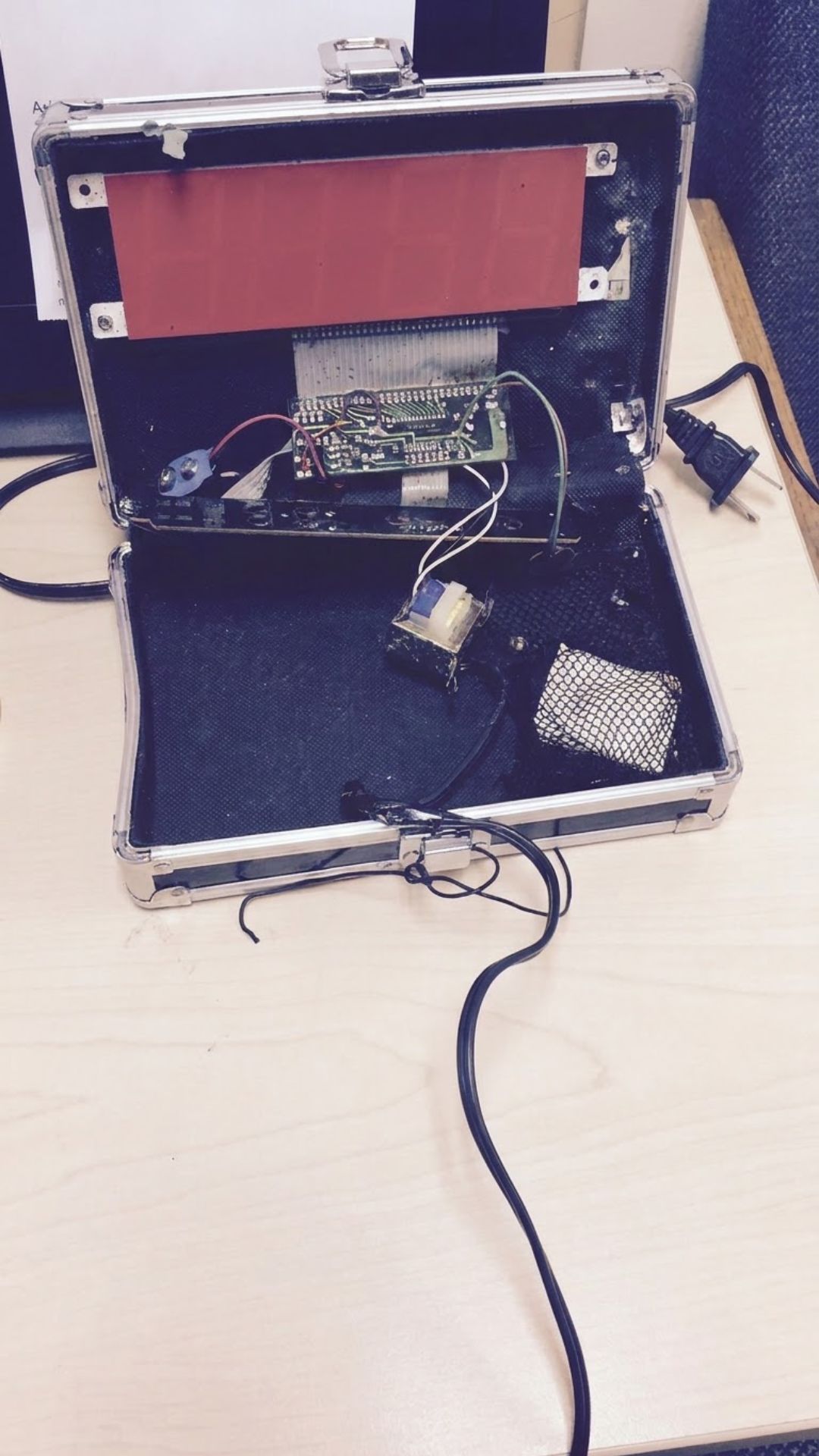
But the device did not look like a conventional store-bought clock. It consisted of a digital display and wiring housed inside a modified case, with several components visible enough to make it appear unfamiliar to someone who did not know what they were looking at.

According to accounts from the time, one teacher who saw the device told Ahmed not to show it to other teachers. Later, another teacher saw it and alerted school officials, who contacted police because they feared the object could be an explosive device. Ahmed was taken to a room, questioned and eventually led out of the school in handcuffs.
For a teenager who had brought the clock to school to demonstrate his engineering ability, the reaction was the opposite of what he expected.
Discover the shocking story of Ahmed Mohamed, a 14-year-old arrested for bringing his homemade clock to school. Was it talent or a misunderstanding? This viral controversy sparked global debates on bias and creativity. Watch the full report to uncover what really happened and how this teen became a science celebrity.
Police Found A Clock, Not A Bomb
Irving police examined the device and determined that it was a clock, not a bomb. Authorities did not file criminal charges against Ahmed, although he was initially accused of making a hoax bomb, and the incident was closed after the device was assessed. Police Chief Larry Boyd defended the department’s response by saying officers had to treat a suspicious device cautiously in a school environment.
The controversy grew because Ahmed’s treatment seemed dramatically different from the harmless nature of what he had actually built. The image of a 14-year-old wearing a NASA shirt and being led away in handcuffs became the defining photograph of the episode.
Ahmed’s family and supporters argued that the incident reflected religious and racial bias because he was Muslim. Others, including police officials, maintained that the response was driven by the appearance of the device and the need to err on the side of caution. The evidence does not establish a single simple explanation for every decision made that day, but the disagreement quickly became part of a much larger national conversation.
The Photograph Went Around The World
What happened next was something neither Ahmed nor his family could have predicted.
Photographs of the teenager in handcuffs spread rapidly across social media, accompanied by the hashtag #IStandWithAhmed. Within days, the story had moved far beyond a Texas high school and become an international discussion about how young people are treated when they experiment with technology.
Then Barack Obama entered the story.
The president publicly encouraged Ahmed’s interest in science and invited him to bring his clock to the White House. Mark Zuckerberg also praised the teenager’s initiative and said that building something useful should lead to encouragement rather than arrest. The reaction transformed Ahmed almost overnight from an unknown high school student into one of the most recognizable young faces in American news. The contrast was extraordinary. One moment, Ahmed was sitting in a police station. A few days later, he was being invited to the White House.

The Clock Took Him From Texas To Washington
The invitation was not merely symbolic. In October 2015, Ahmed attended the White House Astronomy Night, where he met Obama and other guests involved in science and space exploration. He arrived carrying the same clock that had caused the controversy.
The event was intended to encourage interest in science, technology, engineering and mathematics, making Ahmed a particularly visible participant. The symbolism was hard to miss: the teenager whose homemade invention had been treated as suspicious was now standing at the White House as a young technology enthusiast.
By then, the story had become larger than the clock itself. Ahmed had received invitations and public support from prominent figures, and his sudden fame opened opportunities that would have been unimaginable only weeks earlier. But the attention also brought consequences that were less positive.
His Family Eventually Left The United States
In October 2015, Ahmed’s family announced that they would move to Qatar after he accepted a scholarship from the Qatar Foundation’s Young Innovators Program. The announcement came shortly after his White House appearance.
The move gave Ahmed an opportunity to continue his education in a new environment, but his family also said the worldwide attention surrounding the case had disrupted their lives. By November, lawyers representing the family were demanding $10 million from the city of Irving and another $5 million from the school district, along with an apology, over what they described as wrongful arrest and illegal detention.
The legal demands were not simply an extension of the viral social-media argument. They marked a second phase of the story, in which the family challenged how the incident had been handled and argued that Ahmed’s rights had been violated.
Meanwhile, the clock itself had become almost an afterthought. In October, Ahmed finally got the device back from police custody.

What The Ahmed Mohamed Story Was Really About
The most memorable part of the story is not whether a digital clock looked suspicious.
It is how quickly a single misunderstanding can move through an entire system. A teenager built something at home, brought it to school and expected a teacher to see an interesting piece of engineering. Instead, uncertainty led to a police investigation, the investigation became a national controversy, and the controversy turned the teenager into an international celebrity within days.
The episode also showed how differently the same object can be perceived depending on context. In a classroom, a homemade electronic device can look like an impressive experiment. In a school operating under heightened security concerns, the same unfamiliar box and wires can look threatening until someone identifies what it actually is.
Ahmed’s story remains memorable because the reversal was so dramatic. He was taken away because people feared what he had built. Then some of the most powerful people in the country publicly encouraged him to keep building. The clock never changed. What changed was what people believed they were looking at.
Ahmed Mohamed brought a homemade digital clock to school in 2015 hoping to demonstrate his interest in engineering. Instead, the unfamiliar device was reported to police, and the 14-year-old was taken away in handcuffs before authorities determined it was not a bomb and filed no criminal charges. The incident quickly went global, leading to public support from Barack Obama and Mark Zuckerberg and an invitation to the White House. Weeks later, Ahmed accepted a scholarship in Qatar. What began as a school project became a remarkable story about fear, perception and the extraordinary consequences of a misunderstanding.
P.S. This account draws on contemporary reporting from Reuters, The Guardian, PBS, ABC News and other outlets that documented the arrest, the police response, the White House invitation, the family’s legal demands and Ahmed’s move to Qatar. The central facts are consistent across those reports, although the broader debate over why school officials and police reacted as they did remains contested. Sources: https://trendingamerican.com/ahmed-mohamed-digital-clock-landed-custody/