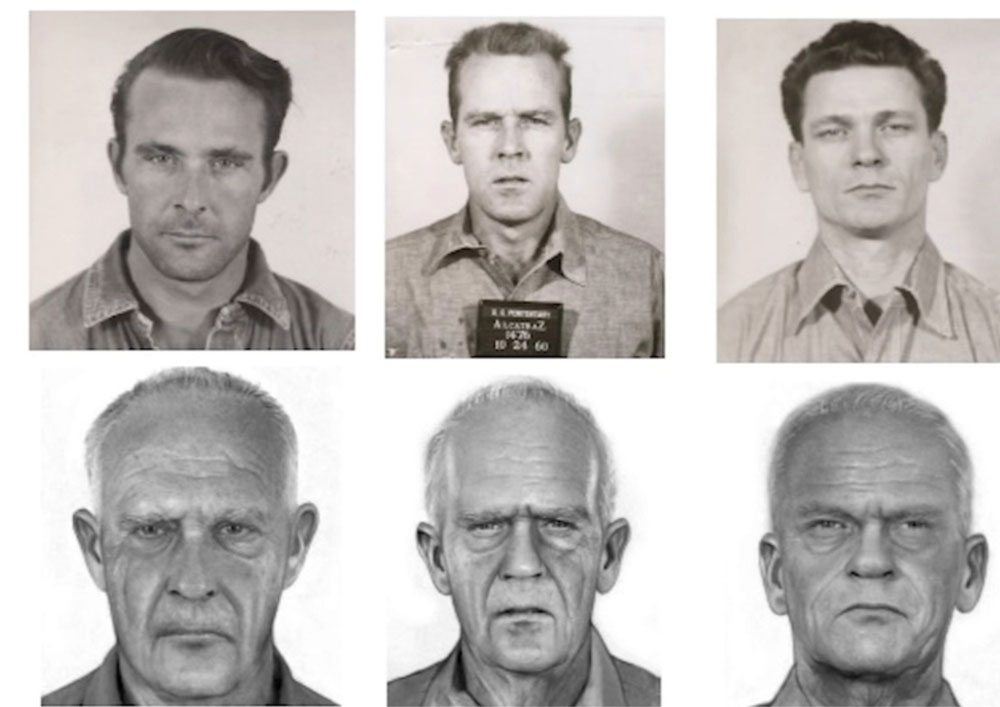
In June 1962, three inmates carried out one of the most audacious escapes in American prison history. Frank Morris and brothers John and Clarence Anglin spent months secretly cutting through the walls of Alcatraz, building a makeshift raft and creating fake heads to fool the guards. They eventually slipped away from the prison and disappeared into San Francisco Bay. More than six decades later, no one knows for certain whether they drowned or made it to freedom.
Three Inmates Left Fake Heads in Their Beds—and Vanished From Alcatraz
Alcatraz was designed to make escape almost impossible. The federal penitentiary sat on an island in San Francisco Bay, surrounded by cold water, strong currents and heavily guarded prison walls. Yet on the night of June 11, 1962, three inmates managed to disappear from their cells without the guards realizing they were gone. The men were Frank Morris and brothers John and Clarence Anglin, and their escape was the result of months of planning, improvised engineering and one remarkably convincing final trick.
By the time guards discovered what had happened the next morning, the prisoners were already gone. On their beds were three fake heads designed to make it appear that the men were still asleep.
What happened after they left the island remains one of America’s most enduring prison mysteries.

The Prison That Was Supposed to Be Impossible to Escape
Alcatraz operated as a maximum-security federal prison from 1934 until 1963. It housed some of America’s most notorious criminals, including Al Capone and George “Machine Gun” Kelly, and its location made escape extraordinarily difficult. The prison wasn’t simply protected by walls and guards. It was separated from San Francisco by the waters of the bay, creating another obstacle for anyone who managed to get outside.
Frank Morris arrived at Alcatraz in 1960. He had a history of criminal activity and previous escape attempts, and according to the FBI, he became the leading planner of what would eventually become the most famous escape attempt in the prison’s history. John Anglin arrived later that year, followed by his brother Clarence in 1961. The three men knew one another from previous prison stays and were assigned adjoining cells.
Another inmate, Allen West, joined their plan.
Their problem was obvious: even if they could get out of their cells, they would still have to escape the building, cross the prison grounds and somehow get off an island surrounded by open water.
They therefore couldn’t rely on a single trick.
They needed an entire system.
And they spent months building it.
Watch the video for a closer look at the daring Alcatraz escape, the clues the three inmates left behind, and the enduring mystery of whether they actually survived and made it to freedom.
They Spent Months Building Their Way Out
The Hole Behind the Cell
The first breakthrough came from something that seemed insignificant: the ventilation openings at the back of their cells.
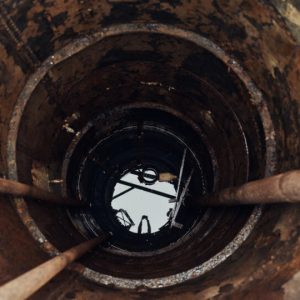
The prisoners discovered that the concrete around the grilles could be gradually loosened. Using crude tools, including a homemade drill powered by the motor of a broken vacuum cleaner, they slowly enlarged the openings. The work had to be done without attracting the attention of guards, so they concealed their activities and worked whenever they could.
Behind the cells was a utility corridor that was not directly guarded. Once the prisoners could squeeze through the openings, they had access to a completely different part of the building.
But escaping the cells was only the beginning.
The Workshop Above the Cell Block
The men established a hidden workshop above the cell block, where they could construct the equipment they would eventually need.
They gathered more than 50 raincoats and turned them into makeshift life preservers and a large inflatable raft measuring roughly 6 by 14 feet. They stitched the material together and used heat from exposed steam pipes to seal the seams. They also constructed wooden paddles and other equipment needed for the journey.
They even created a crude device that allowed one of them to watch for guards while the others worked.
The escape was therefore not a spontaneous decision.
It was an engineering project carried out piece by piece inside one of the most heavily guarded prisons in America. They weren’t improvising an escape. They were building one.
The Fake Heads That Fooled the Guards
The Final Deception
Even after months of preparation, there was one problem the prisoners couldn’t solve with tools or engineering.
The guards performed regular checks.
If they looked into the cells during the night and saw three empty beds, the escape would be discovered immediately.
So the prisoners created something almost absurdly simple: fake heads.
The decoys were constructed from materials including plaster or cement-based material, paint and human hair gathered from the prison barbershop. The faces were designed to resemble the inmates, and the heads were positioned on pillows beneath blankets. From a distance, especially in the dim conditions of a nighttime inspection, they looked like sleeping prisoners. The deception worked.
On the night of June 11, Morris and the Anglin brothers left their cells. Allen West was supposed to join them, but his ventilation opening was not ready in time. The others were forced to leave without him.
The three escapees climbed through the utility area, made their way toward the roof and gathered the equipment they had hidden there. They then climbed down from the prison structure, crossed the perimeter and reached the northeastern shoreline of the island.
Their raft was ready. They had beaten the prison. Now they had to beat the bay. For hours, the prison believed three men were sleeping in their cells. They were already gone.

They Escaped Alcatraz. Then They Disappeared.
The three men launched their improvised raft into San Francisco Bay during the night. What happened afterward is where the story becomes a mystery.
The FBI investigation recovered several pieces of evidence. A packet of letters associated with the men was found sealed in rubber. Paddle-like pieces of wood and pieces of rubber inner tube were recovered from the water. A homemade life preserver made from raincoat material was later found washed up on Cronkhite Beach.
But the most important thing was never found. The men themselves. No confirmed bodies were recovered. The raft was not found. There was no definitive evidence establishing that Morris or the Anglin brothers reached the mainland. Investigators therefore had to consider two very different possibilities.
They might have successfully crossed the bay. Or they might have disappeared into the water.
The cold temperature, currents and distance made the journey extremely dangerous. But the escape plan itself suggests that the men had considered their route carefully. FBI records indicate that they intended to use the raft to reach Angel Island and potentially continue toward Marin County. The question was no longer whether they had escaped from Alcatraz. They had. The question was whether they had escaped from the bay.

Did They Really Survive Alcatraz?
The FBI investigated the escape for 17 years. Despite extensive searches and interviews, investigators could not determine conclusively whether the three men had survived. The FBI closed its investigation in 1979 and transferred responsibility to the U.S. Marshals Service.
The mystery has never completely disappeared. There were no confirmed sightings that proved the men reached freedom, but there were also no bodies that definitively proved they drowned. That distinction has kept the story alive for decades.
The escape is remarkable even if the men died in the bay. They fooled the guards, created a hidden workshop, built their own raft and escaped from a prison that had been designed specifically to prevent such an event.
But if they survived, the story becomes something else entirely. It means three men managed to leave Alcatraz, cross one of the most dangerous stretches of water in the region and disappear without leaving behind enough evidence to establish what happened to them. Either way, the fake heads remain the perfect symbol of the escape.
The guards were looking for prisoners. The prisoners gave them what they expected to see. Three sleeping men. Three faces on pillows. Three empty cells hiding in plain sight. By the time anyone realized the truth, Frank Morris, John Anglin and Clarence Anglin were already beyond the prison walls. More than six decades later, the central question remains unanswered. They defeated Alcatraz. What no one knows is whether they also defeated the water.
The escape from Alcatraz remains one of America’s most enduring prison mysteries. Frank Morris and the Anglin brothers defeated the walls, fooled the guards and disappeared into San Francisco Bay, leaving behind little evidence of what happened next. They may have drowned in the cold waters, or they may have reached the mainland and vanished into ordinary life. More than six decades later, there is still no definitive answer. The prison was conquered. The mystery was never solved.