At 9 a.m. on May 22, 2021, 172 runners started a 100-kilometer ultramarathon through the spectacular Yellow River Stone Forest in northwestern China. The course climbed into the mountains, and many competitors were dressed for a long race in what had seemed like manageable weather. Within hours, rain, hail and powerful winds had transformed the trail into a freezing survival ordeal. By the time rescuers reached the stranded runners, 21 were dead.
The Race Looked Nothing Like a Disaster
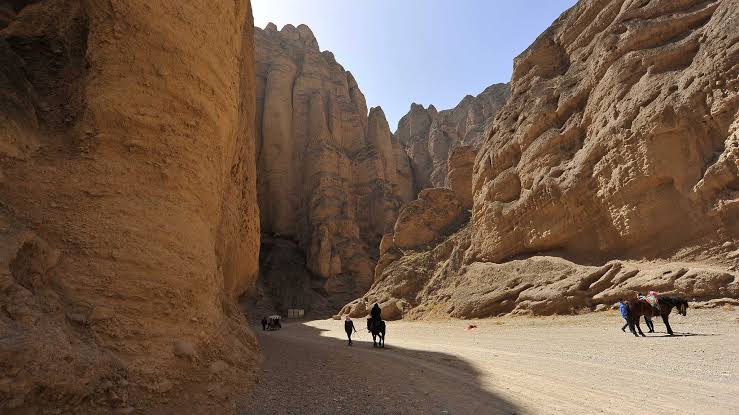
The Yellow River Stone Forest 100K was not an ordinary road race. The course wound through the dramatic landscape of Baiyin in Gansu Province, with runners crossing remote, rocky terrain at elevations reaching roughly 2,230 meters, or more than 7,300 feet. The event was designed to test endurance over 100 kilometers, and participants were accustomed to difficult conditions.
For 43-year-old nurse Yan Daixiang, the race was supposed to be a major personal challenge after months of disrupted competition. She had been running since recovering from pneumonia and had progressed from shorter races to marathons and ultramarathons around China. The evening before the event, she photographed the barren landscape and laid out her race equipment, excited about what was supposed to be another test of endurance.
Another competitor, Zhang Xiaotao, was one of China’s experienced ultrarunners. He had grown up on a farm in Henan Province, where he spent much of his childhood moving across fields while herding goats and harvesting crops by hand. By race day, he was among the strongest runners in the field and was competing near the front.
At 9 a.m., the race began.
The runners headed into a landscape that looked harsh but familiar. Some wore shorts and short sleeves, while others carried light layers intended for a long day on the trail. Many had no reason to believe that the next few hours would become a fight simply to stay warm.
Discover the tragic story of the 2021 Gansu Ultramarathon, where a sudden, extreme weather shift turned a professional race into a life-saving struggle. Learn how administrative oversight and ignored weather warnings led to this avoidable disaster. Watch the full investigation into this chilling event and its aftermath today.
Then the Mountain Changed
The first part of the race was difficult, but still manageable. The runners climbed, descended and moved deeper into the course while strong winds began to make themselves felt. Zhang later recalled that the first 20 kilometers were still relatively normal despite the wind.
Then the weather deteriorated.
Rain arrived, and conditions became dramatically colder as the runners gained elevation. Around the third checkpoint, the course rose toward its highest and most demanding section. The trail became slick, visibility deteriorated, and wind made it increasingly difficult to remain upright.
The official investigation later established just how severe the conditions had become. Around 1 p.m., temperatures near the third checkpoint had fallen to about 4°C, while sustained winds were reported at roughly force 6 to 7, with gusts reaching force 8 to 9. Rain, wind and elevation pushed the perceived temperature down to approximately -5°C to -3°C, with the apparent temperature remaining below freezing for much of the afternoon.
For people dressed for an ultramarathon rather than a winter storm, that change was devastating.
Runners who had been moving steadily were suddenly drenched. Some began shaking uncontrollably. Others struggled to keep walking. The trail markers were being torn loose by the wind, while fog made navigation more difficult on an exposed section that ran dangerously close to steep drops.
Yan had one advantage that many others did not. She had packed extra clothing in her running pack.
She stopped and put on warmer layers before continuing upward. But even with the additional clothing, she began to realize that the situation was becoming far more dangerous than she had expected. Around her, she could see other runners crawling, lying on the ground or standing motionless in the storm. The race had stopped being a race. It had become a survival problem.
When Strong Runners Could No Longer Move
The danger of hypothermia is that exhaustion can make the victim less capable of recognizing how serious the situation has become. As body temperature falls, coordination and judgment deteriorate. For exhausted runners already soaked by cold rain and exposed to strong winds at altitude, that deterioration could happen frighteningly quickly.
Zhang Xiaotao experienced that progression himself.
He was running near the front when the storm intensified. The wind repeatedly knocked him down, and his arms and legs gradually began to feel heavy and difficult to control. Eventually, he wrapped himself in an emergency thermal blanket, activated the SOS function on his GPS device and lost consciousness.
He was not rescued by an organized race team arriving at his side. He was found by a shepherd.
Zhu Keming had been tending roughly 30 sheep when the storm arrived. He took shelter inside a cave, but around 2 p.m. he heard someone calling for help. Then another runner appeared. Zhu eventually brought six runners into the cave, including Zhang, whose clothes were soaked through.
Zhu changed Zhang’s wet clothing and wrapped him in a blanket. He kept a fire burning inside the cave, even tearing pages from a book to help keep the flames alive. Zhang eventually regained consciousness. For those six runners, the cave became a lifeline. For many others, help came too late.
The Search Became a Rescue Mission
As runners disappeared from the course, the scale of the emergency became clear. Authorities launched a major search involving hundreds of rescuers, soldiers and emergency personnel. Thermal-imaging drones and other equipment were used to search the mountainous terrain for missing competitors.
The race had 172 starters.
By the following day, 151 runners had been rescued, while eight had been injured and 21 had died. Among those who died was Liang Jing, one of China’s best-known ultramarathoners and an elite competitor with experience in extremely long-distance races. Paralympic runner Huang Guanjun was also among the dead.
Liang’s death was particularly difficult for the running community to comprehend.
He was not an inexperienced participant who had accidentally wandered into an extreme race. He was an elite ultrarunner who had won the 400-kilometer Ultra Gobi in 2018 and held China’s 24-hour ultramarathon record. Yet the mountain and the sudden weather shift overwhelmed even that level of experience.
That fact changed the way people viewed the tragedy. This was no longer simply a story about amateurs taking on a difficult course. It was a demonstration of how quickly the environment can overwhelm human endurance.
The Weather Was Not the Only Question
In the immediate aftermath, attention naturally focused on the storm. But investigators eventually concluded that the disaster could not be explained by nature alone.
An official investigation determined that race organizers had received weather information and a blue warning for strong winds before the event, but failed to take effective measures in response. Investigators also found that wind- and cold-protection equipment had not been made mandatory, despite the demands of the high-altitude course.
The problems continued on the course itself.
The most difficult high-altitude section, at about 2,230 meters, had no medical rescue or supply station. Communications were also inadequate during the most dangerous part of the race, making it harder to locate and assist runners in distress. Investigators said the emergency response plan and rescue preparations were seriously insufficient.
That turned the weather from a severe hazard into something much more dangerous.
A cold front can strike without warning. But a properly prepared race is supposed to anticipate what happens when conditions become dangerous.
The inquiry ultimately classified the event as a public safety responsibility incident caused by extreme weather combined with improper event management and unprofessional operational execution.
The consequences were substantial. Investigators found 16 organizations and 27 people responsible and said five people connected with the race were formally arrested and would face criminal proceedings. Officials were also disciplined or removed from their positions.
The tragedy therefore left behind a second question that may be just as important as the first: How much of this disaster was preventable?

What the Mountain Left Behind
The Yellow River Stone Forest disaster remains one of the starkest reminders that endurance has limits.
The runners who entered the race had trained to withstand exhaustion, pain and long distances. They had GPS devices, race numbers, checkpoints and support systems. Yet once the weather turned, the most important struggle was no longer how fast they could run.
It was whether they could preserve enough body heat to survive.
Yan Daixiang survived in part because she recognized the cold and had extra clothing with her. Zhang Xiaotao survived because Zhu Keming found him and brought him into the cave. Those stories offer an important contrast to the 21 people who never made it out.
The most haunting part of the story is how ordinary the morning had seemed.
There was a start line. There were athletes stretching and preparing their gear. There was an official starting gun at 9 a.m. And there were 172 people who believed they were beginning a brutal but manageable day in the mountains.
A few hours later, the mountain had become something entirely different. The lesson was not that humans cannot challenge extreme environments. It was that experience, technology and physical strength cannot replace preparation when nature changes faster than a plan can respond. The race began as a test of endurance. In the end, it became a test of survival.
The 2021 Yellow River Stone Forest ultramarathon began as a test of endurance but quickly became a fight for survival. A sudden combination of cold, rain and fierce winds overwhelmed runners and exposed serious weaknesses in race preparation and emergency response. Twenty-one people died, including experienced athletes. Yet amid the disaster, a simple act of courage stood out: a shepherd opened his cave to stranded runners and kept a fire burning until help arrived.
This story draws on Runner’s World’s detailed report about the 2021 Yellow River Stone Forest ultramarathon disaster, including the experiences of survivors, the sudden change in weather and the 21 deaths that followed. Source: https://www.runnersworld.com/races-places/a37885780/china-ultramarathon-disaster/