The Filo Jet had been sailing for only 15 minutes when passengers suddenly realized water was entering the vessel. The ferry, carrying 267 people from Kyrenia to Taşucu, was still about 7.5 kilometers from shore when the situation escalated into a full-scale emergency. Within minutes, passengers were scrambling for life jackets and the catamaran capsized, leaving investigators with one question: what caused a routine voyage to go so wrong, so fast?
The Voyage Had Barely Begun
The Filo Jet was carrying 267 people—259 passengers and eight crew members—when it departed Kyrenia for the Turkish port of Taşucu. The route is a regular sea connection between northern Cyprus and southern Turkey, making the journey routine rather than an unusual expedition into open waters.
But only about 15 minutes after departure, passengers noticed that water was entering the vessel. The ferry was around four nautical miles, or about 7.5 kilometers, from the coast, meaning the disaster began while the ship was still relatively close to land.
The speed of the deterioration is one of the most important details in the case. A passenger ferry had enough time to leave port, build up speed and begin its normal crossing—then suddenly had to deal with a serious water-ingress problem almost immediately after departure.
Tragedy off the coast of northern Cyprus as a passenger boat sinks. 267 people were on board, with rescue teams working against the clock. Get the full report on the ongoing situation in this video.
Then Something Went Wrong at the Bow
Survivors have described hearing loud noises from below decks shortly before the ferry began listing and taking on water. One passenger told AP that crew members initially said there was no major problem and attributed the leak to a loose gasket.
Other witnesses described a more violent sequence. Several said the ferry jolted, struck the sea surface and suffered damage around the bow before water rushed inside. Another account reported what sounded like an explosion at the front of the vessel, although investigators have not established that an actual explosion caused the disaster.
That distinction matters. At this stage, an explosion is a witness account, not an official finding. Authorities are still investigating the precise mechanism that allowed water into the ferry and caused it to lose stability so quickly.
The vessel eventually attempted to return toward Kyrenia, but the situation deteriorated faster than the crew could bring it safely back. What began as water entering the ship became a capsizing emergency in a matter of minutes.

Hundreds of People Suddenly Had to Get Out
Once the ferry began to tilt, passengers had to switch instantly from ordinary travel to survival mode. People searched for life jackets, tried to reach exits and moved toward the sections of the vessel they believed offered the best chance of escape.
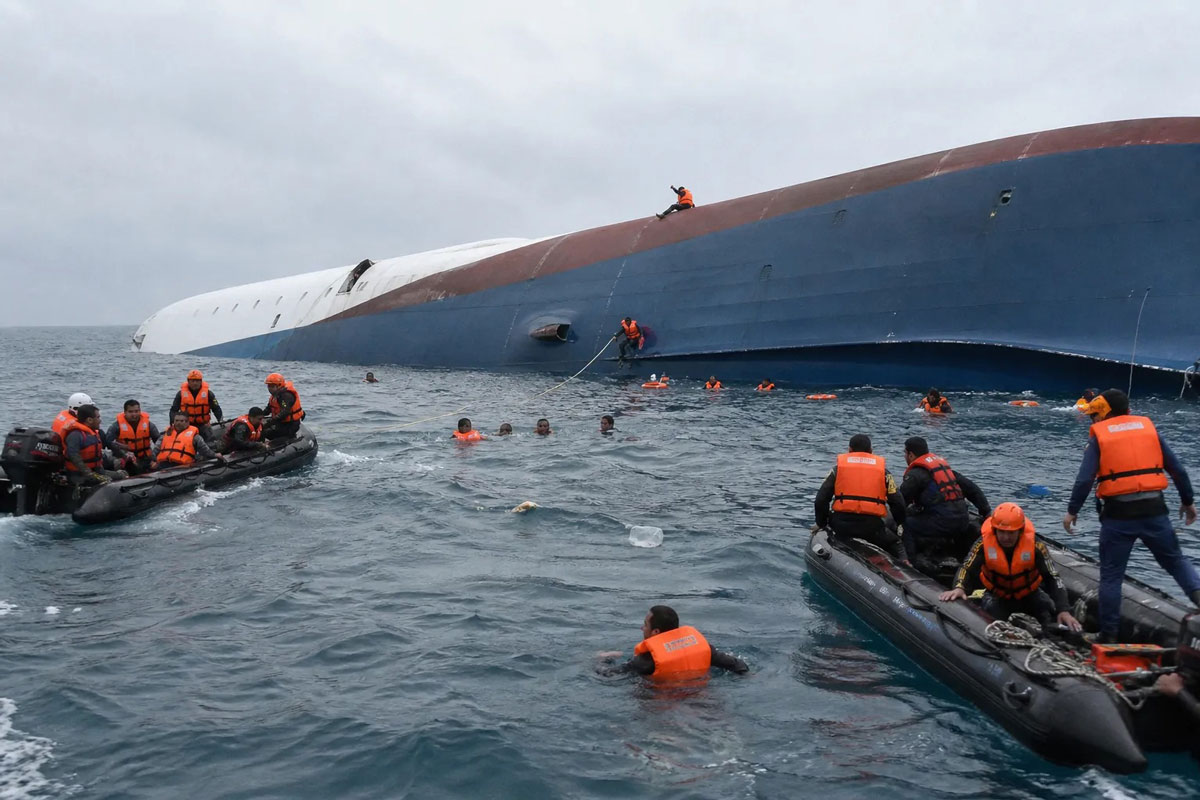
Video from the scene showed survivors in the water wearing life jackets and clinging to the overturned hull. Other people were picked up by passing boats and coast guard vessels, turning the area around the wreck into a large, improvised rescue zone.
But escaping the ferry did not mean everyone was safe. The latest official figures put the death toll at eight, with 18 people still missing after authorities reconciled the passenger manifest with the number of survivors. 241 people had been rescued.
The rescue became even more difficult because the wreck eventually settled at a depth of about 514 meters, or 1,686 feet. Authorities said deep-sea intervention was initially beyond the resources available at the scene, creating another race against time for anyone who might still be trapped below.
The Questions Started Before the Ferry Sank
As survivors reached shore, their accounts began raising questions about how the emergency had been handled. Some passengers said they had warned crew members about water entering the vessel, while other reports alleged that the captain continued the voyage before turning back.
Witnesses also made claims about the captain’s actions during the evacuation, including allegations that he was among the first to leave the vessel. These are witness allegations being investigated, not established findings. The transport authorities have specifically said claims about the captain, locked doors and safety procedures will be examined.
Another important fact complicates the picture: officials said the ferry had a valid seaworthiness certificate before the accident. That does not prove the vessel was operating safely at the moment of the disaster, but it means investigators must now determine whether there was a sudden mechanical or structural failure, an operational problem, weather-related damage or some combination of factors.
That is why the investigation cannot be reduced to a single theory yet. The evidence is still being assembled, and several early accounts remain unverified.

Why Did It Happen So Fast?
The ferry was a catamaran-style vessel, meaning it had two hulls rather than one. Investigators will need to determine how water entered the structure and whether flooding in one section affected the vessel’s balance quickly enough to trigger the dramatic list and eventual capsize.
The weather is another part of the puzzle. Cyprus had experienced severe storms the previous day, and survivors described rough seas, although officials also warned against making premature assumptions that bad weather alone caused the disaster.
The sequence may ultimately come down to the interaction of several factors: the condition of the vessel, the point where water entered, how quickly that flooding affected stability and how the crew responded once the problem became obvious. Until investigators examine the ferry and reconstruct the timeline, none of those explanations can be treated as the final cause.
The Ferry Is Gone. The Investigation Is Just Beginning.
The Filo Jet eventually sank in waters more than 500 meters deep, while search teams continued looking for the missing. A ship from Turkey was expected to join the effort, and authorities have said they will investigate the ferry’s documents, seaworthiness, permits and safety measures.
The central mystery is therefore remarkably narrow: what happened during the first 15 minutes after departure? A vessel carrying 267 people was operating normally, passengers then noticed water entering the ship, and within a short period the ferry had overturned.
For maritime investigators, those minutes could contain the entire answer. The condition of the bow, the flooding pattern, the vessel’s stability and the crew’s actions may eventually reveal whether the disaster began with a sudden structural failure, a mechanical problem, an operational decision or something else.

The Filo Jet left Kyrenia carrying 267 people, then began taking on water just 15 minutes into its voyage, about 7.5 kilometers from shore. The catamaran capsized, leaving eight dead, 241 rescued and 18 missing in the latest official count. Survivors have reported loud noises, rapid flooding and chaos, while authorities investigate claims involving the vessel, crew and safety procedures. The ferry had a valid seaworthiness certificate, so the crucial question remains unanswered: what caused a routine voyage to turn into a disaster so quickly?