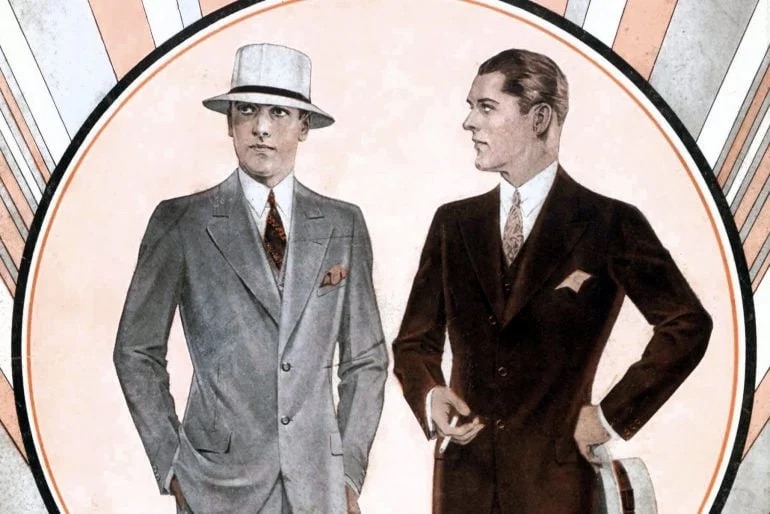
The suits of the 1930s were built around a powerful idea: clothing could change the way a man appeared before he said a word. Broad shoulders, fuller chests, defined waists, wide lapels and high-waisted trousers created a silhouette that looked confident without relying on flashy details. Hollywood helped turn the style into an international symbol of success, while skilled tailoring remained central to everyday menswear. Nearly a century later, men do not need to dress like they stepped out of a 1930s film. But many of the era’s best principles can still make a modern wardrobe look sharper, more balanced and more distinctive.
Why 1930s Suits Looked So Different From Modern Suits
A typical 1930s suit was designed to create presence. The jacket emphasized the upper body with broad shoulders and a full chest, while the waist was shaped to create a stronger V-shaped silhouette. Trousers sat much higher than the low-rise styles that became popular decades later and generally offered considerably more room through the leg.
This was a very different approach from the slim-fit and skinny tailoring that dominated much of modern menswear during the 2000s and 2010s. Instead of making every part of the body look narrow, 1930s tailoring used proportion to create a balanced, masculine appearance. A fuller trouser was balanced by a structured jacket, while the higher waist helped visually lengthen the legs.
That does not mean the goal today should be to copy every historical proportion exactly. Some original suits had extremely wide trouser legs, pronounced padding and lapels that would look theatrical in many modern settings. The more useful lesson is understanding why those proportions worked: the clothes were designed as a complete silhouette rather than as a collection of individually tight-fitting pieces.

Broad Shoulders Were the Secret to the 1930s Power Look
Watch the video to discover what men really wore in the 1930s—and why many of the era’s most distinctive style ideas still influence menswear today. From high-waisted trousers to powerful suit silhouettes, these classic looks may offer more inspiration for a modern wardrobe than you expect.
One of the most recognizable features of 1930s tailoring was the shoulder line. Suit jackets were often cut with broad or “cushion” shoulders, creating a stronger upper body and helping the chest appear fuller. Double-breasted suits used this effect particularly well, combining shoulder structure with overlapping fabric and a shaped waist.
For a modern wardrobe, however, broader does not necessarily mean better. Extremely padded shoulders can make an outfit look like a period costume. A better approach is to choose a jacket with a clean shoulder line that follows the body while providing enough structure to maintain its shape.
This can be especially effective for men who want their clothing to look sharper without wearing an obviously formal suit. A well-cut blazer with moderate structure can create many of the same visual benefits as a vintage jacket while still working with contemporary trousers, knitwear or even a simple T-shirt.
The lesson from the 1930s is not “make your shoulders as large as possible.” It is to make sure the jacket gives your body a clear, balanced shape.

High-Waisted Trousers Still Make Sense Today
High-waisted trousers are perhaps one of the easiest 1930s ideas to bring into a modern wardrobe. During the decade, trousers commonly sat much higher on the body and were cut with more room through the thighs and legs. Many styles also featured pleats and cuffs, helping the fabric drape naturally rather than cling closely to the body.
Today, a high-rise or mid-to-high-rise trouser can still create a noticeably better silhouette than an extremely low-rise alternative. By raising the visual starting point of the legs, it can make the body appear more proportionate and reduce the awkward appearance created when a jacket ends far below the trouser waist.
You do not need to wear trousers with 1930s-level width. A straight-leg or relaxed tailored cut is usually enough to capture the spirit of the period while remaining contemporary. Dark wool trousers can work with a blazer for business, while lighter fabrics can be paired with knit polos, sweaters or simple shirts.
This is one area where modern menswear has increasingly rediscovered an old principle: comfort and elegance do not have to be opposites.

Double-Breasted Suits Still Know How to Make an Entrance
The double-breasted suit was one of the great symbols of 1930s menswear. Contemporary advertisements described these jackets as dressy and capable of creating a broad-shouldered, full-chested appearance. Hollywood stars and fashion illustrations helped make the silhouette even more influential.
For many men today, a double-breasted jacket can still provide something that ordinary single-breasted tailoring does not: instant presence. The overlapping front, stronger lapels and structured shape make the wearer look more deliberate.
The easiest way to modernize it is through styling. Instead of automatically combining a double-breasted jacket with a crisp white shirt and formal tie, try pairing it with a knit polo, fine-gauge crewneck or even a plain T-shirt in the right setting. A navy or charcoal jacket can also be separated from its matching trousers and worn as a blazer.
The result should feel inspired by classic tailoring rather than trapped in the past. The double-breasted jacket works best today when the cut is clean and the rest of the outfit remains relatively simple.

Wide Lapels Can Add Character Without Looking Old-Fashioned
Wide lapels were another defining feature of the era. Peak lapels appeared prominently on many suits, while fashion advertisements of the period celebrated strong, attention-grabbing jacket lines. The lapel was not treated as a minor detail—it was part of the suit’s overall personality.
Modern tailoring can benefit from the same principle without reproducing the most exaggerated vintage proportions. A moderately wider lapel often adds more character than an extremely narrow one, particularly on a man with a larger frame or broader shoulders.
Peak lapels can work especially well on double-breasted jackets, formalwear and statement blazers. A wider notch lapel may be a safer choice for business and everyday tailoring.
The key is proportion. A lapel should complement the jacket, shoulders and body rather than becoming the only thing people notice. The best modern interpretation of 1930s style is usually an adjustment of scale, not a historical reproduction.

Hollywood Helped Turn the Suit Into a Symbol of Success
The influence of Hollywood on 1930s menswear was enormous. Stars such as Clark Gable, Fred MacMurray and Robert Young appeared in films, promotional photographs and magazines wearing the latest tailored looks. Their clothing helped connect the suit with confidence, charisma and professional success.
That relationship between celebrity and menswear has not disappeared. Social media, red carpets and film still influence what men consider stylish. The difference is that modern audiences are exposed to far more styles and have fewer expectations about wearing formal clothing every day.
The most useful lesson from Hollywood’s 1930s influence is not to imitate an actor’s entire outfit. It is to understand the importance of having a recognizable silhouette. A well-dressed man often looks memorable because his clothes fit his personality and proportions consistently.
Whether that means structured tailoring, relaxed trousers, textured fabrics or a preference for double-breasted jackets, style becomes more convincing when it has a clear point of view.

Stripes, Herringbone and Tweed Are Easy Ways to Bring Back Vintage Character
The 1930s were not dominated by plain navy and gray suits alone. Period clothing featured herringbone, chalk stripes, pinstripes and other woven textures. These patterns allowed men to add visual interest without relying on bright colors or excessive accessories.
This is one of the easiest vintage ideas to apply today. A herringbone blazer can add depth to a simple outfit of dark trousers and a knit polo. A subtle pinstripe suit can make a strong statement while remaining professional if paired with a plain shirt and restrained accessories.
Tweed also remains highly versatile, particularly during cooler weather. A textured jacket can be worn with tailored trousers for a classic appearance or dressed down with dark denim.
The safest rule is to let one pattern lead the outfit. If the jacket already has a distinctive weave or stripe, the trousers and shirt should usually remain quieter. Vintage-inspired style works best when the outfit feels intentional rather than overloaded.

The Three-Piece Suit Still Has a Place Today
Matching waistcoats were common in 1930s suits, helping create a complete three-piece silhouette. They added visual depth and allowed the outfit to remain polished even when the jacket was removed.
For most modern men, however, a three-piece suit is no longer everyday clothing. Wearing one to an ordinary office can sometimes feel unnecessarily formal, while hot weather makes the additional layer impractical.
That does not mean the waistcoat has disappeared completely. It can still work beautifully for weddings, formal dinners and special events. A matching three-piece suit offers more visual depth than a standard two-piece, particularly when the jacket is removed during an event.
For a less formal approach, a contrasting waistcoat can also be used selectively, though this requires more care. The modern goal should be flexibility. You should be able to remove one element without the rest of the outfit losing its balance.

You Don’t Need a Full Vintage Suit to Dress Like the 1930s
This is probably the most important point for anyone interested in classic menswear. You do not need to search for an original 1930s suit or reproduce an entire historical outfit.
A single high-waisted trouser can introduce a vintage influence. So can a structured blazer, a pair of relaxed tailored pants, a textured wool jacket or a moderately wider lapel.
Trying to wear every historical element at once can easily make the result look theatrical. A man wearing an extremely wide suit, matching waistcoat, suspenders, fedora and period-style shoes may look more like he is attending a costume event than developing a personal style.
A better approach is to borrow one or two ideas and combine them with contemporary clothing. Think of 1930s tailoring as a source of principles rather than a uniform.
Fit, proportion, texture and silhouette have survived because they remain relevant. The details surrounding them can change.
Three Ways to Wear 1930s Style Today
The Modern Business Look
Start with a navy or charcoal suit featuring moderately high-rise trousers and a jacket with clean shoulder structure. Add a white or light-blue shirt, a simple tie and classic leather shoes.
The 1930s influence comes from the proportions rather than from obvious vintage details. A slightly fuller trouser and a more substantial lapel can create a sharper silhouette without making the outfit look dated.
This approach works particularly well for professional settings where traditional tailoring is still appropriate.

The Smart Casual Vintage Look
Choose a textured herringbone or tweed blazer and combine it with high-rise trousers. A knit polo, fine-gauge sweater or open-collar shirt can replace the traditional dress shirt and tie.
For footwear, loafers or suede shoes can soften the formality of the outfit. The result is comfortable enough for a restaurant, social event or creative workplace while retaining the structure associated with classic menswear.
This may be the easiest way to experiment with 1930s influence because the pieces can also be worn separately.

The Relaxed Hollywood-Inspired Look
Take a double-breasted blazer and pair it with relaxed tailored trousers. Underneath, wear a simple knit polo or plain T-shirt rather than a formal shirt.
Keep the colors controlled—navy, gray, brown, olive and cream work particularly well. Loafers or minimal leather sneakers can complete the look depending on the setting.
The goal is to preserve the confidence of classic tailoring while removing the stiffness of a traditional business suit.

The Biggest Mistake Is Trying to Recreate the Entire Decade
Historical fashion is easy to admire because the images are often visually complete. Every element—from the hat to the trouser width—belongs to the same period. Real life is different.
A modern wardrobe must account for climate, work, transportation, social habits and personal comfort. A suit designed for 1933 does not automatically make sense for everyday life today.
The mistake is assuming that authenticity is the same as good style. In most cases, the strongest vintage-inspired outfits are not exact copies. They take the underlying ideas of a historical period and adapt them to modern proportions.
You might choose a higher trouser rise but skip the suspenders. You might wear a double-breasted blazer but combine it with a polo. You might choose herringbone fabric while keeping the cut entirely contemporary.
The best result usually comes from restraint. One or two references to the past can create character. Too many can turn clothing into a costume.

Why the Best 1930s Style Was Never Really About Fashion Trends
The enduring appeal of 1930s menswear comes from its attention to fundamentals. The clothes were designed around tailoring, fabric and proportion. A strong silhouette mattered more than constantly changing logos or novelty details.
The era’s suits often used broad shoulders, fuller chests, shaped waists and higher trousers to create visual harmony. These principles can still work because the human body has not changed—even though fashion cycles have.
That is why elements of the decade continue to return. Modern trends may alternate between slim and relaxed fits, but a well-cut jacket will always look better than a poorly proportioned one. Quality fabric still changes how clothing hangs. Trouser rise still affects the balance between the upper and lower body.
The 1930s did not offer a single formula for every man. But the decade understood something modern fashion occasionally forgets: good clothing should work with the body rather than simply follow a trend.

The suits of the 1930s remain influential because they were built around timeless ideas rather than temporary novelty. Broad but balanced shoulders, high-waisted trousers, double-breasted jackets, textured fabrics and strong tailoring created a silhouette that still looks confident nearly a century later. The modern man does not need to recreate the entire decade to benefit from those lessons. Borrow a higher trouser rise, choose a jacket with better structure or introduce a textured blazer into an otherwise simple outfit. You do not need to dress like a man from 1933—but borrowing a few ideas from him might help you dress better today.