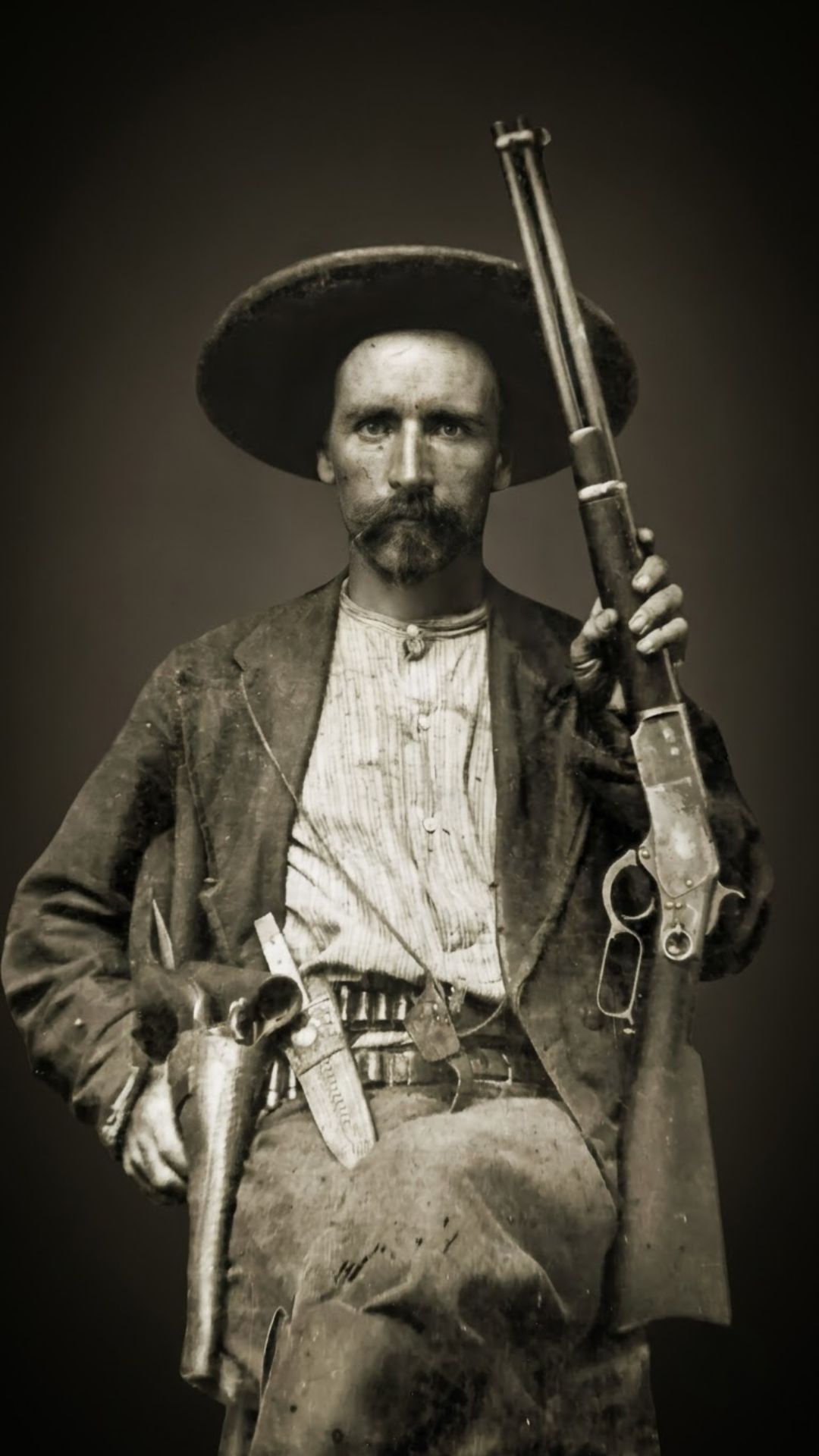
In 1873, two firearms appeared that would become inseparable from the mythology of the American West. One was a lever-action rifle: the Winchester Model 1873. The other was a revolver: Colt’s Model 1873 Single Action Army, better known as the Peacemaker. They were designed for different jobs, yet they shared an important advantage—both could use reliable center-fire metallic cartridges, and Colt soon offered versions of its revolver chambered for Winchester’s increasingly popular ammunition. Lawmen, cowboys, soldiers, outlaws and ordinary settlers carried them, while newspapers, advertising and eventually Hollywood turned them into legends. More than a century later, both still carry the nickname “The Gun That Won the West.”
1873 Changed The American Gun
The year 1873 was unusually important in American firearms history because two iconic designs arrived almost simultaneously. Winchester introduced its Model 1873 lever-action rifle, while Colt introduced the Single Action Army revolver, developed for the U.S. Cavalry and initially chambered in .45 Colt.
The Winchester was built around speed and practicality. Its lever-action mechanism allowed a shooter to fire several rounds in succession without manually loading each shot, while its tubular magazine held multiple cartridges ready to go. For people living and working across a rapidly expanding frontier, that combination made the rifle an appealing tool for hunting, protection and everyday use.
The Colt filled a different role. Shorter and easier to carry on horseback, the revolver became a standard sidearm for cavalrymen and civilians alike. The two guns were not originally designed as a matching set, but the marketplace soon made them one.
Step into the Old West and discover the legend behind “The Gun That Won the West”—the Winchester ’73. From the battlefields to Hollywood screens, find out why this iconic lever-action rifle changed firearms history forever.
The Rifle And Revolver Began Speaking The Same Language
One of the smartest developments came when Colt began offering civilian versions of the Single Action Army chambered for Winchester’s .44-40 cartridge, as well as .38-40 and .32-20.
That mattered because a person carrying both a Winchester and a Colt no longer necessarily needed two completely different kinds of ammunition. A cowboy could carry a rifle and revolver that shared a cartridge, making resupply simpler and reducing the amount of ammunition he needed to keep on hand.

The .44-40 Winchester became especially successful. According to HistoryNet, it went on to become one of the most popular cartridges in firearms history, helping reinforce the practical relationship between Winchester rifles and Colt revolvers.
The importance of the pairing was not simply mechanical. It also created a recognizable combination that became deeply embedded in the culture of the West: rifle across the saddle or nearby, revolver at the belt.

Cowboys And Lawmen Carried Them
The guns quickly became associated with the people whose lives later came to define the Western era.
Texas Rangers carried them. U.S. marshals carried them. Cowboys and working ranchers used them, while outlaws carried the same commercially available firearms. HistoryNet notes that figures including Texas Ranger Frank Hamer, U.S. marshal Bill Tilghman and outlaw Billy the Kid were associated with the Colt and Winchester combination.

Their widespread use is visible in historical photographs. An 1888 photograph of Texas Ranger Company D, for example, shows many of its members armed with Winchester Model 1873 carbines and Colt Peacemaker revolvers. These were not merely movie props decades before Hollywood existed; they were working firearms carried by real people in the American West.
The guns also appeared in the hands of people who did not fit the traditional Western stereotype. Pearl Hart, a Canadian-born stage robber, was photographed carrying a Winchester ’73 with a Colt revolver at her side. The photograph itself became part of the visual mythology surrounding the two firearms.
By then, the guns were becoming more than equipment. They were becoming symbols.

They Were Sold As Symbols Before Hollywood Arrived
Winchester and Colt understood the value of Western celebrity long before the movie industry turned the frontier into entertainment.
Both companies used testimonials and promotional material to associate their firearms with famous Western figures. Winchester’s 1875 catalog included praise from Buffalo Bill Cody, while writer Ned Buntline helped popularize the image of the larger-than-life Western gunfighter through his enormously influential dime novels.

Buffalo Bill was particularly useful to Winchester. The company supplied him with presentation rifles, and he publicly praised the Model 1873. Promotional photography often placed famous Western personalities beside the same firearms ordinary customers were being encouraged to buy.
This was important because the legend did not simply emerge naturally from history. The manufacturers helped create it.
The image of the armed cowboy, the lawman with a revolver and the frontier rider carrying a Winchester was partly a reflection of reality and partly the result of increasingly sophisticated advertising. By the early twentieth century, the two Model 1873s had already accumulated reputations that went well beyond their technical specifications.

Then Hollywood Made Them Immortal
Check out the iconic U.S. Cavalry M1873 Single Action Revolver by Taylor’s & Co. as it takes to the range! Famous for its connection to historical events like Little Bighorn, this legendary sidearm combines classic craftsmanship with unforgettable range footage.
The biggest transformation came when the American West moved from history books and photographs onto the movie screen.
The Colt Peacemaker became one of Hollywood’s defining Western firearms. Its role in the 1953 film Shane helped cement its association with the classic gunfighter, while the distinctive design of the revolver made it instantly recognizable even to people who had never handled one.
The Winchester Model 1873 received an even more direct starring role. In 1950, Universal Pictures released Winchester ’73, with James Stewart, and the rifle itself became the central object around which the story was built. Promotional material prominently used the phrase “The Gun That Won the West,” turning a manufacturer’s slogan into a piece of American cultural language.
That phrase eventually became associated with both firearms. Winchester claimed it for the Model 1873. Colt claimed the same distinction for the Peacemaker.And in a strange way, they were both right.

Which Gun Really Won The West?
There was never a single firearm that literally “won” the American West. The frontier was shaped by soldiers, settlers, Native nations, ranchers, railroad workers, lawmen, merchants and countless others, and they used many different kinds of weapons.
Even within firearms history, the Winchester and Colt were only part of a much larger story. Shotguns, other rifles, earlier revolvers and later firearms all played important roles in the West.
What made the two Model 1873s special was the way their practical usefulness, commercial success and public image reinforced one another. Winchester produced about 720,000 Model 1873 rifles through 1923, while Colt manufactured more than 357,000 first-generation Single Action Army revolvers through 1940. Those numbers show that these were not obscure collector’s pieces that became famous only after the fact. They were produced on a large scale and encountered across the country.
The legend came from the combination of reality and repetition. People actually carried them.
Companies actually advertised them. Famous Western figures actually posed with them. Then Hollywood spent decades teaching America what those guns were supposed to mean.

The Legend Outlived The Frontier
By the time the real frontier had changed beyond recognition, the Winchester ’73 and Colt Peacemaker had already taken on lives of their own.
Photographs of Billy the Kid, Texas Rangers and Buffalo Bill linked the guns to recognizable historical figures. Western films then magnified those associations, turning ordinary firearms into visual shorthand for an entire era.

That is why the phrase “The Gun That Won the West” has survived even though the history is more complicated. It was never simply about which firearm was superior. It was about two designs that arrived at a pivotal moment, found enormous practical success and became embedded in America’s understanding of its own frontier past.
The Winchester became the rifle. The Colt became the sidearm. Together, they became the silhouette of the Old West. And perhaps that is why more than 150 years later, both names are still instantly recognizable.

In 1873, Winchester and Colt introduced two firearms that would become symbols of the American West: the Model 1873 rifle and the Single Action Army revolver. Their practical designs, shared ammunition options and widespread use made them popular with cowboys, lawmen, soldiers and outlaws. Manufacturers then promoted them through famous Western personalities, while Hollywood transformed them into legends. Neither weapon literally “won” the West, but both helped define how later generations imagined it. Their greatest achievement may have been turning working tools into enduring symbols of one of the most recognizable eras in American history.
P.S. This article is based primarily on George Layman’s HistoryNet feature, originally published in Wild West magazine. The article documents the 1873 introduction of both firearms, their ammunition compatibility, adoption by Western figures, production numbers and eventual transformation into Hollywood icons. Sources: HistoryNet, Wild West magazine archives. Source: https://historynet.com/the-guns-that-won-the-west/